
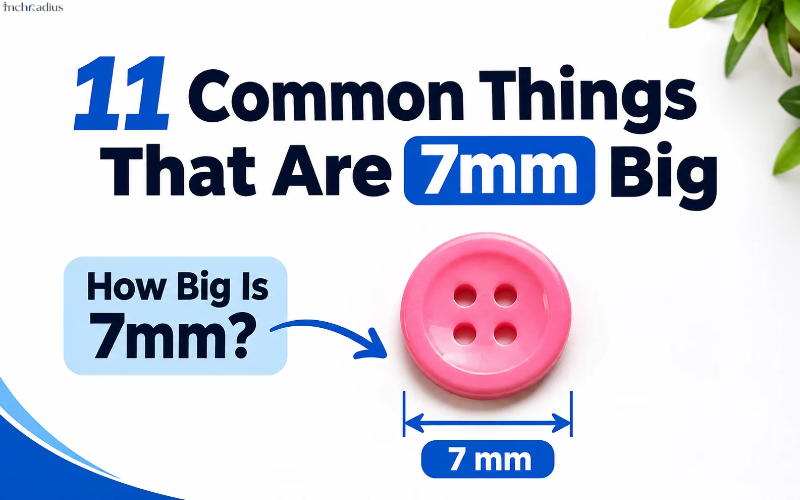
7mm is a very small measurement, equal to 0.7 centimetres, 0.275 inches, or 7 millimetres. It is slightly less than three-tenths of an inch, making it shorter than the width of most adult little fingers. Although it may seem difficult to picture such a small size, several everyday objects can help. Small beads, pencil lead holders, craft materials and household items offer useful points of comparison.
These examples can help you estimate 7mm when measuring jewellery, checking small parts, working on DIY projects or choosing accessories. A ruler with millimetre markings is still the best way to confirm the exact size.
How Long Is 7 Millimetres?
Seven millimetres is a short distance that measures exactly 0.7 centimetres. In inches, it is approximately 0.2756 inches, which is just over one-quarter of an inch. This means 7mm is considerably smaller than the width of a standard adult finger.
On a metric ruler, the distance starts at zero and ends at the seventh small marking. Each small marking represents one millimetre, so counting seven of them gives you the correct length.
This measurement appears in many everyday settings. You might encounter it when checking the diameter of a small bead, measuring a jewellery component or looking at the thickness of a small craft material. It is also useful when comparing screws, fittings and other tiny parts. Although these objects may look similar in size, their actual measurements can vary, so always check the manufacturer’s specifications when accuracy matters.
Related Post: 11 Common Things That Are 12 Centimeters Long
How Big Is 7mm?
Seven millimetres is roughly the width of a small button or a tiny craft bead. Imagine looking at a standard ruler and moving your finger across seven of its smallest divisions. That short distance gives you a practical picture of the measurement.
Another way to picture it is to compare it with your little finger. The fingertip is usually wider than 7mm, so the measurement would cover only part of its width. However, finger sizes differ, making this a rough comparison rather than a reliable measuring method.
A quarter-inch mark on a ruler is also helpful. Seven millimetres is slightly longer than that mark, although the difference is small. These comparisons are particularly useful when shopping for small accessories, checking craft supplies or estimating the size of an item before finding a proper measuring tool.
11 Common Things That Are 7mm Big
Several small everyday objects can help you visualise 7mm. The following examples come from jewellery, stationery, crafts, household accessories and other familiar categories. Some are close to this measurement, while others depend on their particular design or model.
| Everyday Item | Actual Size |
| Small craft bead | 7mm |
| Small round jewellery stud | 7mm |
| Miniature button | 7mm |
| Small rubber grommet | 7mm |
| Watch crown | 7mm |
| Small metal spacer | 7mm |
| Craft pom-pom | 7mm |
| Miniature wooden dowel diameter | 7mm |
| Small cable sleeve diameter | 7mm |
| Tiny decorative gemstone | 7mm |
| Small silicone stopper | 7mm |
1. Small Craft Bead
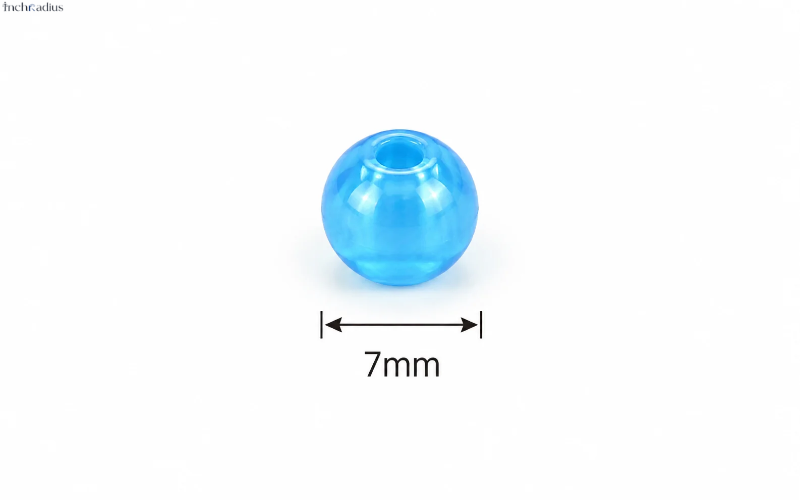
A small craft bead measuring 7mm across is an easy way to picture this measurement. These beads are commonly used in jewellery making, bracelet designs, necklaces and decorative craft projects. Their small, rounded shape makes their diameter relatively easy to understand.
A 7mm bead is slightly smaller than a standard pea and can sit comfortably between two fingertips. Some beads have holes running through their centres, allowing thread or thin wire to pass through.
You can find beads made from glass, plastic, wood and ceramic. Their materials affect their appearance, but the stated diameter remains the same. If you have a 7mm bead at home, place it beside a ruler to see how little space seven millimetres occupies.
Related Post: 10 Common Things That Are 13 Centimeters Long
2. Small Round Jewellery Stud
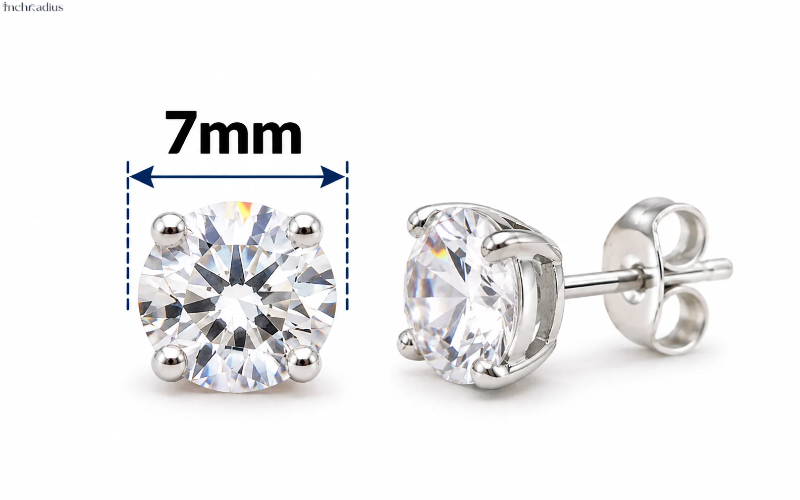
A small round jewellery stud can have a front-facing diameter of approximately 7mm. This size is suitable for people who prefer simple accessories without large or heavy decorative designs.
Stud earrings come in many shapes, including circles, flowers, stars and small geometric patterns. A 7mm round stud has a noticeable appearance without covering a large part of the earlobe.
It is important to distinguish the decorative front from the full earring. The front may measure 7mm, while the post and backing have separate dimensions. When buying earrings online, check the listed face diameter rather than assuming the entire piece measures the same.
3. Miniature Button
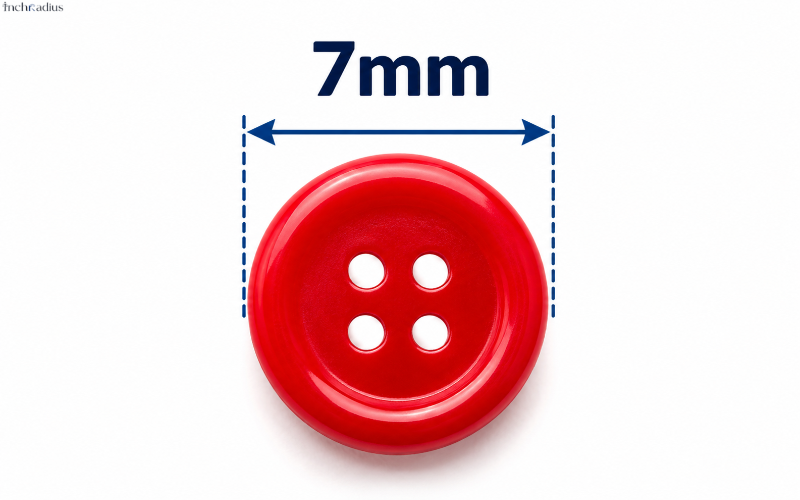
A miniature sewing button measuring around 7mm across provides another useful comparison. Small buttons are often used on baby clothes, dolls’ clothing, miniature outfits and delicate sewing projects.
Their compact size makes them noticeably smaller than the buttons found on ordinary shirts and jackets. A 7mm button can usually be held between your thumb and index finger without much difficulty.
Buttons are available in plastic, metal, wood and other materials. Some have two holes, while others have four. Their thickness also varies, so the 7mm measurement normally refers to the diameter across the front rather than the depth.
If you have a collection of sewing supplies, a small button can help you picture how much space seven millimetres covers.
Related Post: 9 Common Things That Are 14 Centimeters Long
4. Small Rubber Grommet
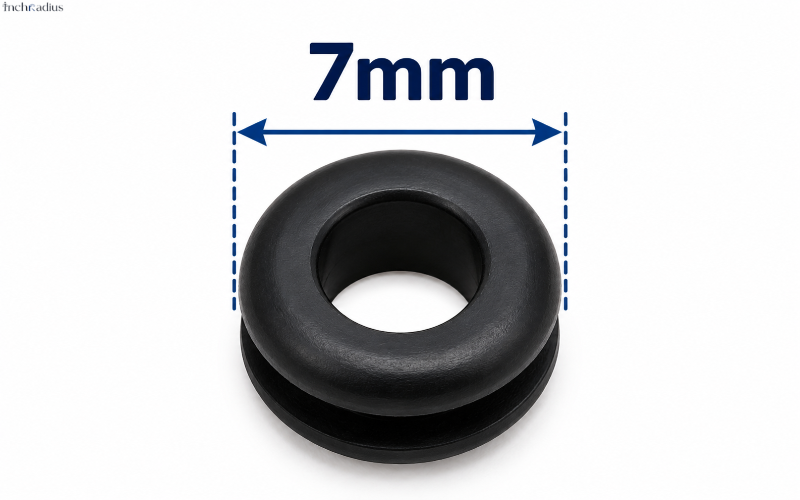
A small rubber grommet is a practical example from the world of household repairs and electrical work. Some miniature grommets have an opening or outer diameter close to 7mm, depending on their design.
Grommets are fitted into holes to protect cables, wires and other materials from sharp edges. They are commonly found in electrical equipment, furniture panels, computer cases and small appliances.
When measuring a grommet, it is important to check which dimension is being discussed. The inner opening, outer diameter and overall height can all be different. A product advertised as having a 7mm opening does not necessarily have an overall width of 7mm.
This object is particularly useful for understanding why small measurements matter when fitting replacement parts.
5. Watch Crown
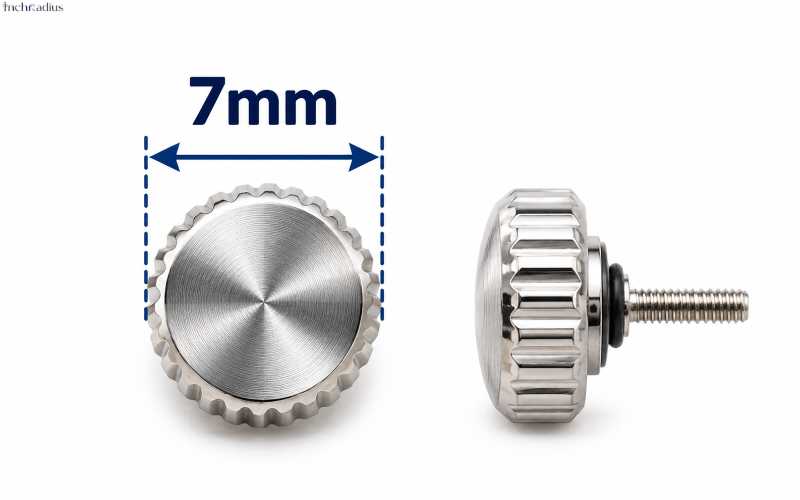
The crown on a wristwatch is the small knob usually found on the side of its case. It allows the wearer to adjust the time and, on some watches, the date.
Certain compact watch crowns have a diameter close to 7mm. Their small circular shape makes them a useful comparison for visualising this measurement.
Look closely at a traditional wristwatch and you will see that the crown does not take up much space. Despite its size, it plays an important role in controlling the watch’s settings.
Not every watch has a 7mm crown. Larger watches often use wider crowns, while slim dress watches may have smaller ones. The actual diameter depends on the watch model and should be checked in its specifications.
6. Small Metal Spacer
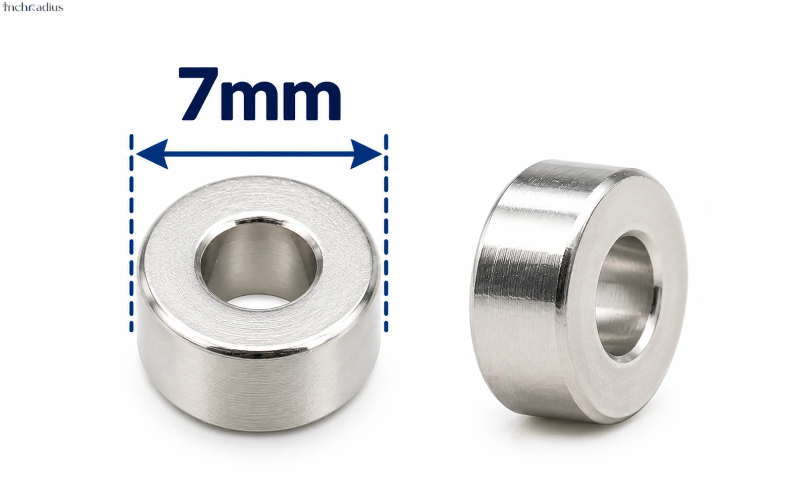
Small metal spacers are used in jewellery making, mechanical assemblies and craft projects. Some have an outer diameter of approximately 7mm, giving them a compact circular appearance.
In jewellery, spacers sit between beads to create gaps and improve the overall design. They may be made from stainless steel, brass, aluminium or other metals.
A spacer measuring 7mm across is easy to compare with a small craft bead. However, its central hole and thickness are separate measurements. Two spacers can have the same outside diameter but look quite different because of their shape and depth.
If you work with jewellery components, keeping a 7mm spacer beside a ruler can provide a quick visual reference when selecting similarly sized pieces.
7. Craft Pom-Pom
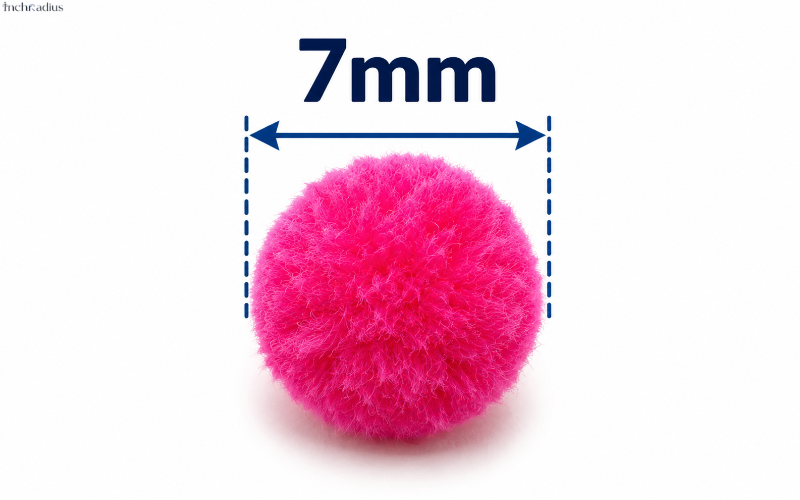
A miniature craft pom-pom can measure around 7mm across. These tiny fluffy balls are used in card making, doll accessories, miniature decorations and school craft activities.
Unlike a metal bead or button, a pom-pom has a soft and uneven surface. Its fibres spread out in different directions, so its apparent diameter may change slightly when compressed or handled.
A 7mm pom-pom is small enough to sit on the tip of a finger. It can also be used to decorate miniature models without taking up much space.
This is an approximate comparison unless the manufacturer provides an exact diameter. If the fibres are loose, the overall width may be slightly larger than the solid centre.
Related Post: 10 Common Things That Are 15 Centimeters Long
8. Miniature Wooden Dowel Diameter
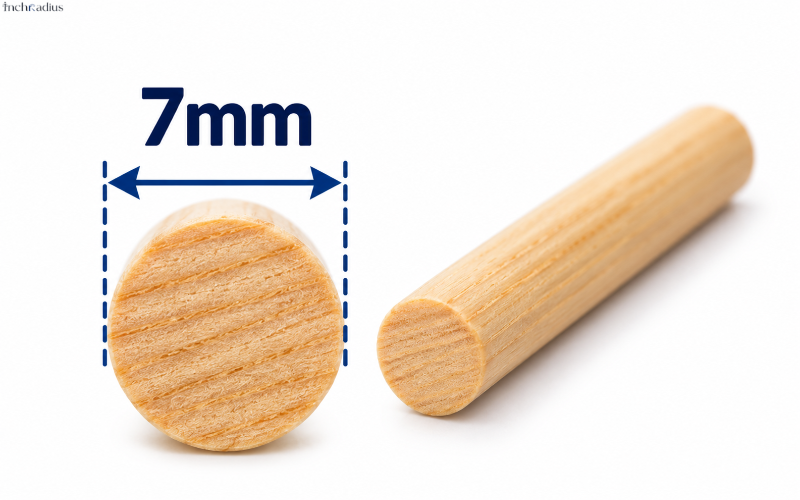
A miniature wooden dowel with a diameter of 7mm offers a different way to picture the measurement. Unlike a bead or button, a dowel is a long cylindrical piece of wood.
Small dowels are useful in model making, furniture repairs, woodworking and decorative craft projects. They can be inserted into matching holes to connect two pieces of material.
The important measurement here is the thickness across the circular end, not the full length of the wooden rod. A dowel may be several centimetres long while measuring only 7mm in diameter.
Place its cut end against a metric ruler to see how the seven-millimetre width compares with the ruler’s markings. This is especially useful when selecting a replacement dowel for a project.
9. Small Cable Sleeve Diameter
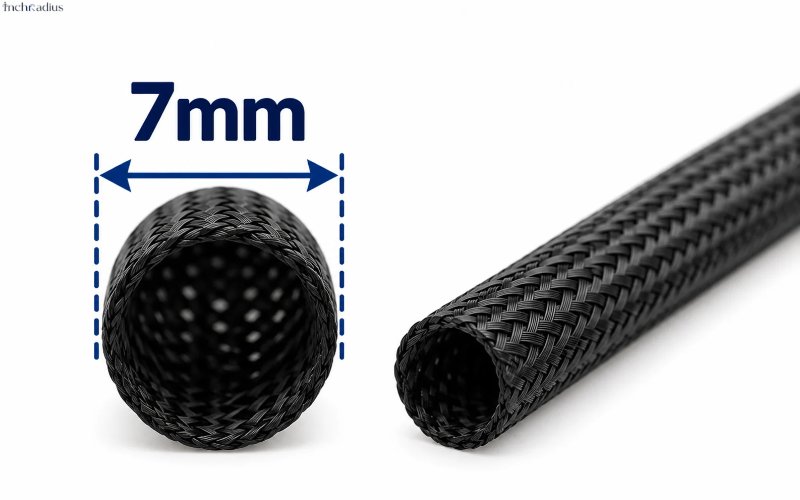
A small cable sleeve can have an outer diameter close to 7mm. These flexible sleeves are used to protect electrical wires and keep cables organised.
You might find them around charging cables, electronic equipment, household wiring and small machinery. Their purpose is to provide an extra layer of protection against rubbing, bending and everyday wear.
A sleeve with a 7mm outside diameter is still relatively narrow. It can be held between your fingertips and compared with the markings on a ruler.
Be careful when checking the size because cable sleeves are sold using different measurements. Some manufacturers list the internal diameter, while others provide the outside diameter. These figures describe different parts of the sleeve.
10. Tiny Decorative Gemstone
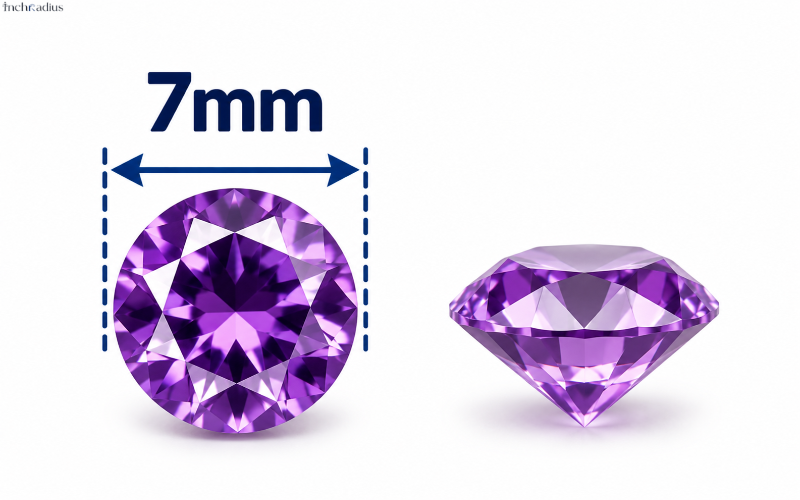
A tiny decorative gemstone measuring approximately 7mm across is another useful visual comparison. Small stones are often used in jewellery, clothing decoration, craft projects and accessories.
A round 7mm stone is compact but large enough to show its colour, shape and surface details. It may be clear, coloured or designed to imitate a natural gemstone.
The measurement usually refers to the width across the stone’s face. Its depth depends on the cut. For example, a flat-backed decorative stone and a rounded gemstone can have the same diameter but different thicknesses.
When choosing gemstones, check the product dimensions carefully. A small difference in size can affect how neatly a stone fits into a jewellery setting.
Related Post: 11 Common Things That Are 16 Centimeters Long
11. Small Silicone Stopper
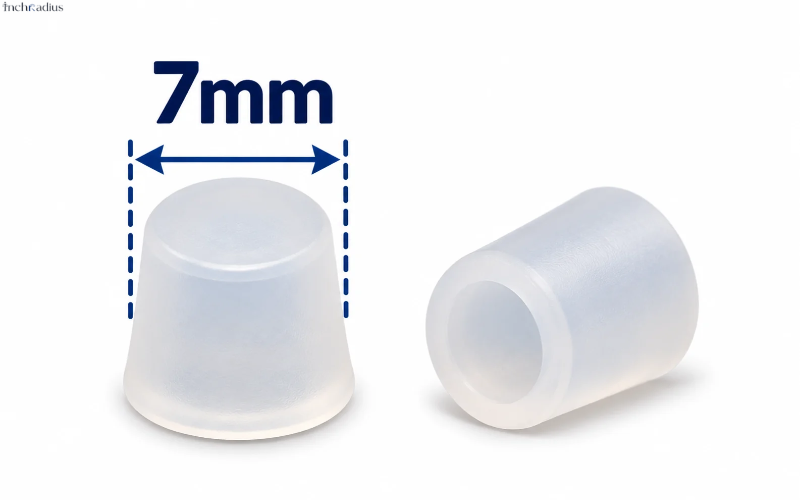
A small silicone stopper can have a width of around 7mm. These tiny components are used to close openings, protect surfaces and prevent unwanted movement in different household and industrial products.
Silicone is flexible, which allows some stoppers to fit securely into openings that are slightly narrower than their widest point. You may find similar pieces in small containers, craft supplies, laboratory accessories and household equipment.
A 7mm stopper is roughly the size of a small bead, although its shape may be different. Some have flat tops, while others are tapered or rounded.
Check whether the listed 7mm measurement refers to the top, bottom or widest section. This matters when choosing a replacement that needs to fit a specific opening.
Measurement Without a Ruler
You do not always need a measuring tool to get a rough idea of how big 7mm is. Familiar objects and simple comparisons can help, although a ruler is necessary when accuracy is important.
1. Compare It With a Quarter-Inch Mark
A quarter of an inch equals 6.35mm. Since 7mm is slightly longer, you can use the quarter-inch mark on an imperial ruler as a starting point.
The difference is only 0.65mm, so the two measurements look very similar. This is useful when you have an inch ruler but no metric ruler nearby.
2. Use Your Little Finger
Look at the width of the tip of your little finger. For many adults, it is wider than 7mm. Imagine measuring a short section across it rather than using the entire fingertip.
This is only a rough visual method because finger widths vary considerably between people.
3. Use Seven Small Ruler Divisions
If you can borrow a ruler briefly, count seven of its smallest metric markings from the zero point. Each division represents one millimetre.
This gives you the most straightforward way to see the measurement. You can also remember that seven millimetres is just a little longer than a quarter of an inch.
Related Post: 9 Common Things That Are 17 Centimeters Long
FAQs
1. Is 7mm bigger than half an inch?
No. Half an inch equals 12.7mm, which is considerably larger than 7mm. In fact, 7mm is approximately 0.276 inches, making it just over half the size of half an inch.
2. How many centimetres are in 7mm?
Seven millimetres equals exactly 0.7 centimetres. Since one centimetre contains ten millimetres, you divide seven by ten to get the centimetre value.
3. How many inches is 7mm?
Seven millimetres is approximately 0.2756 inches. For everyday estimates, you can round this to 0.28 inches or roughly 0.28 of an inch.
4. Is 7mm the same as 1/4 inch?
No, but the measurements are close. One-quarter of an inch equals 6.35mm, while 7mm is slightly longer by 0.65mm. The difference is small but can matter when fitting mechanical parts or selecting jewellery components.
5. How can I measure 7mm accurately?
Use a metric ruler with clearly marked millimetre divisions. Place the object at the zero mark and check where its opposite edge ends. For very small components, digital callipers provide a more precise measurement.
6. Is 7mm considered a small measurement?
Yes. Seven millimetres is less than one centimetre, so it is considered a small measurement. It is commonly used for describing tiny components, jewellery details, beads, fittings and other compact objects.
7. What household object is closest to 7mm?
A small round craft bead or miniature button can provide a useful comparison. However, their dimensions vary by manufacturer. Check the stated size if you need an object that measures exactly 7mm.
8. How do I convert 7mm into other measurements?
To convert 7mm into centimetres, divide by ten to get 0.7cm. To convert it into inches, divide by 25.4 to get approximately 0.2756 inches. These conversions are useful when comparing metric and imperial measurements.
- Discover more everyday objects and their measurements in Feet
- 10 Common Things That Are 15 Feet Long
- 12 Common Things That Are 14 Feet Long
- 11 Common Things That Are 13 Feet Long
- 10 Common Things That Are 12 Feet Long
- 11 Common Things That Are 11 Feet Long
Conclusion
Seven millimetres is a small distance, but it becomes easier to picture when compared with familiar objects. A miniature craft bead, small sewing button or decorative gemstone can give you a useful idea of its size. You can also remember that 7mm is slightly longer than a quarter of an inch and measures exactly 0.7cm.
These comparisons are helpful when selecting small accessories, checking craft materials or estimating the dimensions of household components. Remember that real objects vary in size, so they should only be treated as visual references. For a precise result, use a metric ruler or digital callipers and measure from the zero point.
