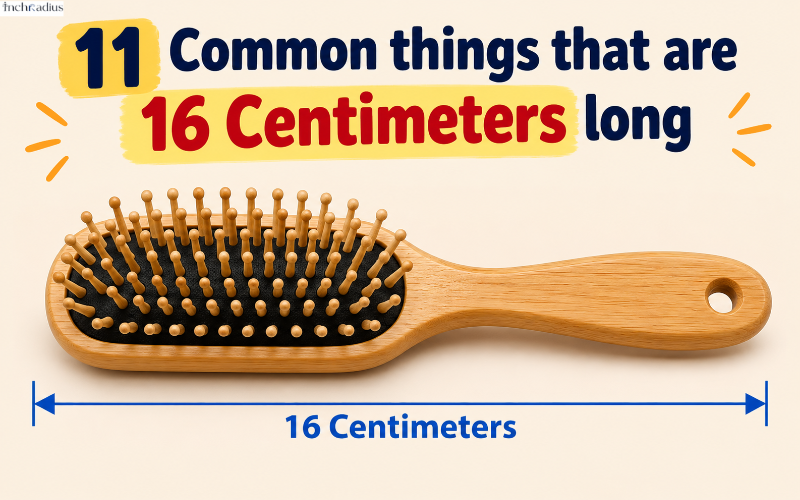
16 centimetres is equal to 6.3 inches or 160 millimetres. It is a relatively short length, about the size of a small kitchen tool, a compact notebook, or a large smartphone measured from top to bottom. Although these objects vary in their dimensions, they can help you picture what 16 cm looks like in everyday life.
This measurement comes in handy when checking the size of a parcel, choosing a small household item, measuring a craft project, or comparing objects without a tape measure. The trick is to use familiar items as visual references rather than assume every example measures exactly 16 cm. Here are 11 distinctive comparisons that make this length easier to imagine.
How Long Is 16 Centimeters?
16 centimetres is exactly 160 millimetres, which is approximately 6.30 inches. In metres, it is 0.16 m. These conversions describe the same length, just expressed in different units.
A length of 16 cm is short enough to fit comfortably in one hand for many adults, yet long enough to be useful for small tools, stationery, kitchen accessories, and personal items. Imagine a compact object stretching across the palm of your hand and towards your fingertips. That gives you a rough sense of its size, although hand dimensions differ from person to person.
You might encounter this measurement when checking the length of a craft tool, comparing a small storage accessory, or deciding whether an item will fit inside a drawer. A centimetre ruler provides the most reliable check. Everyday objects can help you estimate the length, but their sizes depend on the design and manufacturer.
Related Post: How Long Is 15 Centimeters?
How Big Is 16 Centimeters?
16 cm is a little over six inches, so it is shorter than a standard 30 cm school ruler and roughly half its length. Picture the first 16 centimetres marked along a ruler, starting at zero. The distance between those marks is the measurement you are trying to visualise.
A small silicone spatula, a compact craft tool, or a short-handled kitchen accessory may come close to this length. A smartphone can also provide a useful reference, although many modern phones are shorter or longer than 16 cm. The exact dimensions depend on the model.
Paper can help too. The shorter side of an A5 sheet measures 14.8 cm, which is just 1.2 cm less than your target. This makes A5 paper a particularly useful comparison when you need a quick estimate. Keep in mind that these examples are visual guides, not guaranteed 16 cm objects.
11 Common Things That Are 16 Centimeters Long
The following items come from different areas of everyday life, including cooking, stationery, personal accessories, crafts, and household storage. Their dimensions can vary, so the table identifies the target length rather than claiming every item is manufactured to exactly 16 cm.
| Everyday Item | Actual Size |
| Small silicone spatula | 16 centimetres |
| Compact pencil case | 16 centimetres |
| Short crochet hook case | 16 centimetres |
| Travel sewing scissors | 16 centimetres |
| Mini wooden rolling pin | 16 centimetres |
| Small plant mister | 16 centimetres |
| Handheld lint brush | 16 centimetres |
| Reusable metal straw | 16 centimetres |
| Compact shoehorn | 16 centimetres |
| Small paintbrush | 16 centimetres |
| Miniature kitchen tongs | 16 centimetres |
Small Silicone Spatula

A small silicone spatula is a useful kitchen reference for picturing 16 cm. Compact spatulas are available in different lengths, and some are close to this measurement when measured from the end of the handle to the tip of the flexible head.
The slim shape makes it easy to compare with a centimetre ruler. Lay the spatula on a flat surface and measure along its longest side. If it reaches the 16 cm mark, you have a close match.
This type of utensil is handy for scraping yoghurt from a small bowl, mixing ingredients in a cup, or spreading icing over a small cake. Choose a compact model rather than a full-sized baking spatula, which may be considerably longer. The utensil offers a practical visual reference because its length is easy to see at a glance.
Compact Pencil Case
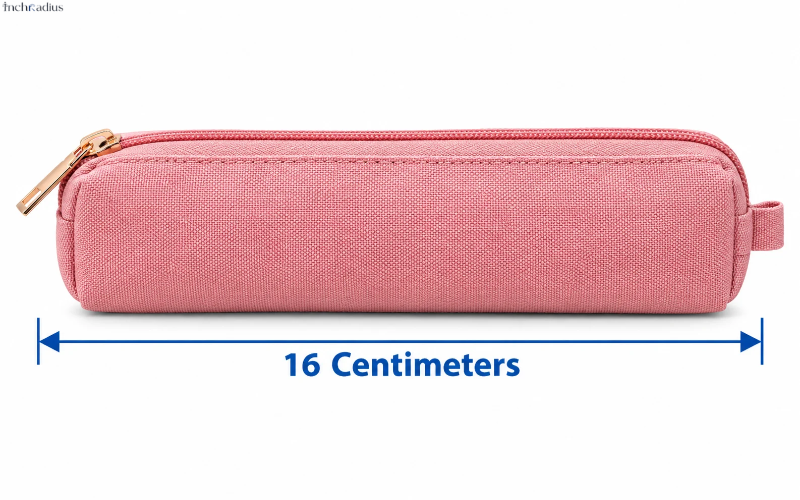
A compact pencil case is another way to imagine a length of 16 cm. Small stationery pouches are designed to hold a few pens, pencils, an eraser, and other small supplies. Some measure around 16 cm long, although wider school cases and larger zip pouches can be much longer.
To use one as a comparison, place it beside a ruler and check the distance from one end to the other. Measure the case itself rather than its zip pull, which can add a little extra length.
A pouch close to 16 cm can fit inside a handbag, small backpack, or desk drawer without taking up much room. It is especially useful for visualising this measurement because its straight edges make the length easy to judge. If you already own a compact case, it may be a convenient reference when estimating the size of another small item.
Short Crochet Hook Case

A short crochet hook case offers a less obvious but useful comparison. These cases store crochet hooks, stitch markers, and other small knitting supplies. Some compact designs are close to 16 cm long, while larger organisers can hold several tools and measure considerably more.
The case’s closed length provides the best point of comparison. Measure it from the outermost edge at one end to the opposite edge, keeping the case flat. Soft fabric cases may bend slightly, so straighten the material before checking its dimensions.
If you enjoy crochet, a case of this size can help you picture how much space 16 cm occupies in a craft bag or drawer. It is also a useful reminder that storage items do not need to be bulky to hold small tools. However, check the manufacturer’s dimensions before using a particular case as an accurate measuring reference.
Travel Sewing Scissors
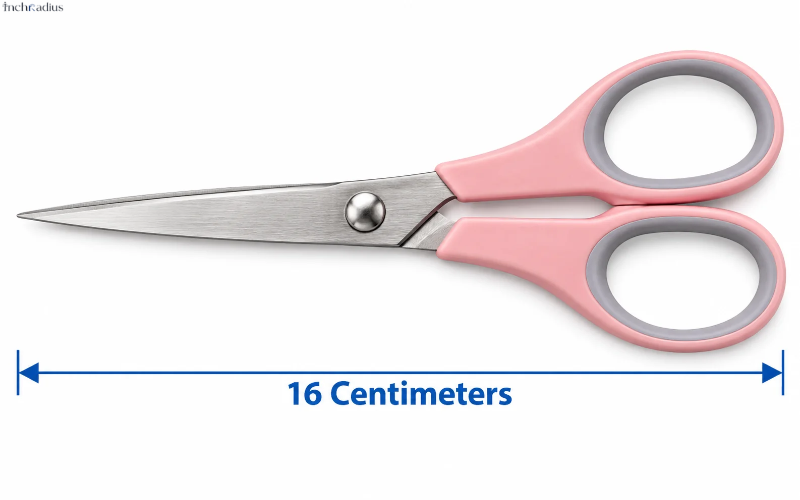
Travel sewing scissors are a distinctive example because they are longer than tiny embroidery snips but smaller than many full-sized household scissors. Some compact scissors measure close to 16 cm from the tips of the blades to the end of the handles. Others are much shorter, so the design matters.
To compare a pair with this measurement, place the closed scissors on a flat surface. Measure along the longest straight line from the blade tips to the furthest point on the handles. Do not measure only the metal blades, as the handles form part of the overall length.
Scissors of this kind can be useful for trimming loose threads, cutting fabric, and completing small sewing repairs. Their elongated shape makes them easy to compare with a ruler. If you need an exact 16 cm reference, check the stated product length rather than relying on the general label of travel scissors.
Mini Wooden Rolling Pin

A mini wooden rolling pin provides a kitchen-based comparison for 16 cm. Small rolling pins are made for modelling clay, pastry decorations, fondant, and other compact projects. Depending on the design, the total length may be around 16 cm, especially for short models intended for detailed work.
Some rolling pins have handles at both ends, while others are simple wooden cylinders. Measure the entire tool from its outermost end to the other, including any handles. The barrel alone may be noticeably shorter than the full item.
A compact rolling pin is easy to picture beside a ruler because it has a clear, straight shape. It can help you estimate the length of a small craft tool or kitchen accessory without imagining an abstract line. If you are buying one for a particular task, check both its overall length and the width of the rolling barrel, as these measurements serve different purposes.
Small Plant Mister
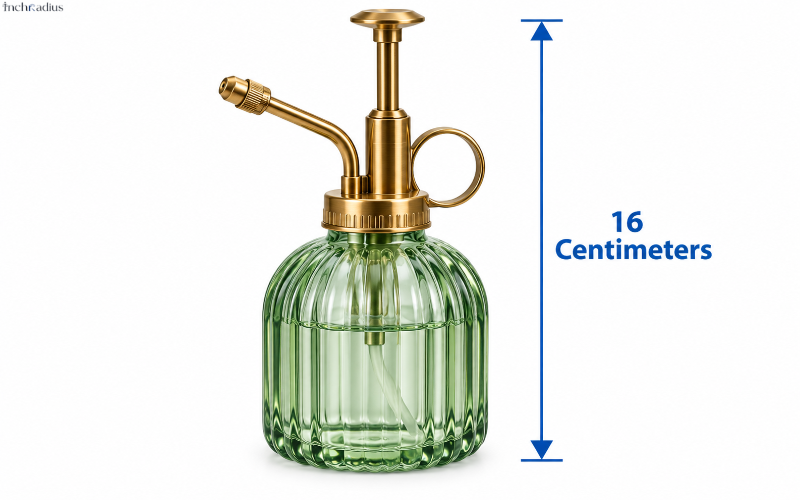
A small plant mister is a useful household comparison, particularly for people who keep indoor plants. Compact spray bottles are used to mist leaves, dampen small areas of soil, or apply water during propagation. Some short models measure approximately 16 cm in height, including the spray head, but bottle sizes vary considerably.
To check its size, stand the bottle upright on a level surface and measure from the bottom of the base to the highest point of the nozzle. Avoid measuring only the bottle body because the spray mechanism may add several centimetres.
A mister close to 16 cm can sit comfortably on a windowsill or fit inside a small gardening caddy. Its upright shape gives you a different way to visualise the measurement compared with long, flat objects. Remember that the height of a bottle is not the same as its width or depth, so use the dimension that matches the object you want to compare.
Handheld Lint Brush
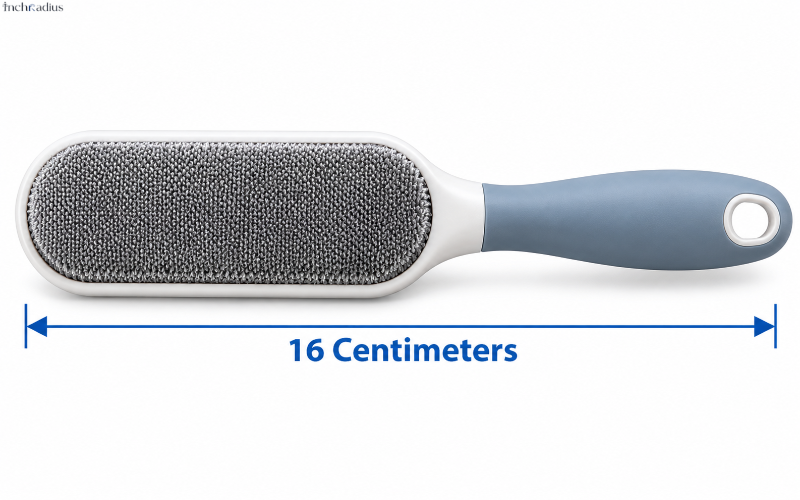
A handheld lint brush is designed to remove dust, fluff, and pet hair from clothing or fabric-covered surfaces. Small models can be around 16 cm long, making them a reasonable reference for this measurement. Larger brushes with long handles may exceed that length.
The easiest way to compare a lint brush is to measure it from the tip of the handle to the farthest edge of the brush head. Some designs have a curved handle, so follow the overall length rather than tracing the curve of the grip.
A compact lint brush can fit in a desk drawer, travel bag, or hallway cupboard. Its length is particularly helpful when estimating whether another small cleaning tool will fit into the same storage space. Keep in mind that the brush head may be wide even when the overall length is short. Length, width, and thickness should be checked separately if you are choosing a storage container.
Reusable Metal Straw
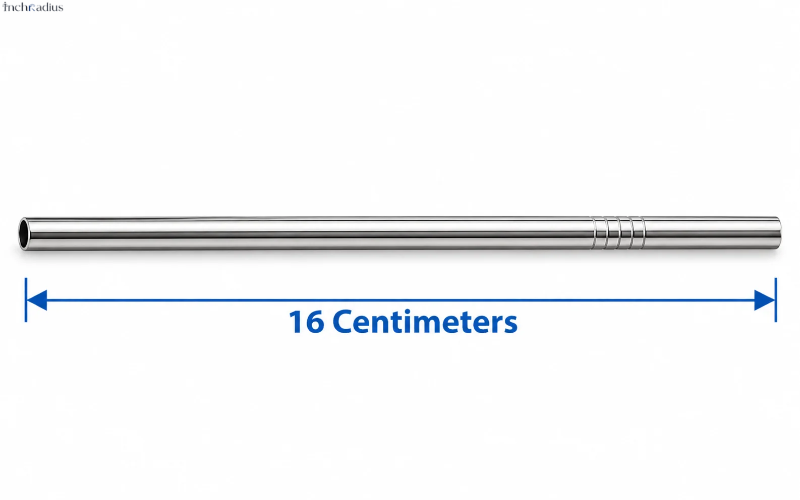
A reusable metal straw is a slim object that helps illustrate the length of 16 cm. Some short stainless-steel straws measure close to this size, while straws made for tall tumblers can be considerably longer. Bent straws also have a different shape, so their total length may not match the straight-line distance from end to end.
For the clearest comparison, choose a straight straw and lay it flat beside a ruler. Measure from one open end to the other. The thin profile makes it easy to see how a narrow object can still have a length of several centimetres.
A straw near 16 cm may suit smaller cups, depending on the cup’s height and the user’s preference. It can also be a useful reference for small rods, craft sticks, and other narrow items. Do not assume all reusable straws have the same length; check the product measurements before buying one for a particular cup.
Compact Shoehorn
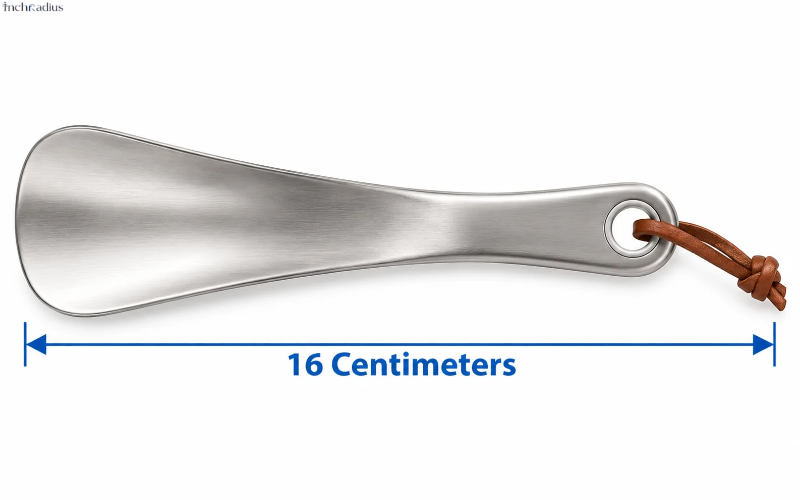
A compact shoehorn can help you picture 16 cm because it has a long, narrow shape. Travel shoehorns are often made to fit inside luggage, a handbag, or a shoe-care kit. Some small models are close to 16 cm from end to end, although other versions are shorter or longer.
Measure the full shoehorn, including its curved end. The curve is part of the object’s shape, but the length is normally recorded along its longest direction rather than following the curved surface.
A shoehorn around this size can help someone put on shoes without crushing the heel, particularly with snug-fitting footwear. It also offers a practical comparison for narrow household accessories. If you are checking whether one will fit into a travel pouch, compare its overall length with the pouch’s internal dimensions rather than its external size alone.
Small Paintbrush

A small paintbrush is a familiar tool for drawing, miniature painting, and detailed craft work. Short-handled brushes can measure around 16 cm from the tip of the bristles to the end of the handle. However, many art brushes are shorter, and long-handled brushes may be much longer.
To check a brush, lay it straight and measure from the end of the bristles to the furthest point of the handle. Avoid pressing down on the bristles, as this can bend them and make the measurement less reliable.
A brush close to 16 cm is easy to compare with a ruler and can give you a quick sense of the length of a small hand tool. Its narrow shape also makes it useful for thinking about the space needed in a pencil roll or craft organiser. If you are purchasing brushes for a specific project, look at both handle length and brush-head size, as they affect control in different ways.
Miniature Kitchen Tongs
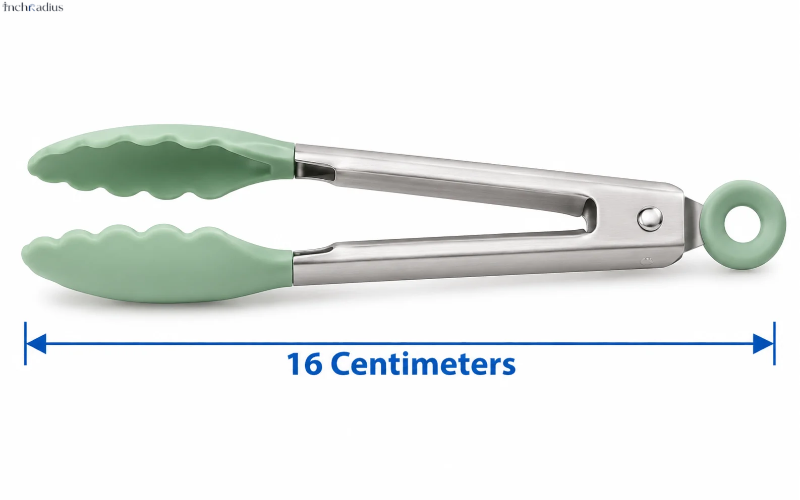
Miniature kitchen tongs offer another way to visualise 16 cm. Small serving or food-preparation tongs are useful for picking up olives, turning small ingredients, or serving snacks. Some compact models are close to this length, while standard cooking tongs are often much longer.
With the tongs closed, measure from the end of the handles to the furthest point of the gripping tips. Check the longest direction and make sure the tips are aligned. If the tongs have a locking ring or loop, include it only if it extends beyond the normal ends.
A pair measuring roughly 16 cm can fit inside a small kitchen drawer or picnic set. The two arms also make the tool look longer than a similarly sized solid object, which helps show how shape affects visual judgement. Use the tongs as an approximate reference until you confirm their dimensions with a ruler or the manufacturer’s specifications.
Related Post: How Long Is 14 Centimeters?
Measurement Without a Ruler
You can estimate 16 cm without carrying a ruler. These methods are useful for quick checks, although they will not provide the same accuracy as a measuring tool.
Use the Short Side of A5 Paper
The shorter edge of an A5 sheet measures 14.8 cm. That is 1.2 cm shorter than 16 cm. If you place the paper beside an object, imagine adding a little over one centimetre to its short edge. This gives you a practical reference for the target length.
Estimate with Your Hand
Open your hand and look at the distance across your palm or from the base of your palm towards your fingertips. Depending on your hand size, one of these distances may be near 16 cm. Hand spans vary, so use this method only as a rough estimate. You can improve it by measuring your hand once with a ruler and remembering the result.
Use a Smartphone
Some smartphones measure close to 16 cm in height, although many are shorter or longer. Check your phone’s published dimensions or measure it when you have access to a ruler. Once you know its height, you can use it as a convenient reference for estimating other objects.
Related Post: How Long Is 13 Centimeters?
FAQs
1. How long is 16 cm in inches?
16 centimetres is approximately 6.30 inches. For everyday use, you can round this to about 6.3 inches. The exact conversion is based on 1 inch equalling 2.54 cm, so the centimetre and inch values describe the same length.
2. How many millimetres are in 16 cm?
There are exactly 160 millimetres in 16 centimetres. Each centimetre contains 10 millimetres, so multiplying 16 by 10 gives 160 mm. Millimetres are particularly useful when measuring small craft pieces, stationery, and other objects that require a little more precision.
3. Is 16 cm considered long or short?
16 cm is generally a short length for household objects, although it can be substantial for small accessories and tools. It is slightly longer than the shorter edge of A5 paper and a little over six inches. Whether it seems long depends on the object you are measuring and how it will be used.
4. What household object is closest to 16 cm?
A compact pencil case, small silicone spatula, or short shoehorn may measure close to 16 cm. The actual size depends on the particular product. If you need a dependable comparison, check its dimensions or measure it directly instead of assuming all objects of the same type have equal lengths.
5. Is 16 cm the same as 0.16 metres?
Yes. 16 centimetres equals 0.16 metres because one metre contains 100 centimetres. Dividing 16 by 100 gives 0.16 m. This conversion is useful when working with measurements in metres, especially for craft plans, small projects, and product specifications.
6. How can I measure 16 cm without a ruler?
The shorter side of A5 paper measures 14.8 cm, making it a useful starting point. You can estimate the remaining 1.2 cm by comparing it with a familiar object or a measured finger width. The result will only be approximate unless you use a properly marked measuring tool.
7. Is 16 cm bigger than a smartphone?
It depends on the smartphone. Some phones are shorter than 16 cm, while others are taller. Compare the phone’s published height with 16 cm to find out. Remember to measure the phone’s body rather than including a loose case or accessories if you want a fair comparison.
8. What is 16 cm useful for measuring?
16 cm can be useful when checking small craft pieces, stationery, kitchen tools, compact accessories, and the available space inside a drawer or pouch. It is also handy for cutting materials to a particular length. For tasks requiring an exact fit, use a ruler or tape measure rather than a visual estimate.
Conclusion
16 centimetres is approximately 6.3 inches, making it easy to picture as a short everyday length. The shorter edge of an A5 sheet provides a particularly useful reference because it measures 14.8 cm, just 1.2 cm less than your target. A compact pencil case, small silicone spatula, or short shoehorn can also help you visualise the distance, provided you check the item’s actual dimensions.
For a quick estimate, compare the object with something familiar and allow for small differences in size. If accuracy matters for a craft project, a purchase, or a fitting, use a centimetre ruler to confirm the measurement. This simple approach helps you judge 16 cm more confidently without relying entirely on guesswork.