
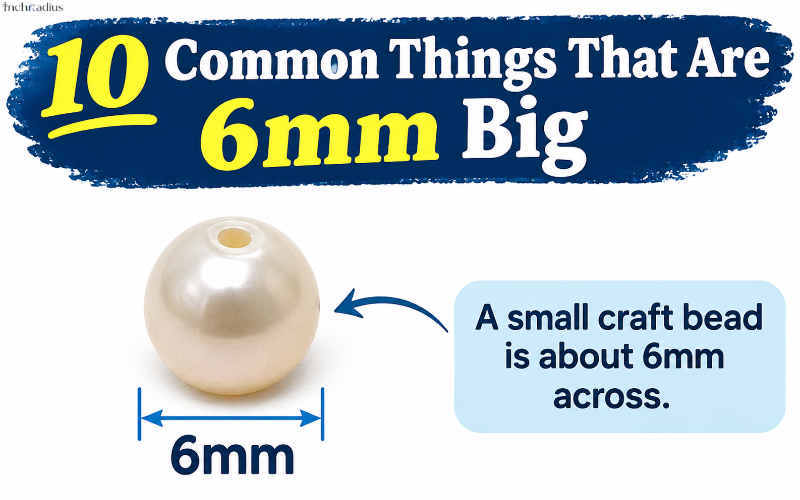
6 millimetres (mm) is a very small measurement, but it is easier to picture when compared with familiar objects. 6mm equals 0.6 centimetres, 0.236 inches, or just under a quarter of an inch. It is roughly the width of a small button or a tiny craft bead. You might come across this measurement when looking at screws, drill bits, jewellery, sewing supplies or small household parts.
Although 6mm is too short to cover much space, it can make a noticeable difference when choosing the correct size for a project. Comparing it with everyday objects helps you picture its actual size without needing to carry a ruler everywhere.
How Long Is 6 Millimetres?
6 millimetres is a short distance measuring exactly 0.6 centimetres. In inches, it is approximately 0.236 inches, which is slightly less than one-quarter of an inch. This makes it a useful measurement to remember when dealing with small parts and objects.
On a metric ruler, 6mm is six small divisions between the zero and one-centimetre marks. Each millimetre represents one-tenth of a centimetre, so the measurement does not even reach the full 1cm mark.
You may find 6mm used as the diameter of a small bead, the width of a drill bit or the threaded diameter of an M6 bolt. These examples help show that the same measurement can describe different features of an object.
It is worth separating length, width, thickness and diameter. A 6mm bead usually measures 6mm across its widest point, while a 6mm drill bit has a cutting diameter of 6mm. The measurement describes a particular dimension, not necessarily the entire object.
Related Post: 11 Common Things That Are 12 Centimeters Long
How Big Is 6mm?
The easiest way to picture 6mm is to think of something smaller than the width of your little fingernail. It is also noticeably shorter than the width of a standard pencil eraser when viewed from the front.
Imagine the centimetre markings on a ruler. The distance between the zero and one-centimetre marks is 10mm. A 6mm measurement covers a little more than half of that distance. This is a useful visual trick because most rulers show individual millimetre markings.
A small round craft bead or a 6mm jewellery pearl can also help you imagine the size. These objects are close to the target measurement across their diameter.
Another comparison is a small screw or drill bit designed for 6mm fittings. Looking at its width gives you a practical idea of how much space 6mm occupies. Remember that these comparisons depend on the object’s actual specifications. Not every bead, button or screw is made to the same size.
10 Common Things That Are 6mm Big
Small measurements can be difficult to imagine because everyday objects are often much larger. The following ten examples come from different areas, including jewellery, sewing, DIY, crafts and household repairs. Some have a specified 6mm dimension, while others are available in approximate sizes close to it.
| Everyday Item | Actual Size |
| 6mm round craft bead | 6mm |
| Small shirt button | Approximately 6mm |
| 6mm jewellery pearl | 6mm |
| M6 bolt thread | 6mm |
| 6mm drill bit | 6mm |
| 6mm wooden dowel | 6mm |
| Small craft rhinestone | Approximately 6mm |
| 6mm jewellery eyelet | 6mm |
| Small seed bead | Approximately 6mm |
| 6mm rubber O-ring cross-section | 6mm |
1. 6mm Round Craft Bead
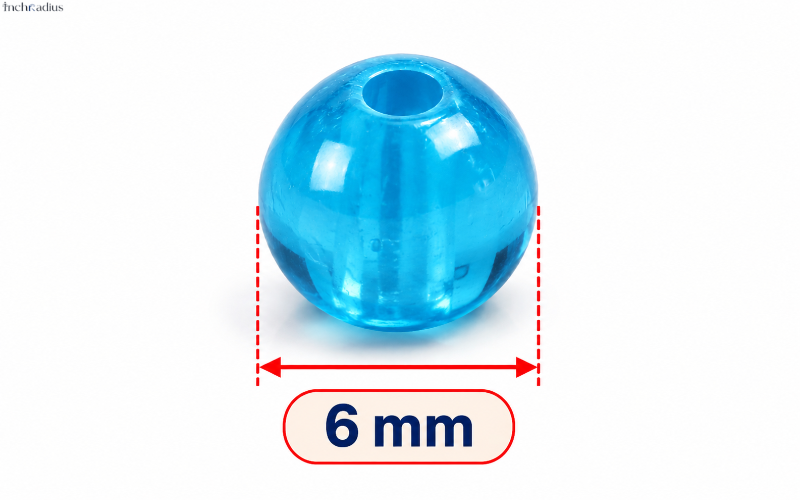
A 6mm round craft bead is one of the simplest objects to use when picturing this measurement. These small beads are commonly used in jewellery making, bracelet designs, necklaces and decorative crafts.
The stated 6mm measurement refers to the bead’s diameter, which is the distance across its widest point. When you place one between your fingers, you can see how little space it takes up.
Craft beads are sold in different sizes, including 4mm, 6mm and 8mm. Comparing these sizes side by side makes the difference easier to recognise. A 6mm bead sits between the smaller 4mm version and the larger 8mm one.
You can use a bead with a labelled 6mm size as a physical reference. It is especially useful for comparing other small round objects, although the hole through the centre does not count towards its outside diameter.
Related Post: 10 Common Things That Are 13 Centimeters Long
2. Small Shirt Button
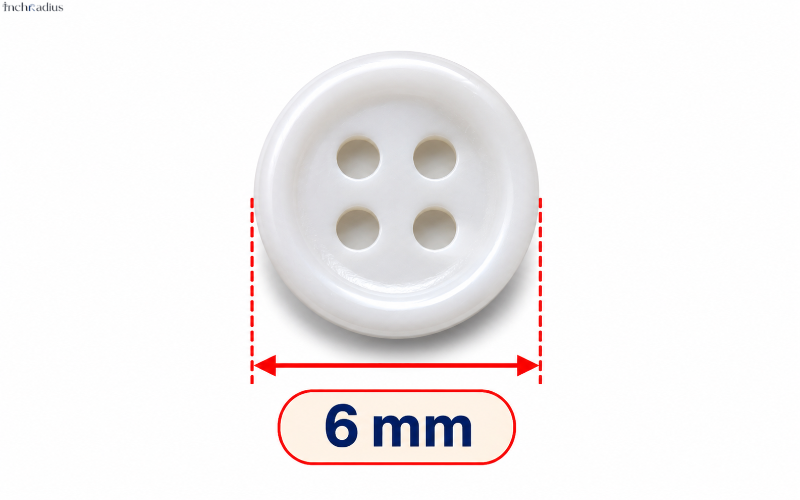
A small shirt button can be close to 6mm across, particularly when used on delicate clothing or decorative garments. Buttons are made in many sizes, so this is an approximate comparison rather than a fixed standard.
A button measuring 6mm from one edge to the opposite edge is a little smaller than a quarter of an inch. Its small circular shape makes it easy to compare with the markings on a ruler.
You may find tiny buttons on children’s clothing, dolls’ clothes, miniature outfits and some decorative sewing projects. Larger buttons are more common on coats, jackets and everyday shirts.
If you have a collection of sewing buttons at home, look for one with a diameter close to 6mm. Placing it beside a ruler will help you see how much space this measurement covers.
3. Jewellery Pearl
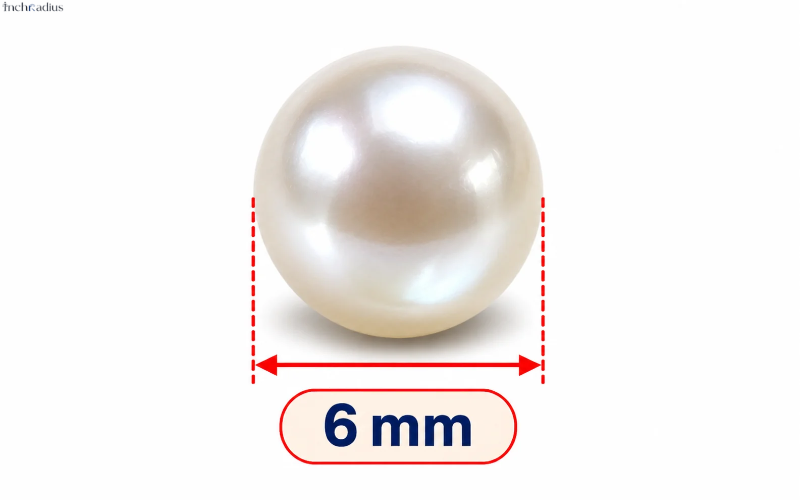
A 6mm jewellery pearl offers another useful way to picture this small measurement. Pearls are used in necklaces, bracelets, earrings and other decorative accessories. They are available in several diameters, with 6mm being a popular size for smaller jewellery designs.
The diameter tells you how far the pearl measures across its widest point. A properly sized 6mm pearl should measure exactly 6mm according to its stated specification, although natural pearls may have slight differences in shape.
A pearl of this size is noticeable when placed on a flat surface, but it is still small enough to fit comfortably between two fingertips.
You can compare it with a larger 8mm pearl to see the difference. The 6mm version looks more delicate and takes up less room in a jewellery design. This makes it a helpful reference for anyone working with small decorative objects.
Related Post: 9 Common Things That Are 14 Centimeters Long
4. M6 Bolt Thread
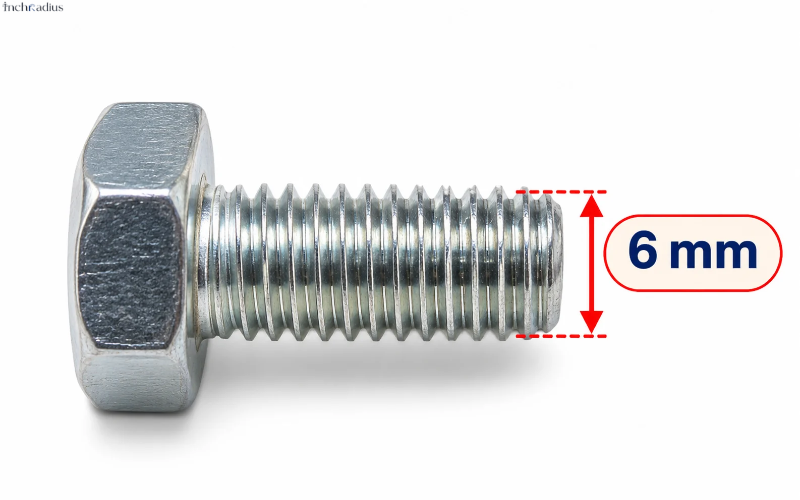
An M6 bolt is a familiar DIY and engineering component. The letter M indicates a metric thread, while the number 6 refers to its nominal outside thread diameter of 6mm.
This means the threaded section measures approximately 6mm across its widest points. The bolt itself can be much longer, with different lengths available for different jobs.
M6 bolts are used in furniture assembly, machinery, metal brackets and various repair projects. You may find them in flat-pack furniture or equipment that needs a secure mechanical connection.
The threaded section provides a practical example of 6mm because its diameter is clearly defined by the metric specification. It is important not to confuse the thread diameter with the bolt head size. The head is usually wider than 6mm.
If you want to picture the measurement, look at the threaded section from the end. Its width gives you a clear example of what 6mm looks like.
5. Drill Bit
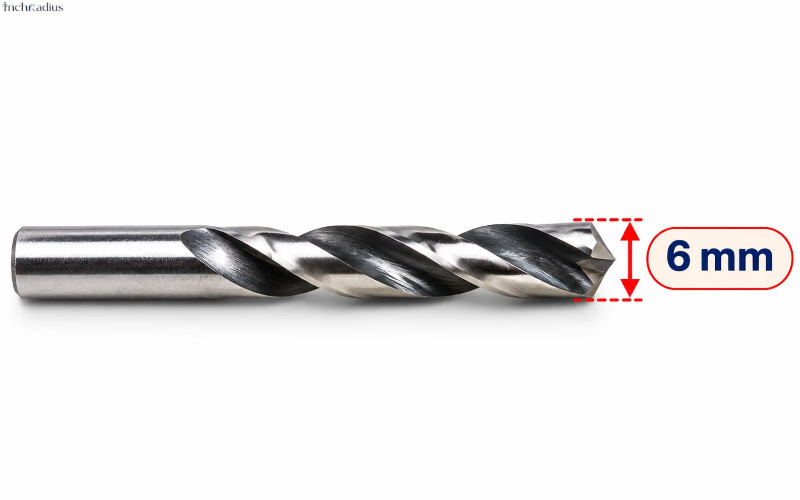
A 6mm drill bit is a useful comparison because its cutting diameter is designed around an exact measurement. It is commonly used for drilling holes in suitable wood, plastic and metal, depending on the type of bit.
The 6mm measurement refers to the width of the cutting section, not the total length of the drill bit. A drill bit may be several centimetres long while its diameter remains just 6mm.
You can picture the measurement by looking directly at the cutting end. The distance from one outer cutting edge to the opposite edge represents its diameter.
Drill bits are often arranged in sets with different sizes. A 5mm bit will look slightly thinner, while a 7mm bit will look wider. Comparing these sizes is a practical way to recognise a 6mm diameter.
This example is particularly helpful for anyone who works with tools, furniture repairs or home improvement projects.
6. Wooden Dowel
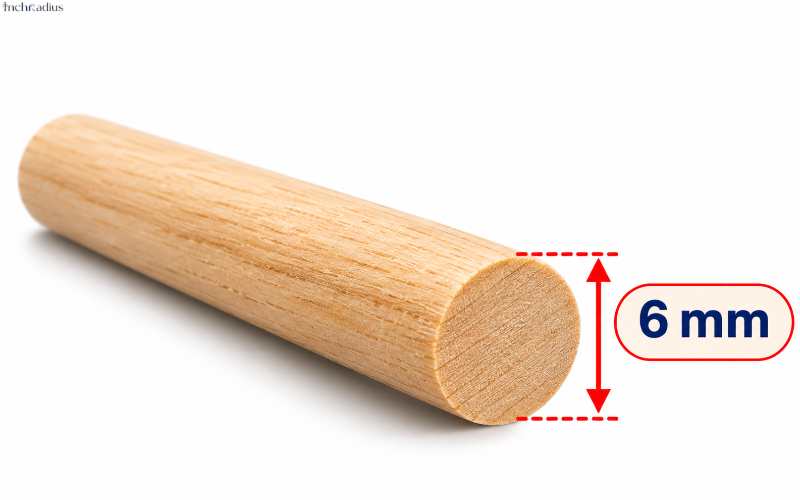
A wooden dowel is a round wooden rod used to join pieces of furniture and create simple wooden structures. A 6mm dowel has a diameter of exactly 6mm according to its specified size.
These dowels are available in different lengths, but their thickness remains the same. They are commonly used in cabinet making, shelving, wooden toys and furniture assembly.
A 6mm dowel is small enough to fit into a narrow drilled hole. It provides a useful example because you can see its circular cross-section and compare its width with a ruler.
For instance, if you cut a short piece from a 6mm dowel, its end will show a circle measuring 6mm across. This is a straightforward way to understand the difference between diameter and length.
Wooden dowels also come in larger sizes, such as 8mm and 10mm, which makes them useful for comparing small measurements.
Related Post: 10 Common Things That Are 15 Centimeters Long
7. Small Craft Rhinestone
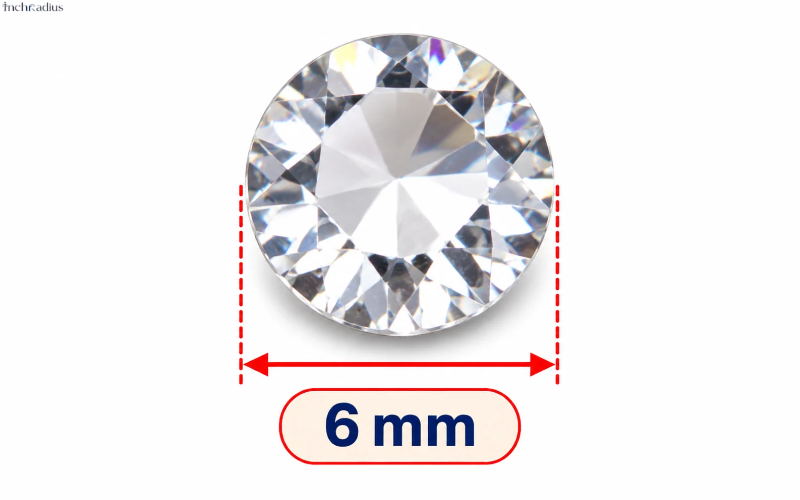
A small craft rhinestone can measure around 6mm across. These decorative stones are often used to add sparkle to clothing, greeting cards, phone accessories, shoes and handmade jewellery.
Many rhinestones are sold according to their diameter. A 6mm stone is large enough to be visible on a small craft project without taking up too much space.
The measurement usually refers to the widest distance across the front of the stone. Its thickness will be different and depends on the design. Some rhinestones have flat backs, while others have pointed or shaped backs.
You can use a 6mm rhinestone as a visual comparison when working with other small decorative pieces. Place it beside a centimetre ruler and you will see that it covers just over half the distance between two centimetre marks.
Rhinestones are available in several sizes, so check the packaging before using one as a precise measurement reference.
8. Jewellery Eyelet
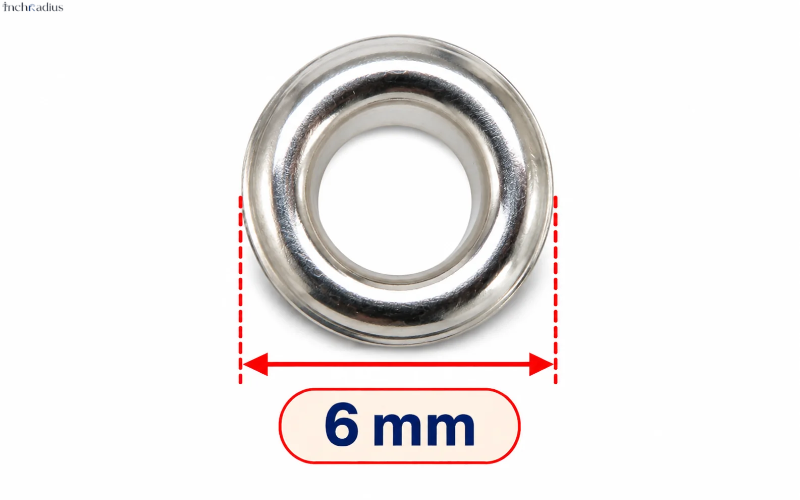
A small jewellery eyelet is a metal ring used to reinforce a hole or provide a neat opening in certain craft materials. Eyelets are used in leatherwork, handmade accessories, fabric projects and decorative designs.
Some jewellery and craft eyelets are sold with a 6mm outside diameter. This gives you a clear example of the measurement when viewed from the front.
The opening in the middle is smaller than the full outside diameter. This distinction matters because the 6mm measurement may describe the outer width rather than the size of the hole.
You may encounter these small metal fittings when making bracelets, attaching decorative pieces or working with thin materials. Their circular shape makes them easy to compare with a small bead or button.
When choosing an eyelet, check whether the listed measurement refers to the outside diameter, inside diameter or another dimension. Different products use different sizing descriptions.
Related Post: 9 Common Things That Are 17 Centimeters Long
9. Small Seed Bead
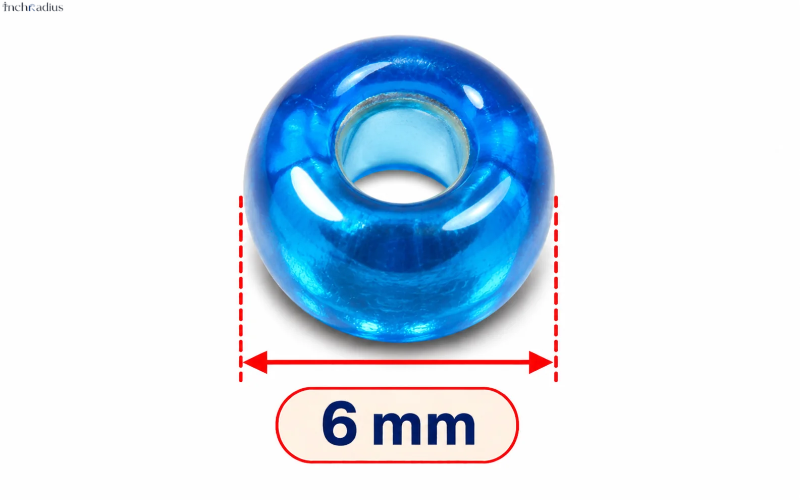
Seed beads are small decorative beads used in jewellery, embroidery and detailed craftwork. Although many traditional seed beads are much smaller than 6mm, larger round varieties are available in sizes close to this measurement.
A bead measuring approximately 6mm across can be used to picture how small the target measurement is. Its rounded shape makes it easy to hold between your fingertips and compare with other objects.
Seed beads come in different colours, materials and shapes. Glass versions are particularly popular because they are available in bright colours and can be used to create detailed patterns.
If you are using a seed bead as a comparison, measure its widest point rather than its central hole. The outside diameter is what matters when checking whether it is close to 6mm.
This example is useful for anyone interested in handmade jewellery or small decorative designs.
10. Rubber O-Ring Cross-Section
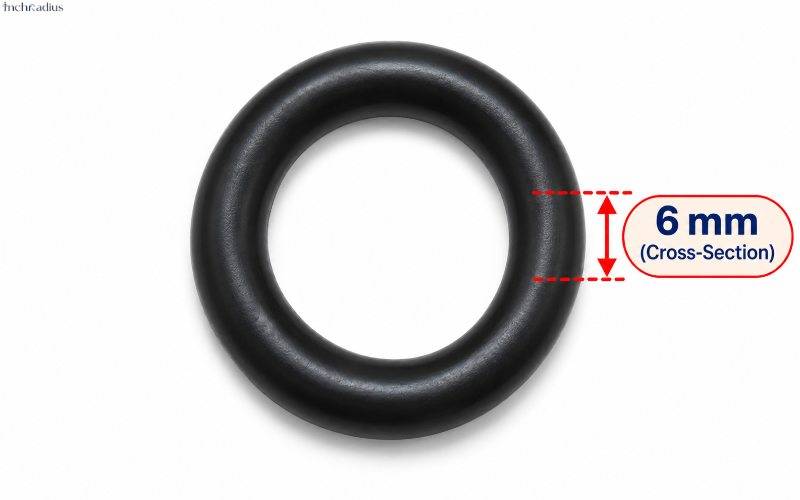
A rubber O-ring is a small circular seal used to prevent liquids or gases from escaping between connected parts. You can find these seals in plumbing fittings, pumps, machinery and various household appliances.
Some O-rings have a cross-section thickness of 6mm. This means the rubber material itself measures 6mm thick when viewed across the circular section.
It is important to distinguish this from the overall diameter of the O-ring. The complete ring can be much wider, while the rubber thickness remains 6mm.
This example is useful because it shows how the same measurement can describe thickness rather than the full width of an object. It also demonstrates why checking product dimensions carefully matters.
If you have an O-ring with a specified 6mm cross-section, you can compare the thickness of the rubber with a ruler to picture the measurement.
Related Post: 11 Common Things That Are 19 Centimeters Long
How to Measure 6mm Without a Ruler
You do not always need a measuring tool to estimate a small distance. A few everyday items can help you picture 6mm, although a proper metric ruler or calliper is better when accuracy matters.
1. Use the Centimetre Markings on a Ruler
Even if you do not have a ruler marked with large numbers for every millimetre, a standard metric ruler will usually show small divisions between centimetre marks.
The distance between two centimetre marks is 10mm. Count six of the small divisions starting from zero, and you will reach 6mm.
This is the most reliable simple method because it uses the actual metric scale rather than an approximate comparison.
2. Compare It with Your Fingernail
Look at the width of your little fingernail. For many adults, the nail is considerably wider than 6mm, although the exact size varies from person to person.
Imagine dividing the nail’s width into smaller sections. A 6mm distance may cover roughly part of its width rather than the whole nail.
This method is only useful for getting a general impression. Fingernails are not standard measuring tools, so avoid using them when fitting parts or cutting materials.
3. Use a 6mm Craft Bead
If you have a labelled 6mm craft bead, use it as a reference object. Place it on a flat surface and compare its diameter with other small items.
You can also put it beside a centimetre ruler to see how it relates to the 10mm distance between centimetre marks.
This works particularly well because the bead has a clearly defined round shape. Just make sure the bead is actually labelled as 6mm rather than assuming all small beads have the same diameter.
Related Post:9 Common Things That Are 20 Centimeters Long
FAQs
1. Is 6mm bigger or smaller than half an inch?
6mm is smaller than half an inch. Half an inch equals 12.7mm, which is more than twice the size of 6mm. A 6mm measurement is approximately 0.236 inches, making it slightly less than one-quarter of an inch.
2. Is 6mm the same as 0.6cm?
Yes. 6mm is exactly 0.6cm. There are 10 millimetres in one centimetre, so dividing 6 by 10 gives 0.6. This conversion is useful when comparing small measurements on metric rulers or product descriptions.
3. How many inches are there in 6mm?
6mm is approximately 0.236 inches. It is slightly smaller than ¼ inch, which equals 6.35mm. The difference is only 0.35mm, but it can matter when choosing parts that need to fit accurately.
4. Is 6mm considered a small measurement?
Yes, 6mm is considered a small measurement. It is less than one centimetre and is commonly used to describe the diameter, thickness or width of small components. Examples include craft beads, drill bits, bolts and jewellery fittings.
5. How can I measure 6mm accurately?
Use a metric ruler with millimetre markings or a digital calliper. A ruler is suitable for checking many small objects, while a calliper can provide a more precise reading of diameter and thickness. Avoid relying on fingers or fingernails for accurate measurements.
6. Is 6mm close to a quarter of an inch?
Yes. One-quarter of an inch equals 6.35mm, so 6mm is only 0.35mm smaller. The difference is small enough that the two measurements may look almost identical to the naked eye, but they are not exactly equal.
7. What common objects have a diameter of 6mm?
A 6mm craft bead, jewellery pearl, specified rhinestone and M6 bolt thread are examples of objects or components with this diameter. Small buttons and decorative beads may also be close to 6mm, depending on their design and manufacturer.
8. How many millimetres are in one centimetre?
There are exactly 10 millimetres in one centimetre. This means 6mm covers six-tenths of a centimetre. If you look at a metric ruler, it is six small divisions from the zero mark towards the 1cm mark.
- Discover more everyday objects and their measurements in Feet
- How Long Is 90 Feet? 10 Common Things That Are 90 Feet Long
- How Long Is 80 Feet? 9 Common Things That Are 80 Feet Long
- How Long Is 70 Feet? 10 Common Things That Are 70 Feet Long
How Long Is 60 Feet? 11 Common Things That Are 60 Feet Long
How Long Is 50 Feet? 12 Common Things That Are 50 Feet Long
Conclusion
6mm is a small measurement, equal to 0.6cm or approximately 0.236 inches. A 6mm craft bead, jewellery pearl or drill bit provides a useful way to picture its size. You can also remember that it covers six of the ten small divisions between two centimetre marks on a metric ruler.
Keep in mind that some everyday comparisons are approximate, while specified items such as an M6 bolt thread or a 6mm drill bit have a defined measurement. For everyday visualising, a small bead is an easy reference. For DIY projects, jewellery making or repairs, always use a proper measuring tool to check the exact size.
