
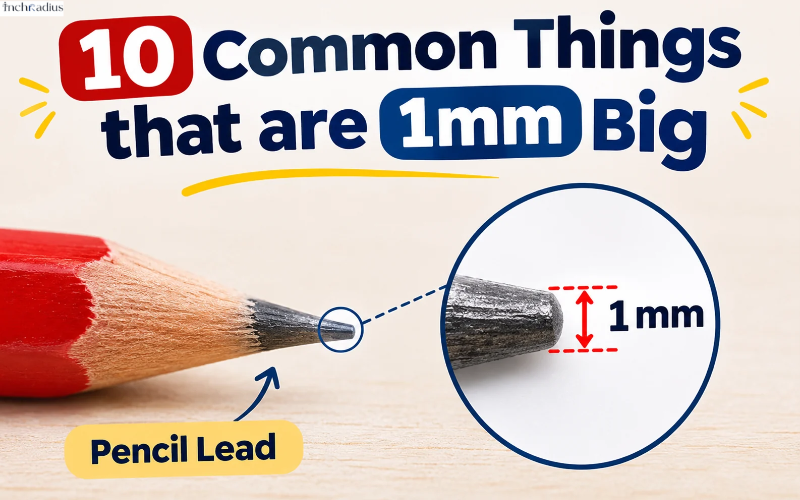
1 millimetre (1mm) is a very small measurement. It is equal to 0.1 centimetres, 0.039 inches, or 1,000 micrometres. You might struggle to picture it because it is much smaller than the width of your little finger or a grain of rice. Yet, this tiny distance appears in many everyday objects, from thin wires and pencil leads to small craft materials. Looking at familiar items can make the measurement easier to imagine without reaching for a ruler.
Some objects are almost exactly 1mm thick or wide, while others provide a close visual comparison. Here are 10 interesting examples that help show just how big 1mm really is.
How Long Is 1 Millimetre?
One millimetre is one-thousandth of a metre. It is also one-tenth of a centimetre. Although the measurement is tiny, it is useful for describing the thickness, width and diameter of small objects.
Here are the exact conversions:
- 1 millimetre = 0.1 centimetres
- 1 millimetre = 0.03937 inches
- 1 millimetre = 1,000 micrometres
- 1 millimetre = 0.001 metres
For everyday use, 1mm is slightly less than one twenty-fifth of an inch. It is much thinner than a standard pencil and considerably smaller than most household items.
You will find this measurement in engineering, jewellery making, crafts and electronics. For example, a 1mm drill bit has a cutting diameter of 1mm. Thin wires and small mechanical parts may also be manufactured to this size.
The easiest way to think about it is as a very narrow gap or a thin line. It is small enough to be difficult to judge with your eyes alone, but it can make a noticeable difference when two parts need to fit together.
Related Post: 9 Common Things That Are 20 Centimeters Long
How Big Is 1mm?
Imagine looking at a ruler and finding the tiny lines between the centimetre markings. Each small division on a standard metric ruler usually represents 1mm. Ten of these small divisions fit between two centimetre marks.
Another way to picture it is to look at a thin piece of wire or mechanical pencil lead. Some varieties are manufactured with a diameter of exactly 1mm. These objects give you a physical reference rather than relying on a number.
A standard bank card is also a useful comparison, although it is slightly thinner at around 0.76mm. It gives you an idea of the scale without being an exact match.
Your fingernail can help you appreciate the size, too. Its thickness is generally several times greater than 1mm, depending on the person and the nail. These comparisons show that 1mm is a tiny distance, often best judged using small objects rather than your hands.
10 Common Things That Are 1mm Big
Finding something that measures exactly 1mm can be tricky because many everyday objects are slightly thinner or thicker. The following examples include manufactured items with a nominal 1mm measurement and familiar objects that come close to this size.
| Everyday Item | Actual Size |
| 1mm mechanical pencil lead | 1mm |
| 1mm drill bit | 1mm |
| Thin nylon fishing line | 1mm |
| Fine jewellery-making wire | 1mm |
| Small glass microscope slide | 1mm |
| Thin craft foam sheet | 1mm |
| Small seed bead | 1mm |
| Thin rubber gasket | 1mm |
| Fine solder wire | 1mm |
| Thin metal craft wire | 1mm |
Note: Some items are manufactured to a nominal 1mm size, while others vary by brand and design. Check the product specifications if an exact measurement matters.
Mechanical Pencil Lead
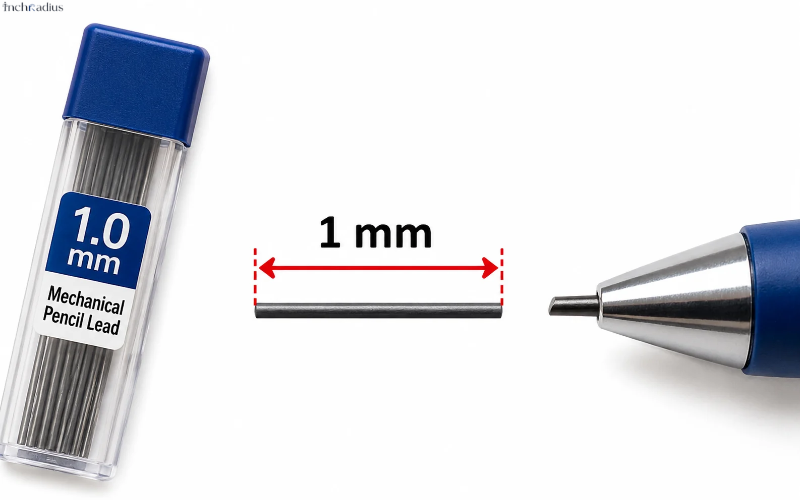
A 1mm mechanical pencil lead is one of the easiest ways to see this tiny measurement. Unlike ordinary wooden pencils, mechanical pencils use separate graphite refills that come in different diameters.
A 1mm refill has a nominal diameter of exactly 1 millimetre. It looks like a very thin dark rod, especially when placed next to a standard ruler. Its narrow shape makes it useful for understanding how small the measurement really is.
You can find mechanical pencil leads in several sizes, including 0.5mm, 0.7mm and 0.9mm. The 1mm version is slightly thicker than these common alternatives.
If you have a mechanical pencil that accepts 1mm refills, remove a piece of lead and place it beside a metric ruler. The small width gives you a direct physical example of 1mm.
Related Post: 11 Common Things That Are 19 Centimeters Long
Drill Bit
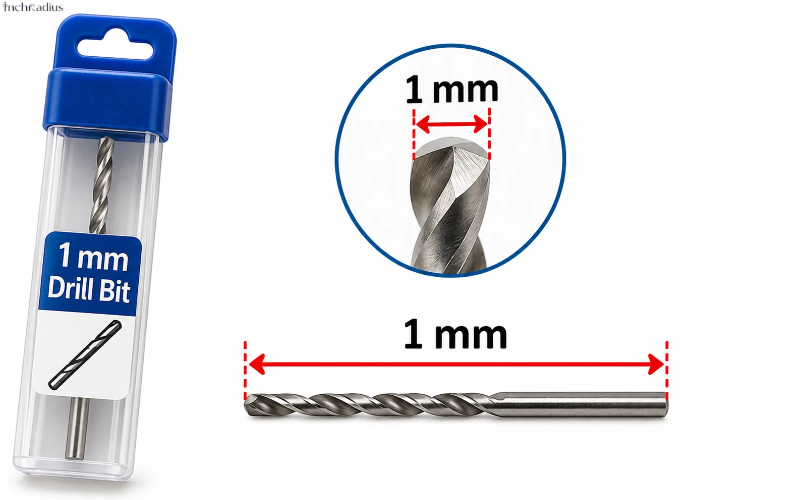
A 1mm drill bit is another clear example of this measurement. It is a small cutting tool used to make narrow holes in materials such as wood, plastic and certain metals.
The 1mm measurement refers to the diameter of the cutting section, rather than the length of the entire drill bit. This distinction matters because the tool itself can be several centimetres long while its cutting width is only 1mm.
Precision drill bits are available in many sizes, including 0.5mm, 0.8mm and 1mm. They are particularly useful for detailed craft projects, model making and delicate repair work.
To visualise the measurement, look closely at the pointed cutting end. Its narrow width represents the distance you are trying to picture. A 1mm drill bit is a practical example because its size is specified during manufacturing.
Thin Nylon Fishing Line
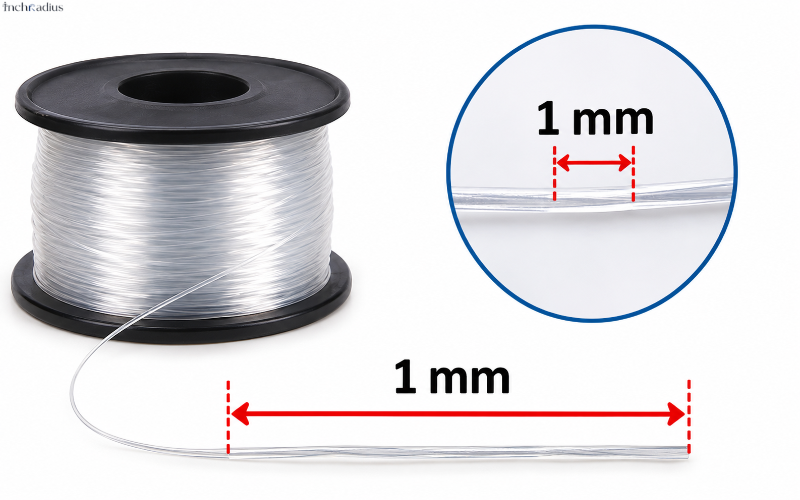
Fishing line comes in different thicknesses, depending on the type of fishing and the weight it needs to support. Some heavier monofilament lines have a diameter close to 1mm.
Nylon fishing line is usually transparent or slightly coloured. This makes it surprisingly difficult to judge its thickness by sight. Holding a thicker line against a ruler can help you appreciate Big narrow 1mm really is.
Unlike a 1mm drill bit, fishing line does not always have an exact diameter of 1mm. Its thickness depends on the manufacturer’s specifications and the breaking strain of the line.
A line with a stated diameter of 1mm provides a useful comparison. It also shows how a material can be flexible and strong despite having such a small width.
Related Post: 10 Common Things That Are 18 Centimeters Long
Fine Jewellery-Making Wire
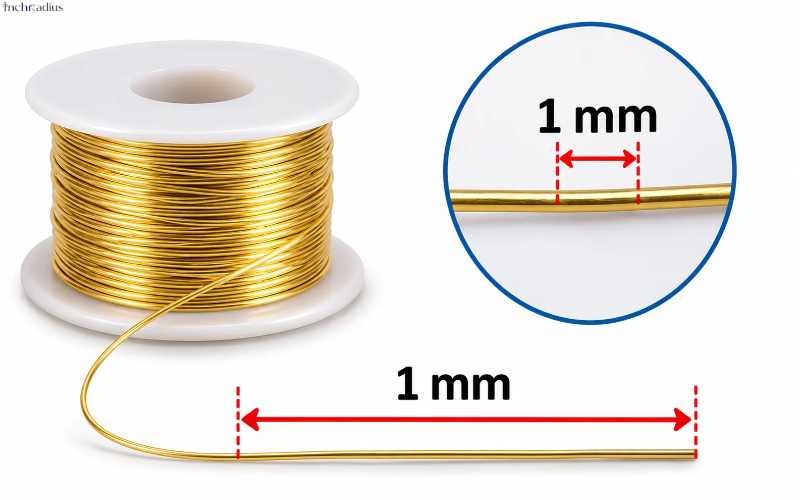
Jewellery-making wire is available in several thicknesses. A 1mm wire is commonly used for making decorative loops, simple rings, pendants and other handmade accessories.
It is thicker than the delicate wire used for some fine beadwork, but it is still narrow enough to bend into different shapes with suitable jewellery tools.
Silver-coloured, copper and gold-coloured craft wires can all be found in 1mm sizes. The actual material may change, but the stated diameter remains the same.
To picture 1mm, look at the circular end of a piece of wire. The distance from one side to the other is its diameter. This is a helpful distinction because the wire’s length might be several metres, even though its thickness is only 1mm.
For anyone interested in jewellery or handmade crafts, this is a useful real-world example of the measurement.
Small Glass Microscope Slide
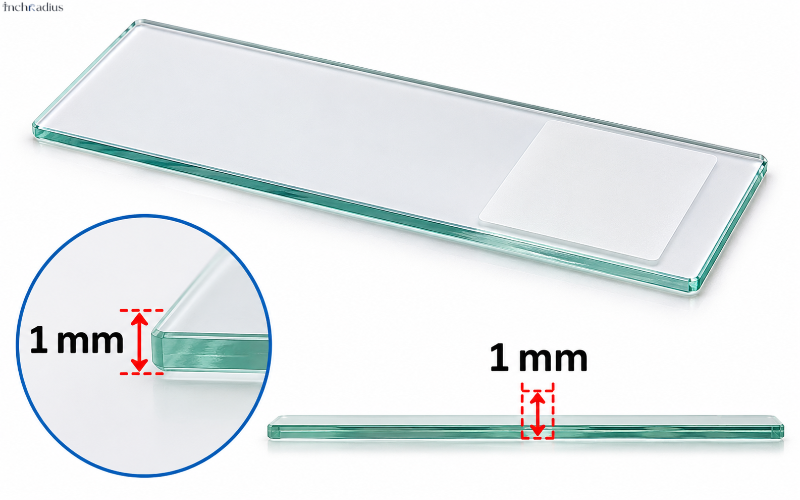
A microscope slide is a small, flat piece of glass used to hold specimens for examination under a microscope. It is commonly used in school laboratories, hospitals and research settings.
Many standard microscope slides are approximately 1mm thick, although their exact thickness can vary by manufacturer. Their flat shape makes it easier to understand the difference between length, width and thickness.
A typical slide is much longer and wider than 1mm. However, the thin glass edge gives you a useful visual reference for the measurement.
Hold the slide carefully by its edges and look at its side profile. You will see a narrow strip of glass that is close to the size you are trying to imagine.
This example is particularly useful because it shows that 1mm can describe the thickness of a flat object rather than its overall length.
Related Post: 9 Common Things That Are 17 Centimeters Long
Thin Craft Foam Sheet
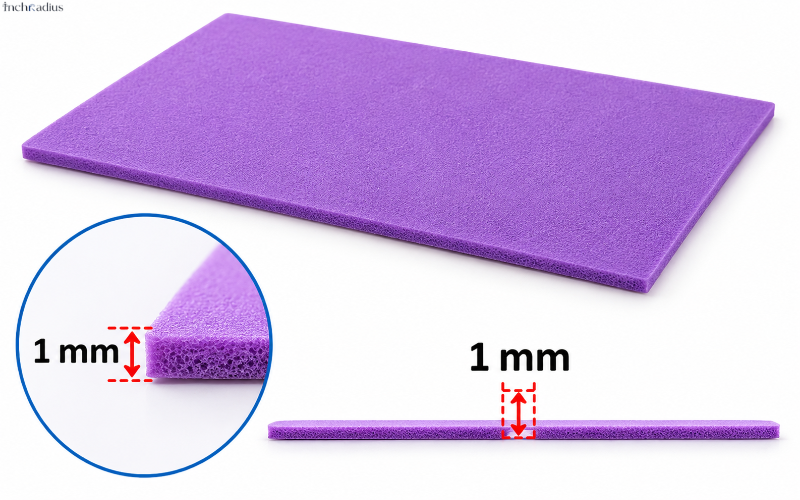
Craft foam is a soft, flexible material used for school projects, decorations, handmade toys and creative activities. It is available in different thicknesses, including thin sheets measuring around 1mm.
Unlike thick foam used for cushions or packaging, a thin craft foam sheet feels almost like a flexible layer. Its edge provides a simple way to visualise the measurement.
The exact thickness depends on the product. Some craft foam sheets are thinner than 1mm, while others are several millimetres thick. Always check the packaging or product description before using one as an accurate reference.
A 1mm sheet is particularly useful for small decorations that need a little structure without adding much bulk.
If you have a sheet of thin foam at home, examine its edge from the side. This makes the small thickness easier to recognise.
Small Seed Bead
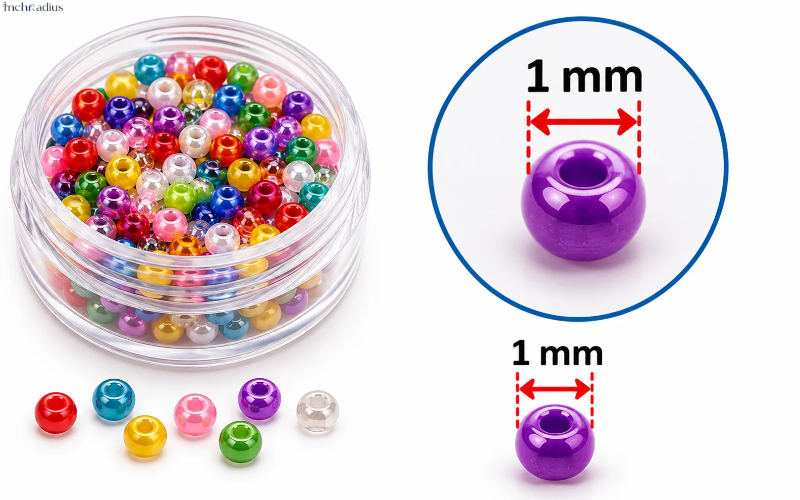
Small seed beads are used in jewellery making, embroidery, clothing decoration and craft projects. They come in many shapes and sizes, with some tiny varieties measuring close to 1mm across.
A bead measuring 1mm in diameter is extremely small. It can be difficult to pick up with your fingers, and its opening may be even smaller than its outer width.
Glass seed beads are often available in numbered sizes. However, bead sizing systems do not always correspond directly to a diameter in millimetres. A specific product’s dimensions should be checked before treating it as an exact 1mm example.
A tiny bead is useful for visualising this measurement because its rounded shape makes the diameter easy to understand.
Place one beside a metric ruler with millimetre markings. You will quickly see how little space 1mm occupies.
Thin Rubber Gasket
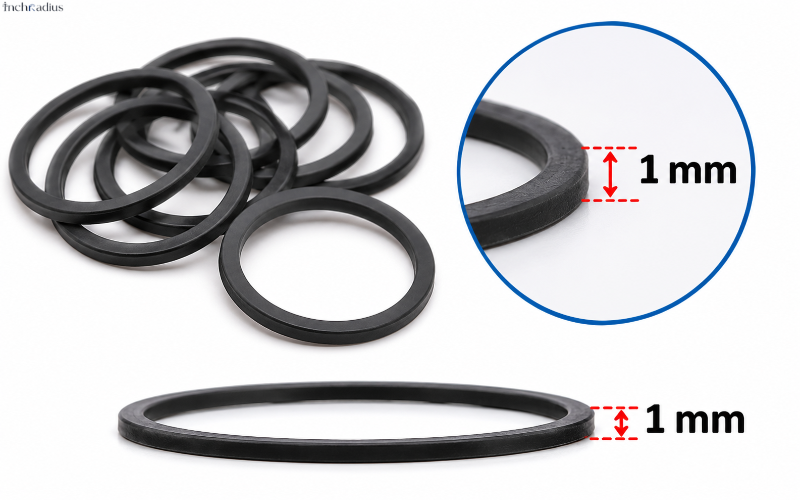
Rubber gaskets are used to create seals between two surfaces. You can find them in plumbing fittings, small machines, household appliances and automotive components.
Some thin rubber gaskets are manufactured with a thickness of approximately 1mm. They are designed to fill a small gap and help prevent air, water or other substances from passing through a connection.
The exact thickness varies depending on the purpose of the gasket. Some are much thicker, while others are thinner than 1mm.
A thin gasket is a useful comparison because it shows how a tiny amount of material can have an important job. Even a small difference in thickness can affect how well two parts fit together.
Look at the flat edge of a 1mm gasket to get a better idea of the measurement. It is a practical example from mechanical and household equipment.
Fine Solder Wire
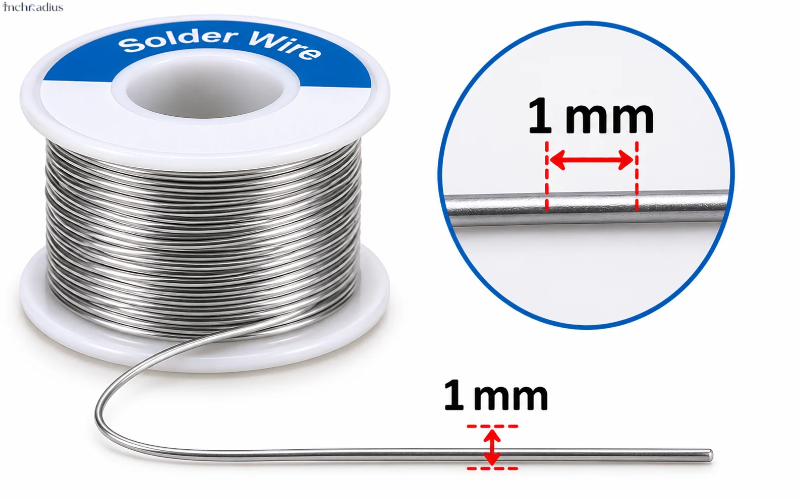
Solder wire is a metal alloy used to join electronic components and wires. It melts when heated and forms an electrical connection between suitable metal surfaces.
Solder is sold in different diameters. Some varieties measure approximately 1mm thick, making them a useful example of this small measurement.
The wire is usually supplied on a plastic or metal spool. Its diameter is much smaller than its overall length, which can extend for several metres.
Thin solder wire is often chosen for delicate electronics work because it allows the user to control how much material is applied to a joint.
Not every solder spool contains 1mm wire, so check the diameter printed on the packaging. A product marked 1.0mm gives you a suitable comparison.
Its circular cross-section is particularly helpful for understanding how 1mm describes width rather than the total length of an object.
Related Post: 11 Common Things That Are 16 Centimeters Long
Thin Metal Craft Wire
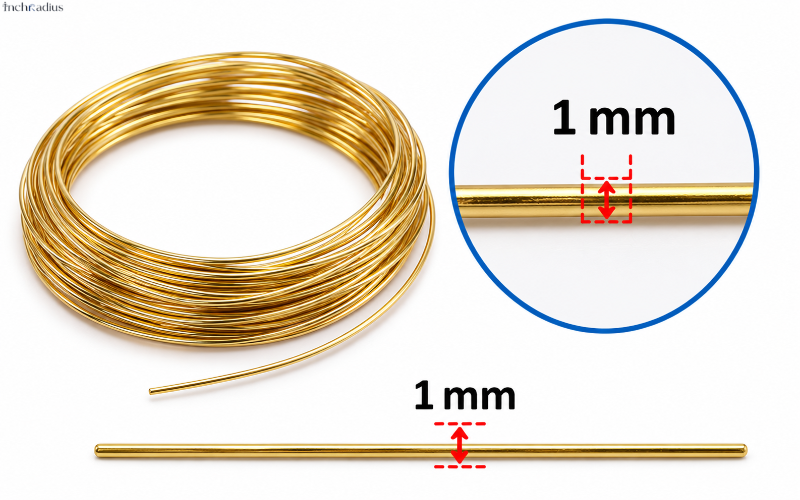
Metal craft wire is used for handmade decorations, sculpture, model building and other creative projects. It is available in materials such as aluminium, copper and stainless steel.
A wire with a diameter of 1mm is thin enough to bend using pliers, but it can still hold its shape when used in small decorative designs.
Its thickness is measured across the circular end. This makes it another straightforward example of a 1mm measurement.
Some craft wires are sold in gauges rather than millimetres. Gauge measurements can differ depending on the standard being used, so a wire labelled 1mm is the better choice when you need this particular size.
You can use a short piece as a visual reference. Place it beside a ruler and compare its diameter with the smallest marked divisions.
Related Post: 10 Common Things That Are 15 Centimeters Long
Measurement Without a Ruler
You do not always need a ruler to get an idea of how small 1mm is. A few familiar objects and simple comparisons can help, although they will not replace an accurate measuring tool.
1. Compare It With Mechanical Pencil Lead
If you own a mechanical pencil with 1mm lead, use one refill as your reference. Its diameter gives you a direct example of the measurement.
Place the lead on a flat surface and compare it with another thin object. This makes it easier to recognise similar widths.
2. Look at the Edge of a Bank Card
A standard bank card is approximately 0.76mm thick. Although it is not a perfect 1mm match, it comes reasonably close.
The card is slightly thinner than the target measurement. Thinking of 1mm as a little thicker than a bank card can help you picture its size.
3. Use the Small Markings on a Metric Ruler
A metric ruler is the simplest option if you have one nearby. Find the space between two consecutive millimetre markings.
The distance from one mark to the next represents exactly 1mm. Ten of these small spaces fit into one centimetre.
This method is more reliable than using your fingers because hand sizes vary considerably.
Related Post:9 Common Things That Are 14 Centimeters Long
FAQs
1. Is 1mm very small?
Yes, 1mm is a very small measurement. It is just one-tenth of a centimetre and approximately 0.039 inches. You can find similar dimensions in thin wires, small mechanical parts and craft materials. It is often difficult to judge accurately without a ruler.
2. How many millimetres are in one centimetre?
There are exactly 10 millimetres in one centimetre. This means 1mm is one-tenth of a centimetre. For example, a 5cm object measures 50mm, while a 2cm object measures 20mm.
3. Is 1mm smaller than 1 inch?
Yes. One inch is equal to 25.4mm, so 1mm is much smaller. It takes 25.4 measurements of 1mm to make one inch. If you are comparing larger sizes, [1 inch] is a useful reference because it is considerably easier to see.
4. What does 1mm look like on a ruler?
On a standard metric ruler, 1mm is the distance between two neighbouring small markings. Ten small divisions make up one centimetre. These markings are useful for measuring thin objects and small gaps.
5. Is 1mm the same as 0.1cm?
Yes. One millimetre is exactly equal to 0.1 centimetres. Both measurements describe the same distance, just using different units. You can convert millimetres into centimetres by dividing the number of millimetres by 10.
6. How thick is a standard bank card compared with 1mm?
A standard bank card is generally around 0.76mm thick. This makes it slightly thinner than 1mm. It is a helpful household comparison, although different cards and materials may have slightly different thicknesses.
7. Can I measure 1mm with my finger?
It is difficult to measure 1mm accurately using your finger. Finger widths are much larger, and their dimensions vary from person to person. You can use your fingertip to understand the general scale, but a metric ruler or calliper is better for precise measurements.
8. What common objects have a diameter of 1mm?
Some examples include 1mm mechanical pencil lead, 1mm drill bits, certain jewellery wires and selected craft wires. Small fishing lines and solder wires may also come close. Always check the stated diameter because similar-looking products can have different measurements.
- Discover more everyday objects and their measurements in inches.
- 11 Real Items That Are 1 Inch Long
- 10 Common Things That Are 2 Inches Long
- 10 Common Things That Are 3 Inches Long
- 10 Common Things That Are 4 Inches Long
- 10 Common Things That Are 5 Inches Long
Conclusion
One millimetre may be difficult to picture at first, but several everyday objects make it easier to recognise. A 1mm mechanical pencil lead and a 1mm drill bit provide two clear examples because their diameters are specified during manufacturing. Thin craft wire and fine solder wire can also offer useful comparisons.
Remember that 1mm equals 0.1 centimetres or approximately 0.039 inches. If you have a metric ruler, look at the space between two neighbouring millimetre marks. That tiny gap is the simplest way to remember the size. Even such a small distance can make a difference in crafts, repairs and precision work.
