
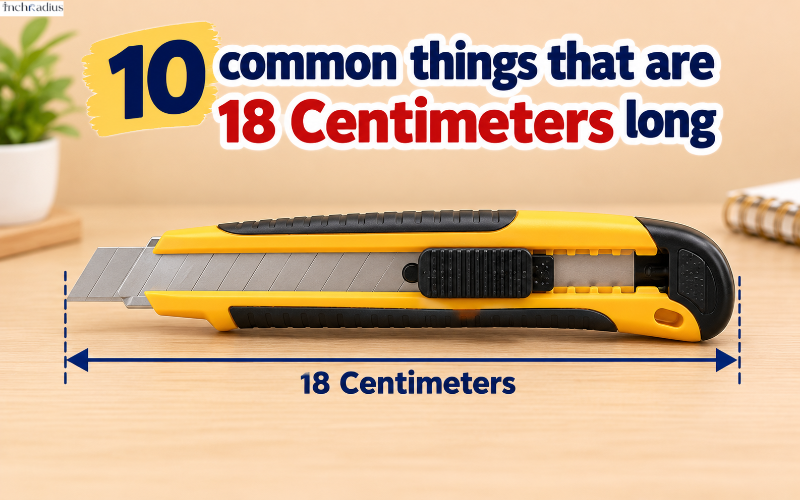
18 centimetres is equal to 7.09 inches, 180 millimetres, or 0.18 metres. It is a relatively short length, roughly similar to the height of a small paperback book or the diameter of a 7-inch vinyl record. Although 18 cm may not sound like much, it is a useful measurement for everyday objects, craft projects, cooking tools and household items.
If you do not have a ruler nearby, familiar things can help you picture the distance. From a small frying pan to a handheld mirror, several ordinary objects come close to this size. Looking at these comparisons makes it easier to estimate 18 centimetres without needing to measure everything yourself.
How Long Is 18 Centimeters?
18 centimetres is a length of 180 millimetres. It is also approximately 7.09 inches, which means it is just a little longer than 7 inches. In feet, the same measurement is about 0.59 feet.
To picture this distance, imagine placing a small ruler next to an object and marking a point just beyond the 7-inch mark. That gives you a useful idea of how far 18 cm extends.
This measurement appears in many everyday settings. Small kitchen tools, personal grooming accessories, craft supplies and compact household objects can all have a length or width close to 18 cm. It is also a practical size for certain decorative items and small storage products.
Remember that an object’s length, height and diameter are different measurements. A frying pan might measure 18 cm across its cooking surface, while a mirror might measure approximately 18 cm from top to bottom. Both can help you visualise the same distance.
Related Post: How Long Is 17 Centimeters?
How Big Is 18 Centimeters?
Imagine holding a small paperback book in your hand. Some compact books measure around 18 cm along their shorter or longer edge, depending on their format. This gives you a familiar reference without needing a measuring tool.
Another useful comparison is a 7-inch vinyl record. Its diameter is approximately 17.8 cm, making it almost identical to 18 cm. The difference is so small that you would hardly notice it by eye.
You can also picture the distance using your hand. For many adults, the span from the tip of the thumb to the tip of the little finger when the hand is stretched out is somewhere around this range. However, hand sizes vary considerably.
A standard 30 cm ruler offers another easy comparison. Eighteen centimetres covers three-fifths of its total length. Imagine marking the 18 cm point and looking at the remaining 12 cm. That is a simple way to recognise the size.
10 Common Things That Are 18 Centimeters Long
Several everyday objects have one dimension close to 18 cm. Some are measured by their height, others by their width, diameter or overall length. The following examples come from different categories, giving you several ways to recognise this measurement.
| Everyday Item | Actual Size |
| 1. 7-Inch Vinyl Record | 18 centimetres |
| 2. Small Frying Pan | 18 centimetres |
| 3. Compact Paperback Book | 18 centimetres |
| 4. Handheld Dressing Mirror | 18 centimetres |
| 5. Small Ceramic Plant Pot | 18 centimetres |
| 6. Mini Paint Roller | 18 centimetres |
| 7. Wooden Pastry Brush | 18 centimetres |
| 8. Handheld Kitchen Grater | 18 centimetres |
| 9. Compact LED Torch | 18 centimetres |
| 10. Mini Rolling Pin | 18 centimetres |
These are approximate size comparisons, not guaranteed standard dimensions. Actual measurements vary by manufacturer, design and model.
1. 7-Inch Vinyl Record
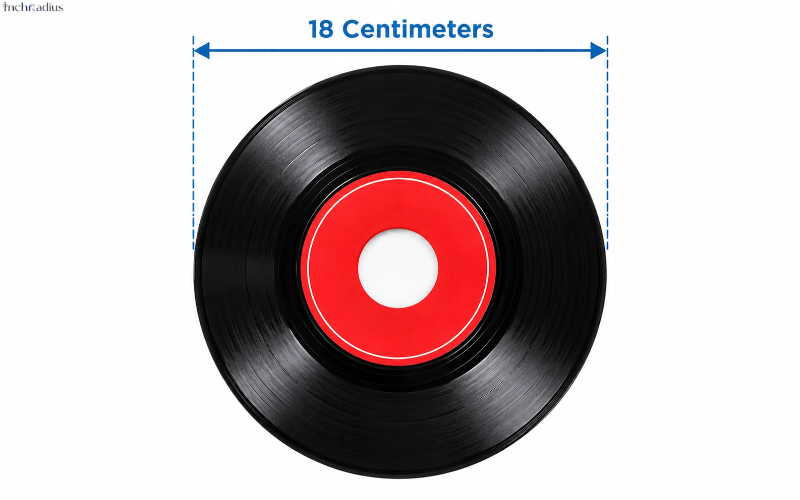
A 7-inch vinyl record is one of the closest comparisons to 18 cm. Its diameter is approximately 17.78 cm, which is only 0.22 cm shorter than the target measurement.
These smaller records are often called singles because they were traditionally used to release one or two songs. They are noticeably smaller than standard 12-inch LP records.
The circular shape makes this object particularly useful for visualising 18 cm. Place the record flat on a table and imagine measuring straight across its centre, from one outside edge to the other. That distance is almost exactly 18 cm.
If you have an old vinyl collection at home, a 7-inch record can be an excellent reference. It is also a fun comparison because its familiar round shape makes the measurement easy to recognise.
2. Small Frying Pan
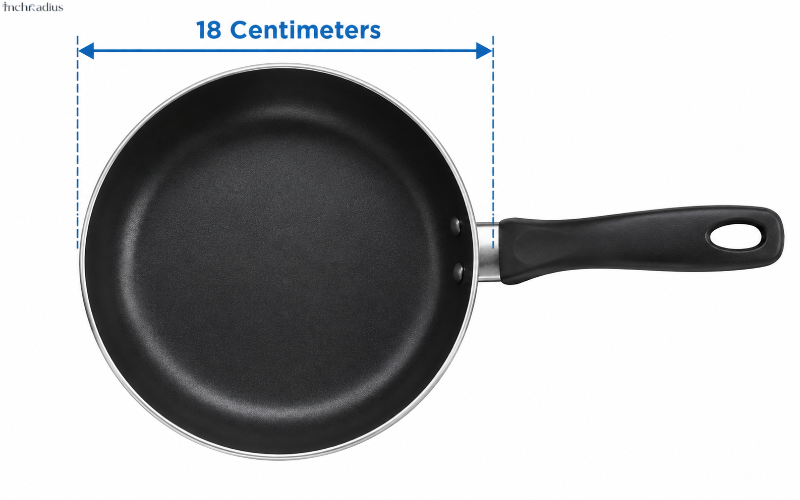
A small frying pan with an 18 cm cooking surface offers another practical comparison. These compact pans are commonly used for cooking one egg, warming a small portion of food or preparing a quick snack.
The important detail is how the pan is measured. An 18 cm frying pan generally refers to the diameter of its cooking surface, rather than the total length from the handle to the opposite edge.
Look directly down at the pan and imagine a straight line running from one side of the cooking area to the other through its centre. That line gives you the 18 cm comparison.
Small pans are useful in kitchens where storage space is limited. They also show how a measurement can describe width rather than the overall length of an object.
3. Compact Paperback Book
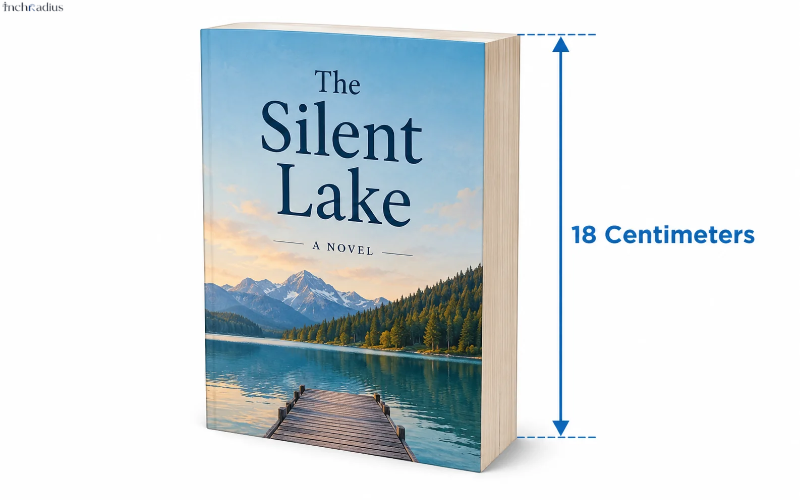
A compact paperback book can measure around 18 cm in height. The exact size depends on the publisher, book format and printing style, but many smaller books fall close to this measurement.
Books are particularly useful comparisons because their rectangular shape makes it easy to recognise both height and width. Hold one upright and look at the distance from its bottom edge to its top edge. If it is approximately 18 cm tall, you have a familiar reference for the measurement.
This comparison is useful when estimating the size of notebooks, small gift boxes or storage compartments. You can also place the book beside another object to see how much space 18 cm takes up.
Keep in mind that not every paperback has the same dimensions. A larger novel may be noticeably taller, while a pocket-sized edition can be considerably shorter.
4. Handheld Dressing Mirror
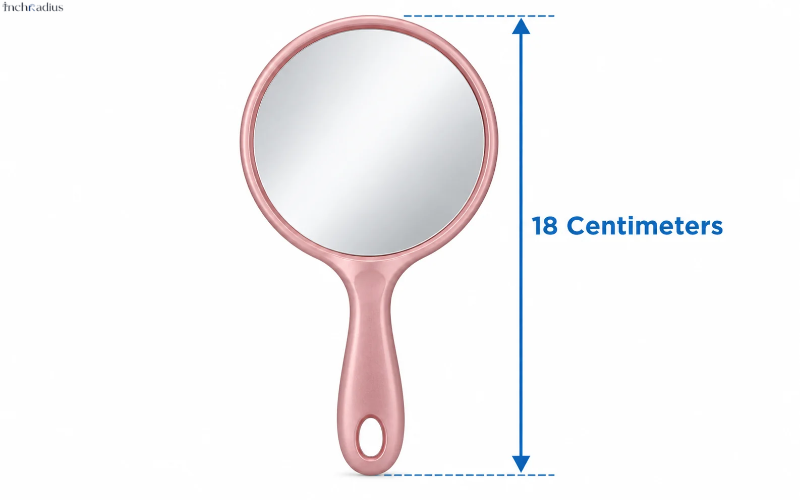
A compact handheld dressing mirror can have an overall length of approximately 18 cm. This measurement usually includes the handle, making it a convenient comparison for everyday personal accessories.
These mirrors are often used for checking hairstyles, viewing the back of the head or applying make-up. Their lightweight design makes them easy to hold and store in a bathroom drawer.
To use one as a reference, measure from the very top of the mirror to the bottom end of its handle. Some designs are longer, while smaller travel mirrors may be shorter.
The mirror is a useful example because it has a clearly defined beginning and end. You can hold it vertically and picture that distance as 18 cm. It also helps demonstrate how this length appears in objects designed to fit comfortably in one hand.
5. Small Ceramic Plant Pot
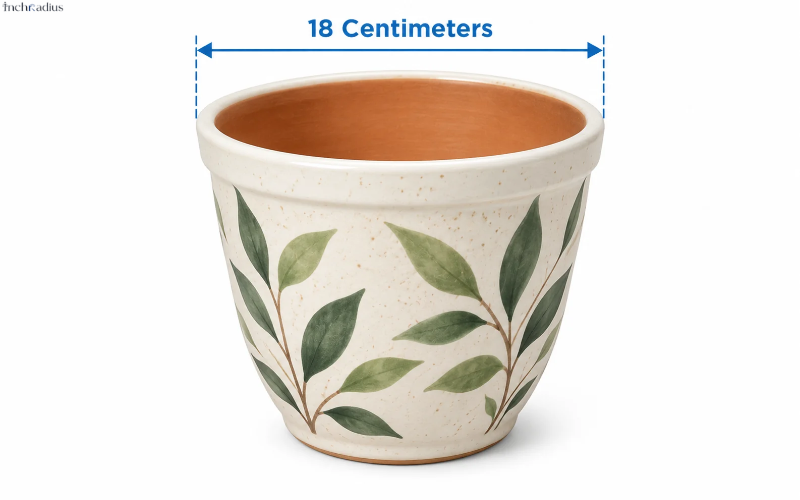
A small ceramic plant pot with a top diameter of approximately 18 cm is another household comparison. This size is suitable for many small indoor plants, herbs and decorative greenery.
The measurement normally refers to the width across the top opening. It does not necessarily describe the height of the pot. Some plant pots are wide and shallow, while others have taller sides and a narrower base.
To picture 18 cm, look at the opening from directly above. Imagine drawing a straight line from one side of the rim to the other, passing through the centre.
Plant pots are available in many shapes and materials, including ceramic, terracotta and glazed stoneware. Their dimensions can vary, so checking the product measurements is useful if you need an accurate comparison.
For a quick visual estimate, however, a pot with an 18 cm opening is an easy object to recognise.
6. Mini Paint Roller
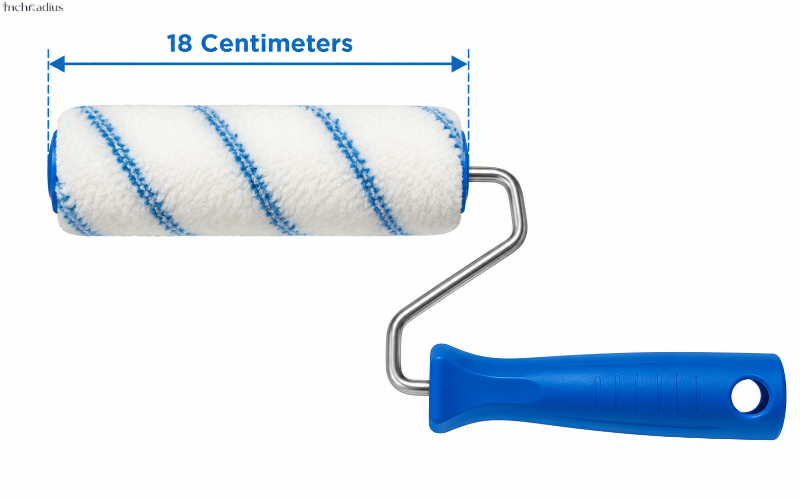
A mini paint roller is a practical tool used for painting smaller surfaces, furniture and narrow sections of walls. Some compact roller covers measure close to 18 cm in width, although smaller models are also widely available.
The roller’s width is the most useful measurement here. It describes the distance across the cylindrical cover from one end to the other. It does not include the handle or the full length of the frame.
If you have a roller of this size, look at the fabric-covered section rather than measuring the entire tool. That section can give you a clear picture of how wide 18 cm is.
Paint rollers are useful comparisons because their dimensions are designed around practical working areas. A roller around 18 cm wide can cover a reasonable strip of surface without being too difficult to control.
7. Wooden Pastry Brush
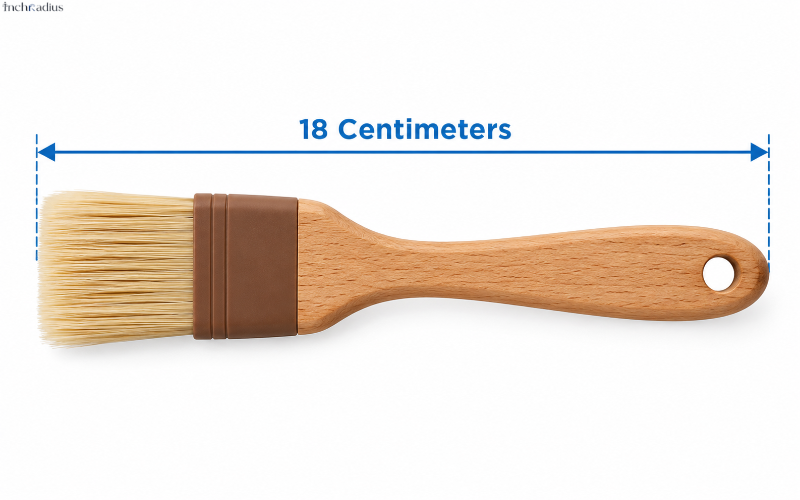
A wooden pastry brush can measure approximately 18 cm from the end of its handle to the tips of its bristles. This is a useful comparison for anyone who enjoys baking or preparing food at home.
Pastry brushes are used to spread butter, oil, egg wash and other liquid coatings over food. They are common tools for preparing bread, pastries, pies and roasted dishes.
Their overall length varies according to the handle design and brush-head size. Some are shorter, while larger kitchen brushes can extend beyond 18 cm.
If you have a compact pastry brush, lay it flat on a worktop. The distance from one end to the other can help you picture the target measurement.
Its slim shape also makes it a useful reference when comparing the length of small kitchen utensils or other narrow household tools.
8. Handheld Kitchen Grater
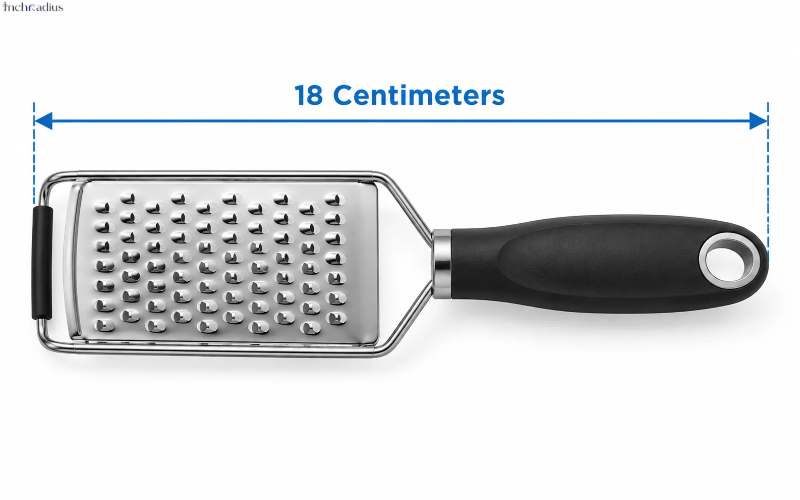
A compact handheld kitchen grater can have an overall length close to 18 cm. These tools are commonly used for grating cheese, chocolate, garlic, ginger and small amounts of vegetables.
Unlike a large box grater, a handheld version is usually narrow and easy to store in a kitchen drawer. Some designs have a flat rectangular shape, while others include a curved handle for a comfortable grip.
For this comparison, measure the full tool from its top edge to the bottom of its handle. The grating surface alone may be shorter than 18 cm.
A small grater makes a useful everyday reference because its length is easy to see. If yours measures around 18 cm, you can use it to estimate the same distance on a shelf, kitchen worktop or storage container.
The actual size depends on the style and manufacturer, so treat this as an approximate comparison.
9. Compact LED Torch
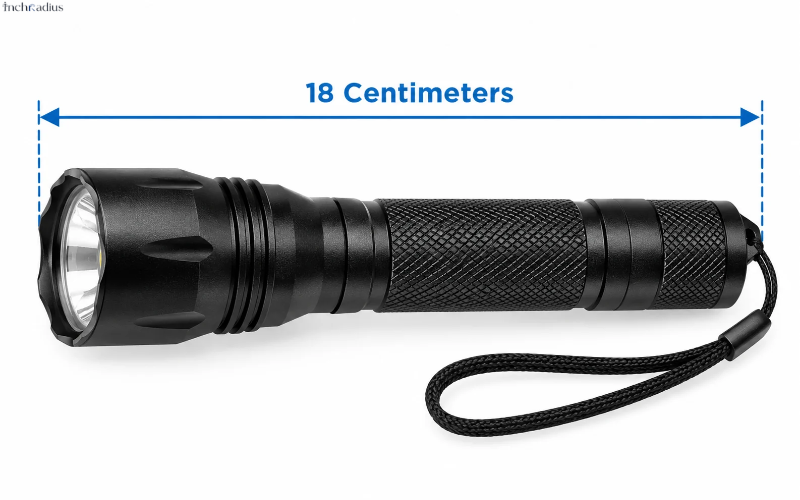
Some compact handheld LED torches measure around 18 cm in overall length. They are designed to provide portable lighting without the bulk of larger emergency or worksite torches.
A torch of this size can be useful for checking dark cupboards, walking outdoors after sunset or keeping in a car for emergencies. Its cylindrical body also makes the measurement easy to visualise.
To compare it with 18 cm, measure from the front rim around the lens to the back end of the torch. Do not include a removable wrist strap or other accessories.
Not all LED torches are this long. Some pocket models are much smaller, while heavy-duty versions can be considerably longer.
A compact torch is a helpful reference because it shows how an 18 cm object can fit comfortably in a bag, toolbox or kitchen drawer.
10. Mini Rolling Pin
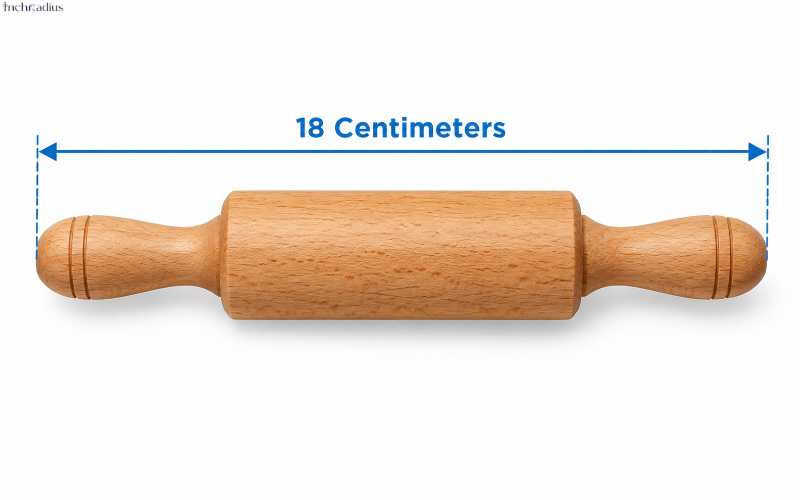
A mini rolling pin with an overall length of approximately 18 cm provides another useful kitchen comparison. These smaller tools are often used for rolling pastry, flattening small pieces of dough and preparing individual portions.
Some mini rolling pins have handles at both ends, while others use a simple cylindrical design without separate handles. This means their total lengths can differ even when the rolling surface is similar.
For an accurate comparison, measure from the outer edge of one end to the outer edge of the other. If the tool is around 18 cm long, it gives you a practical idea of the target measurement.
Mini rolling pins are especially useful in baking projects where a full-sized rolling pin would feel awkward. Their compact design also makes them easy to store in smaller kitchen spaces.
Related Post: How Long Is 16 Centimeters?
Measurement Without a Ruler
You do not always need a measuring tape or ruler to estimate 18 cm. A few familiar objects and simple body measurements can help you get reasonably close. These methods are useful for quick checks, although they should not replace accurate measuring when precision matters.
1. Use the Width of Your Hand
Stretch your hand naturally and measure the distance from the tip of your thumb to the tip of your little finger. This is called your hand span.
For some adults, a fully stretched hand span can be close to 18 cm. However, the distance varies from person to person, so it is best to check your own hand against a ruler once.
After you know your approximate hand span, you can use it as a quick reference when estimating a small object.
2. Compare It With a 7-Inch Vinyl Record
If you have a 7-inch vinyl record, place it flat on a table. Its diameter is approximately 17.8 cm, which is extremely close to 18 cm.
Imagine a straight line running across the centre of the record. That line gives you almost the exact distance you are trying to estimate.
This is one of the more reliable visual methods because the record has a well-established standard diameter.
3. Use a Standard A4 Sheet of Paper
An A4 sheet of paper measures 21 cm along its shorter side. Eighteen centimetres is 3 cm less than that distance.
Place the paper on a flat surface and imagine a line beginning at one edge and stopping 3 cm before the opposite edge. The remaining distance is approximately 18 cm.
This method works well if you regularly use printer paper at home or in an office. It is also useful for estimating the dimensions of small packages, notebooks and craft materials.
Related Post: How Long Is 15 Centimeters?
FAQs
1. Is 18 cm considered long or short?
18 cm is generally considered a short length. It is slightly longer than 7 inches and is similar to the diameter of a small vinyl record. It is large enough to describe many handheld household items but considerably shorter than objects such as standard rulers or most full-sized books.
2. How many inches are in 18 centimetres?
18 centimetres equals approximately 7.09 inches. This means it is just slightly longer than 7 inches. For everyday comparisons, you can round it to about 7.1 inches, but use 7.09 inches when a more precise conversion is needed.
3. Is 180 mm the same as 18 cm?
Yes. Both measurements describe exactly the same length. One centimetre contains 10 millimetres, so multiplying 18 by 10 gives 180 mm. The only difference is the unit being used.
4. How can I measure 18 cm without a ruler?
You can use a 7-inch vinyl record as a close reference because its diameter is approximately 17.8 cm. An A4 sheet of paper is another option. Its shorter side is 21 cm, so a point 3 cm before the opposite edge gives you approximately 18 cm.
5. Is 18 cm bigger than 7 inches?
Yes, but only by a small amount. Seven inches equals 17.78 cm, while 18 cm is approximately 7.09 inches. The difference is 0.22 cm, or 2.2 mm, which is difficult to notice without measuring tools.
6. What household items are approximately 18 cm long?
Several household items can come close to this size. Examples include compact dressing mirrors, small kitchen graters, pastry brushes and mini rolling pins. Their dimensions depend on the design, so check the actual product measurements if you need an exact 18 cm reference.
7. How many millimetres make up 18 cm?
There are 180 millimetres in 18 centimetres. To convert centimetres into millimetres, simply multiply the centimetre measurement by 10. This conversion is useful for craft projects, small repairs and tasks that require more precise measurements.
8. Is 18 cm the same as 0.18 metres?
Yes. One metre contains 100 centimetres, so 18 centimetres is equal to 0.18 metres. It is also 180 millimetres and approximately 7.09 inches. These are different ways of expressing exactly the same length.
Conclusion
18 centimetres is a little over 7 inches, making it a handy measurement to recognise in everyday life. A 7-inch vinyl record is perhaps the closest comparison, with a diameter of approximately 17.8 cm. Other useful references include a small frying pan, compact paperback book and handheld dressing mirror.
If you do not have a ruler, an A4 sheet of paper or your hand span can help you estimate the distance. Just remember that household objects come in different sizes, so these comparisons are approximate. For a quick mental picture, think of a small vinyl record: its width is almost exactly 18 centimetres.
