
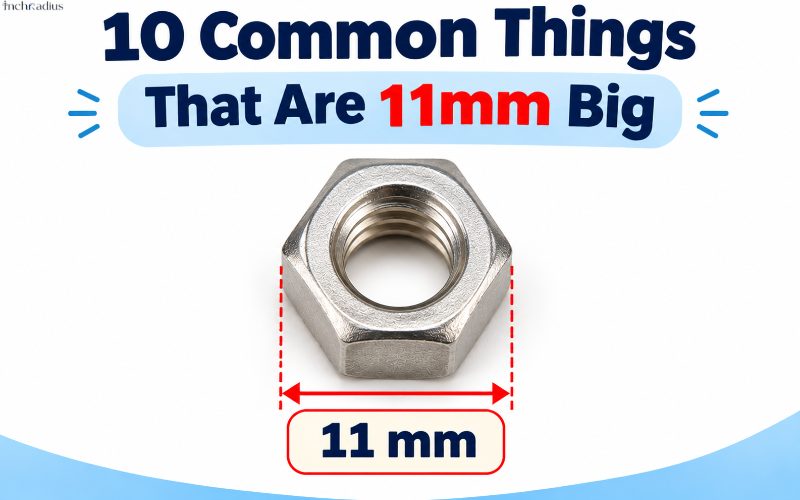
11 millimetres (mm) is a small measurement, equal to 0.43 inches, 1.1 centimetres, or 11 millimetres. It is just over one centimetre, making it shorter than the width of many everyday buttons and small household objects. Although 11mm might seem difficult to picture, several familiar items can help you visualise it. Small craft beads, shirt buttons, glass cabochons and metal nuts are useful examples.
These objects provide practical references when you need to estimate a measurement without a ruler. Whether you are checking the size of a small component, choosing craft materials or measuring something around the house, these comparisons can make 11mm easier to recognise.
How Big Is 11 Millimetres?
11 millimetres is exactly 1.1 centimetres or approximately 0.433 inches. It is a little longer than one centimetre, but it is still less than half an inch. This makes it a relatively small measurement that is often found in buttons, craft supplies, fasteners and other compact objects.
To picture the size, imagine a line slightly longer than the centimetre marking on a standard ruler. The extra millimetre is small, but it makes the total length noticeably greater than 1cm when viewed closely.
You might encounter an 11mm measurement when buying small hardware, selecting jewellery components or checking the dimensions of a replacement part. It can also describe the diameter of a round object rather than its length. This distinction matters because an 11mm button, for example, measures approximately 11mm across its face, not from top to bottom along a different dimension.
Related Post: 10 Common Things That Are 10 Feet Big
How Big Is 11mm Compared to Everyday Objects?
11mm is approximately 0.43 inches, so it is smaller than the width of most adult fingertips. A useful way to picture it is to look at the diameter of a small button or craft bead. These objects are easy to find and give you a practical sense of the space occupied by just over one centimetre.
A standard ruler is another helpful reference. The distance between the 0cm and 1cm marks is 10mm. An 11mm object extends just one small millimetre beyond that distance.
You can also compare the measurement with small hardware components. An 11mm nut, socket or drill bit has a clearly defined size that can be checked using measuring tools. Round objects are especially useful for visual comparisons because their diameter provides a simple way to understand the measurement.
Remember that everyday objects are not always manufactured to exactly 11mm. Their dimensions can vary by brand, design and intended use. The examples below use nominal sizes or approximate dimensions, so check the specifications if you need an accurate measurement.
10 Common Things That Are 11mm Big
Several small household, craft and hardware objects can help you picture an 11mm measurement. Some are sold in this exact nominal size, while others are available in sizes close to it.
The following table provides ten practical examples. The descriptions explain which dimension measures approximately 11mm.
Related Post: 11 Common Things That Are 11 Feet Long
| Everyday Item | Actual Size |
| Small Wooden Craft Bead | 11mm |
| Round Shirt Button | 11mm |
| Glass Craft Cabochon | 11mm |
| Small Glass Marble | 11mm |
| Hexagonal Nut | 11mm |
| Socket Wrench Socket | 11mm |
| Metal Drill Bit | 11mm |
| Jewellery Earring Stud | 11mm |
| Metal Grommet | 11mm |
| Round Snap Fastener | 11mm |
1. Small Wooden Craft Bead
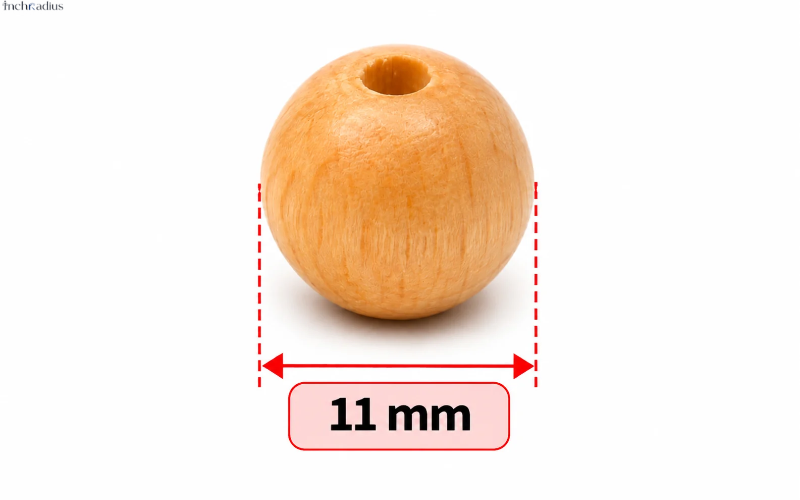
A small wooden craft bead measuring 11mm in diameter is a simple way to picture this measurement. These beads are commonly used in jewellery making, decorative crafts, bracelets and handmade accessories. Their round shape makes the measurement easy to understand because you can look straight across the widest part.
An 11mm bead is slightly larger than a 1cm bead. The difference is only 1mm, but it becomes easier to notice when you place the two sizes next to each other.
Wooden beads are available in different colours, finishes and hole sizes. Some are smooth and polished, while others have a natural grain. If you have an 11mm bead at home, place it beside a ruler to see how its diameter compares with the 1cm marking. It is a useful reference for visualising a small round measurement.
2. Round Shirt Button
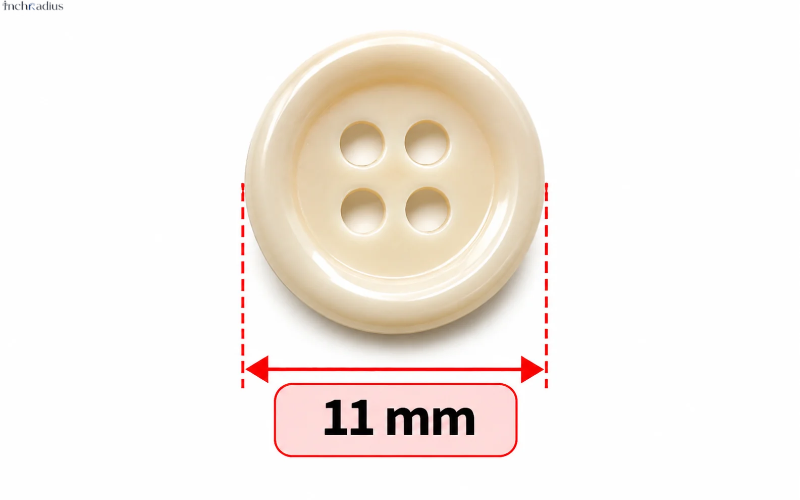
A small round shirt button can measure approximately 11mm across. Buttons of this size are often found on shirts, blouses, children’s clothing and lightweight garments. Their flat shape makes them particularly useful for understanding a measurement that is just over one centimetre.
Look at the widest part of the button, measuring from one outside edge to the opposite edge. If the button is 11mm in diameter, it will extend slightly beyond the 10mm mark on a ruler.
Button sizes are not universal. Some are smaller, while others are noticeably wider depending on the clothing design. You can find buttons close to 11mm in sewing kits and replacement button collections. A button of this size is also easy to hold between your fingers, giving you a practical sense of how little space 11mm occupies.
Related Post: 10 Common Things That Are 12 Feet Long
3. Glass Craft Cabochon
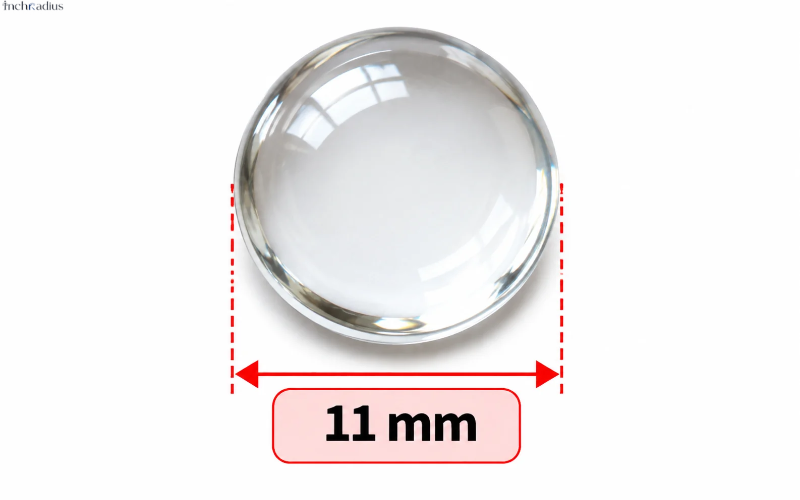
A glass cabochon is a small decorative piece used in jewellery making and craft projects. It usually has a smooth, rounded top and a flatter underside. Small versions measuring around 11mm across are used for earrings, pendants and miniature decorations.
Its circular shape makes it easy to compare with the 11mm measurement. Simply measure across the centre from one outside edge to the other. This gives you the diameter, which is the most useful dimension for this example.
Glass cabochons can be clear, coloured or decorated with patterns. Some are designed to fit inside metal settings, so their diameter matters when choosing compatible jewellery components. An 11mm cabochon is just over one centimetre wide. If you place it beside a 10mm cabochon, the difference becomes easier to recognise.
Related Post: 11 Common Things That Are 13 Feet Long
4. Small Glass Marble
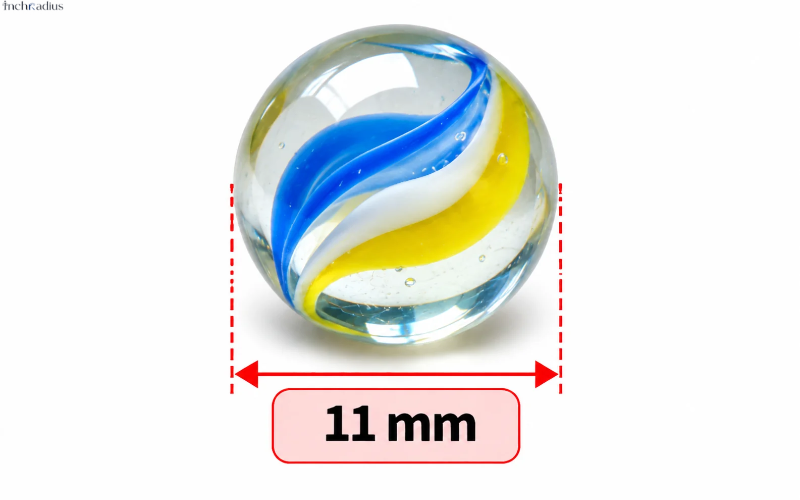
Small glass marbles are another interesting way to visualise 11mm. Although many traditional playing marbles are considerably larger, miniature craft and decorative marbles are available in smaller diameters, including sizes close to 11mm.
The rounded surface makes the measurement easy to picture. Imagine measuring straight across the centre of the marble. If its diameter is 11mm, that distance is slightly greater than one centimetre.
Small glass marbles are used in decorative displays, craft projects, miniature arrangements and some games. Their transparent or coloured surfaces also make them easy to distinguish from other small objects.
Not every miniature marble measures 11mm, so check the manufacturer’s dimensions before using one as an exact reference. A marble close to this size is still a useful visual comparison when estimating how big 11mm looks.
5. Hexagonal Nut
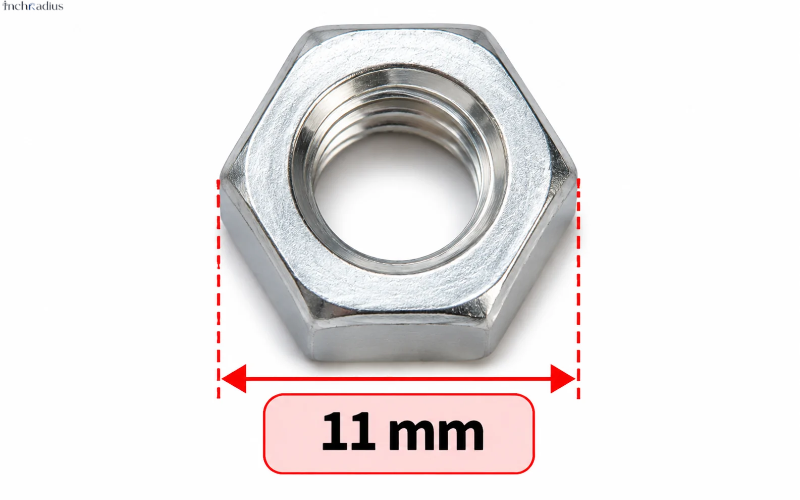
A hexagonal nut is a familiar metal fastener used to secure bolts and threaded components. Some nuts have an 11mm measurement across their flat sides. This is commonly referred to as the across-flats dimension.
Unlike the diameter of a bead or button, this measurement is taken between two opposite flat surfaces. It is important not to confuse it with the overall corner-to-corner width, which is larger.
An 11mm hex nut is used in various mechanical, repair and assembly applications. You might find a matching size in bicycle repairs, machinery or household hardware kits.
Its solid metal construction makes it a convenient object to examine closely. Place it beside a ruler and measure across two opposite flat faces. This provides a clear example of how an 11mm dimension can describe the width of a practical component rather than its length.
Related Post: 12 Common Things That Are 14 Feet Long
6. Socket Wrench Socket
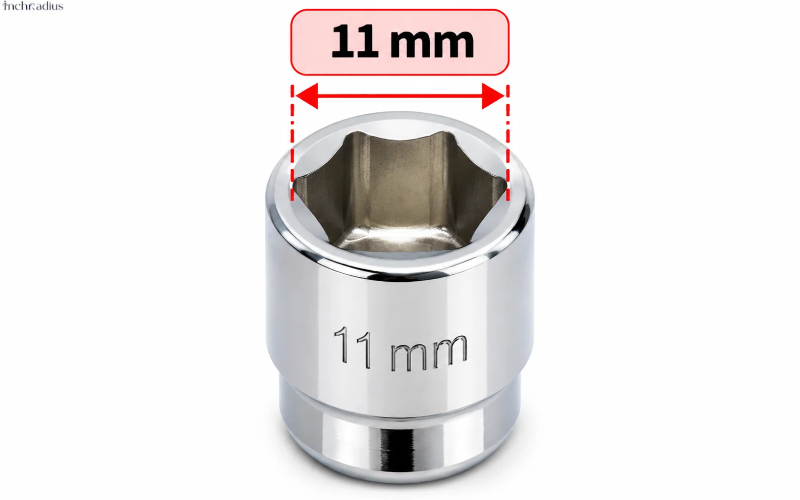
An 11mm socket wrench socket is a useful hardware example because its size is printed or marked on many socket sets. It is designed to fit compatible fasteners with an 11mm across-flats measurement.
The 11mm figure refers to the internal opening of the socket, not its overall outside diameter or height. The socket itself will be larger because it needs enough metal around the opening to provide strength.
You might use this size when working on certain bicycles, machines, appliances or mechanical fittings. It is particularly useful as a reference because the measurement is clearly defined by its intended fitting size.
To visualise 11mm, look at the opening at the working end. Although the outside of the socket is wider, the internal distance across opposite flat surfaces represents the target measurement. This is a good reminder that measurements can describe internal openings as well as external dimensions.
7. Metal Drill Bit
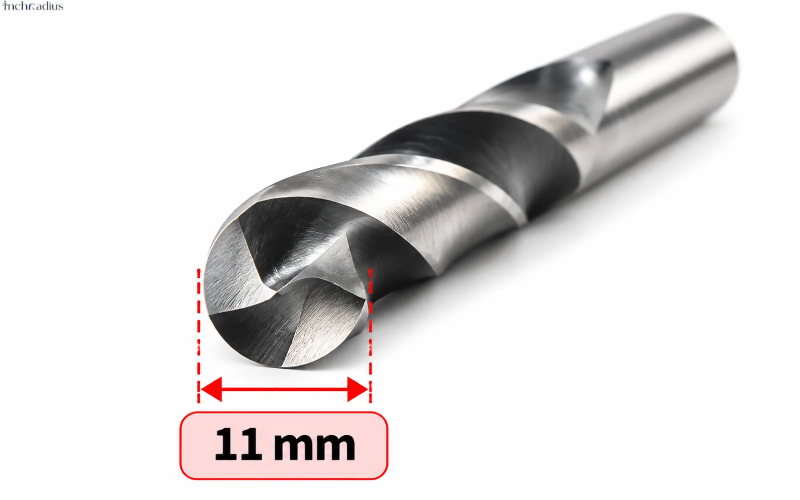
An 11mm drill bit is a practical example of this measurement. Drill bits are manufactured in different diameters to create holes of specific sizes in materials such as wood, plastic and metal.
For this example, 11mm refers to the diameter of the cutting end. It is the distance across the widest circular part of the bit, not the length of the entire tool.
An 11mm drill bit creates a hole with a nominal diameter of 11mm when used correctly. The actual hole can vary slightly depending on the material, drill condition and technique.
This object is especially useful because the size is normally printed on its packaging or marked on the bit. If you have a collection of drill bits, you can compare the 11mm version with a 10mm one to see the difference. The extra millimetre is small, but it changes the size of the hole being made.
Related Post: 10 Common Things That Are 15 Feet Long
8. Jewellery Earring Stud
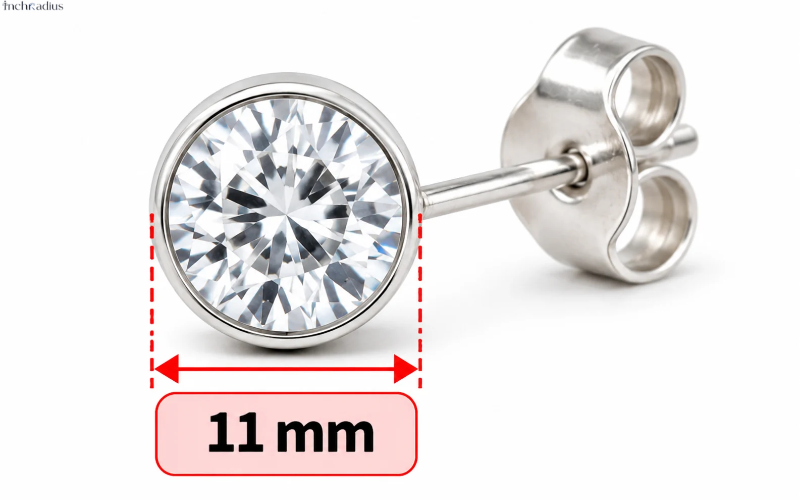
Some decorative earring studs have a front design measuring approximately 11mm across. These may feature a simple metal disc, a small decorative stone or a round patterned surface.
The measurement usually refers to the visible front of the earring rather than the length of its post. This makes it a useful comparison for understanding the diameter of a small circular object.
An 11mm earring stud is slightly wider than a 1cm circle. It is still compact enough to sit comfortably within a small jewellery design without taking up too much space.
You can find similar dimensions in fashion jewellery, handmade earrings and craft jewellery supplies. If you are buying replacement studs, always check whether the listed size refers to the decorative front, the setting or the complete earring. These measurements can be quite different.
9. Metal Grommet
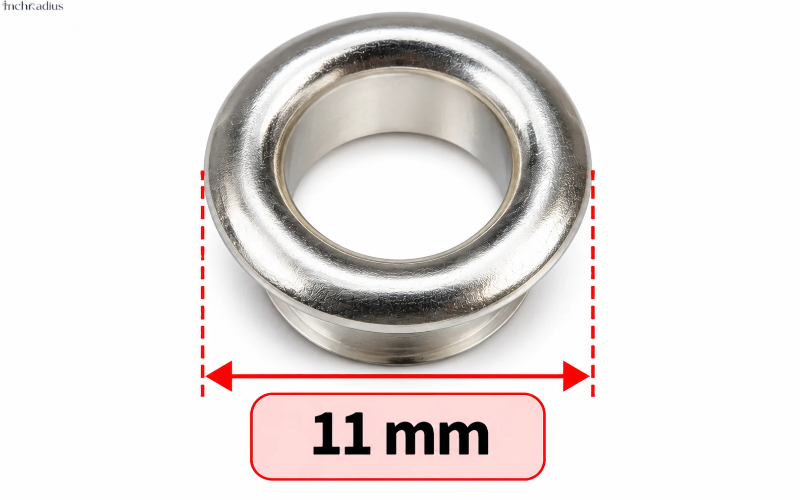
A metal grommet is a small ring-shaped fitting used to reinforce holes in materials such as fabric, leather, canvas and plastic sheets. Some grommets have an internal opening measuring approximately 11mm.
This example is particularly useful because it shows how 11mm can describe the inside space of an object. The outer diameter of the grommet is larger because the metal ring surrounds the opening.
Grommets are commonly used in curtains, tarpaulins, clothing, bags and craft projects. They help prevent material from tearing around holes used for cords, hooks or fasteners.
If you want to visualise an 11mm opening, look through the centre of a correctly sized grommet. The distance from one inner edge to the opposite inner edge represents the approximate measurement. Always check whether a product listing gives the internal or external diameter before purchasing.
Related Post: 11 Common Things That Are 16 Feet Long
10. Round Snap Fastener
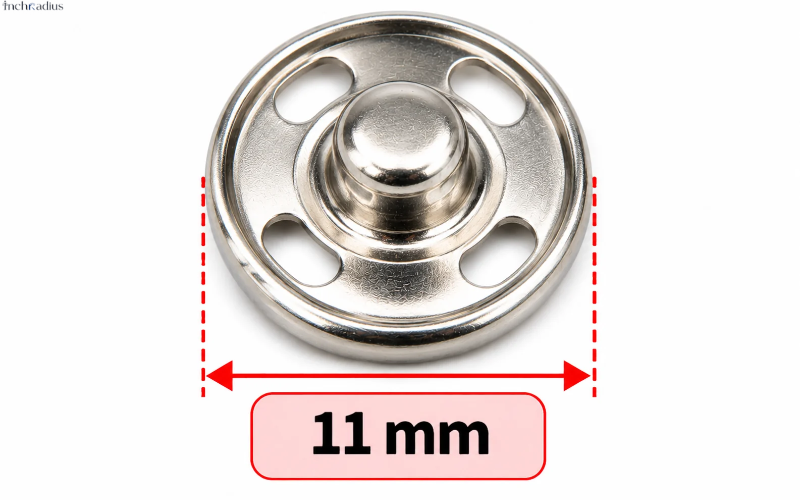
A round snap fastener is a small fastening component used on jackets, shirts, bags, baby clothing and other fabric products. Some varieties have a visible circular face measuring close to 11mm in diameter.
These fasteners consist of matching parts that connect when pressed together. Unlike an ordinary button, they usually hold fabric through a mechanical snapping action.
An 11mm snap fastener gives you a compact example of a measurement just over one centimetre. Look at the circular face and imagine a line passing straight through its centre. That distance from one outer edge to the other is the diameter.
Snap fasteners come in several sizes and finishes, including silver, brass and coloured options. The complete fastener may have different dimensions from its visible face, so check the product specifications when accuracy matters.
Related Post: 11 Common Things That Are 17 Feet Long
How to Measure 11mm Without a Ruler
You do not always need a measuring tool to estimate 11mm. A few familiar objects and simple techniques can help you get close to this measurement.
1. Start With a 1cm Reference
A centimetre is equal to 10mm, so 11mm is just 1mm longer. If you have a ruler with centimetre markings, find the 1cm line and picture a tiny additional distance beyond it.
This is the most reliable way to estimate the measurement without focusing on the smaller millimetre markings. It also helps you understand why 11mm is only slightly larger than 1cm.
2. Use a Small Button
Find a small shirt button that measures close to 11mm across. Hold it between your fingers and look at its circular face.
If you have several buttons, compare their sizes. A button that is just over 1cm wide can help you picture the target measurement. However, buttons come in different dimensions, so this method is only an estimate unless you have checked the button’s actual size.
3. Compare It With Your Fingertip
The width of an adult fingertip is usually much greater than 11mm, but it can still provide a rough reference.
Look at the width of your little finger near its tip and imagine a distance covering only part of that width. You can also place a small 1cm object against your fingertip to see how the measurements compare.
This method is less accurate because finger sizes vary from person to person. Use it only when you need a quick visual estimate.
Related Post: 10 Common Things That Are 18 Feet Long
FAQs
1. How many inches is 11mm?
11mm is approximately 0.433 inches. Rounded to two decimal places, it is 0.43 inches. This is slightly less than half an inch, which measures 12.7mm. The difference is small, but it matters when choosing components that need to fit accurately.
2. Is 11mm the same as 1cm?
No. One centimetre is exactly 10mm, while 11mm is 1.1cm. The difference is just 1mm. Although these measurements look very similar, they are not identical. This extra millimetre can matter when selecting jewellery parts, fasteners or other small components.
3. Is 11mm bigger than half an inch?
No. Half an inch is equal to 12.7mm, making it 1.7mm larger than 11mm. The difference may be difficult to notice without a ruler, but it can affect whether a component fits into a particular opening.
4. What does 11mm look like on a ruler?
On a metric ruler, 11mm is the distance from the zero mark to the first millimetre line after the 1cm mark. It is slightly longer than the space between 0cm and 1cm. You can use this small extra distance to picture the measurement.
5. How many millimetres are in 1.1cm?
There are exactly 11 millimetres in 1.1 centimetres. Every centimetre contains 10mm, so multiplying 1.1 by 10 gives 11mm. This conversion is useful when comparing measurements written in different metric units.
6. Is 11mm considered a small measurement?
Yes. 11mm is a relatively small measurement because it is only slightly longer than one centimetre. It is commonly found in small craft supplies, jewellery components, buttons and hardware. However, its importance depends on what you are measuring.
7. How can I measure 11mm accurately?
Use a metric ruler, digital calliper or suitable measuring gauge. A digital calliper is particularly helpful when measuring small round objects, internal openings or metal components. Place the measuring surfaces correctly and check the reading in millimetres for a more reliable result.
8. What household objects are close to 11mm?
Small buttons, miniature craft beads and decorative glass pieces can be close to 11mm. Their dimensions vary, so they should be treated as visual comparisons rather than exact measuring tools. For a precise reference, choose an object with a stated 11mm specification.
- Discover more everyday objects and their measurements in inches
- 10 Common Things That Are 21 Inches Long
- 12 Common Things That Are 20 Inches Long
- 10 Common Things That Are 19 Inches Long
- 12 Common Things That Are 18 Inches Long
- 10 Common Things That Are 6 Inches Long
Conclusion
11mm is a small but useful measurement, equal to 1.1cm or approximately 0.43 inches. It is just slightly longer than the 1cm mark on a ruler. Small wooden craft beads, shirt buttons, glass cabochons and metal hardware components provide practical ways to picture its size. For an especially clear reference, an 11mm drill bit or socket has a defined nominal measurement that can be checked against its specifications.
Remember that the measurement may describe a diameter, width or internal opening depending on the object. If accuracy matters for a repair or purchase, use a metric ruler or digital calliper rather than relying on visual comparisons alone.
