
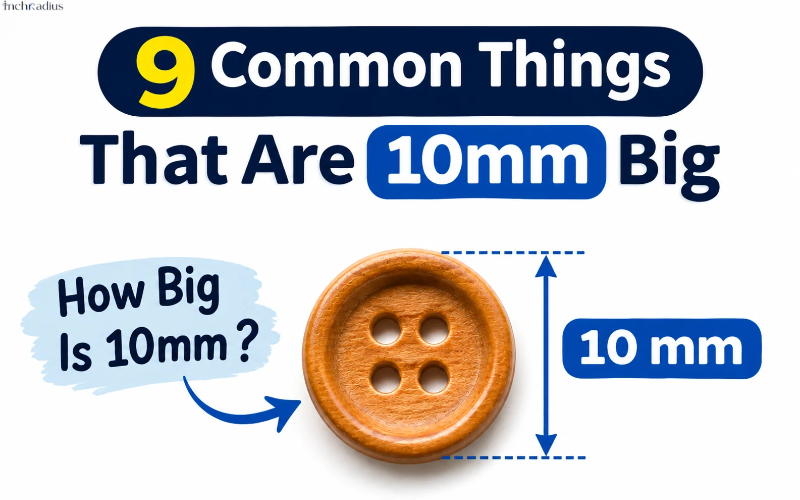
10 millimetres (10mm) is a small measurement equal to 1 centimetre, 0.39 inches, or 0.01 metres. It is roughly the width of a small fingernail or the diameter of a standard pencil, depending on the design. Although it may seem tiny, 10mm is easy to spot when compared with everyday objects.
You might come across this measurement when checking jewellery, screws, craft materials, small tools, or electronic parts. Familiar objects can help you picture the size without reaching for a measuring tape. Nine everyday examples provide useful reference points for seeing just how big 10mm really is.
How Long Is 10 Millimetres?
10 millimetres is exactly 1 centimetre. It is also approximately 0.39 inches, which means it is just a little shorter than half an inch. In metric measurements, 10mm is a convenient size because it makes up one complete centimetre.
This measurement is small enough to fit comfortably across part of a fingertip. It is also similar to the width of some small buttons and the diameter of certain everyday objects. These comparisons make it easier to recognise 10mm when you see it.
You may encounter this size when buying nuts and bolts, measuring small craft supplies, choosing jewellery, or checking the dimensions of electronic components. In DIY projects, even a difference of a few millimetres can affect whether a part fits properly.
Related Post: How Long Is 100 Feet? 11 Common Things That Are 100 Feet Long
How Big Is 10mm?
A 10mm measurement is approximately the width of a small fingernail. Imagine looking at your little finger from the front. The width of its nail may be close to 10mm, although this varies from person to person.
You can also picture 10mm by looking at a standard wooden pencil. Many pencils have a diameter of around 7–8mm, so 10mm is slightly wider. A centimetre marked on a ruler gives an even clearer reference.
On a sheet of paper, 10mm would cover a short distance between two markings on a metric ruler. It is not long enough to span the width of a typical smartphone, but it is large enough to notice on small household items.
These comparisons are useful for visualising the measurement, but they should not replace an accurate ruler when precise sizing matters.
9 Common Things That Are 10mm Big
Several everyday objects can help you picture a length of 10mm. The examples below come from different categories, including stationery, household supplies, jewellery, tools, and personal accessories.
| Everyday Item | Actual Size |
| Small shirt button | 10mm |
| Pencil eraser diameter | 10mm |
| Small craft bead | 10mm |
| Standard rubber O-ring thickness | 10mm |
| Small round cabinet knob | 10mm |
| Jewellery spacer bead | 10mm |
| Miniature plastic wheel | 10mm |
| Small washer outer diameter | 10mm |
| Short sewing needle eye | 10mm |
These are approximate examples. Actual dimensions depend on the product and manufacturer.
1. Small Shirt Button
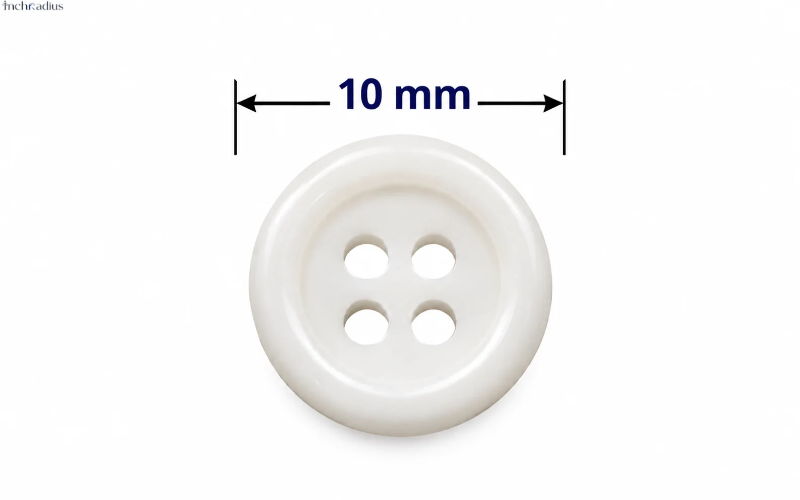
A small shirt button can have a diameter close to 10mm. Buttons of this size are often found on dress shirts, children’s clothing, and lightweight garments. Their compact design makes them suitable for holding fabric together without adding much weight or bulk.
Look at a button from directly above. Its circular face may measure around one centimetre from one edge to the other. This gives you a simple way to picture 10mm.
Not every shirt button has the same dimensions. Some are much smaller, while coat and jacket buttons are usually larger. If you have a button measuring approximately 10mm across, it provides a useful real-life comparison.
Related Post: How Long Is 90 Feet? 10 Common Things That Are 90 Feet Long
2. Pencil Eraser Diameter
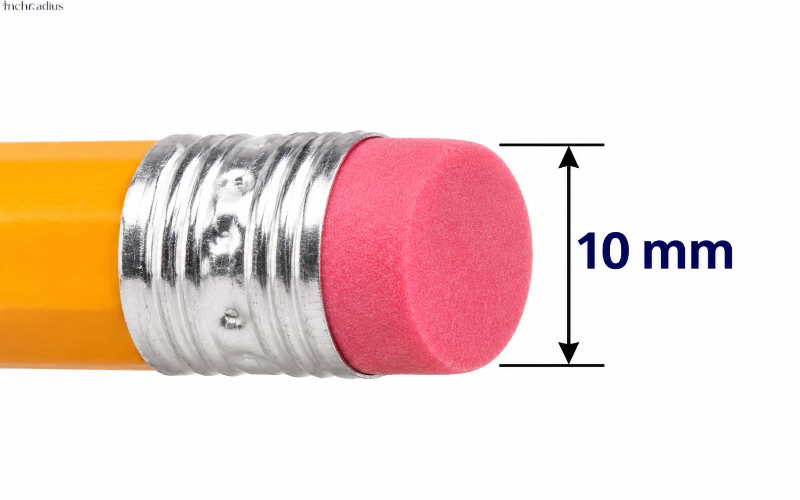
A small cylindrical pencil eraser can measure approximately 10mm across. This is particularly true of compact replacement erasers designed for mechanical pencils or smaller stationery products.
The easiest way to use this comparison is to look at the circular end of the eraser. Measure from one side straight across to the opposite side. If the diameter is close to one centimetre, you have a practical example of 10mm.
Pencil erasers come in many shapes and sizes. Some are wider, while others are narrow enough to fit inside a pencil holder. A 10mm eraser is useful for visualising this measurement because its round shape makes the width easy to recognise.
Related Post: How Long Is 80 Feet? 9 Common Things That Are 80 Feet Long
3. Small Craft Bead
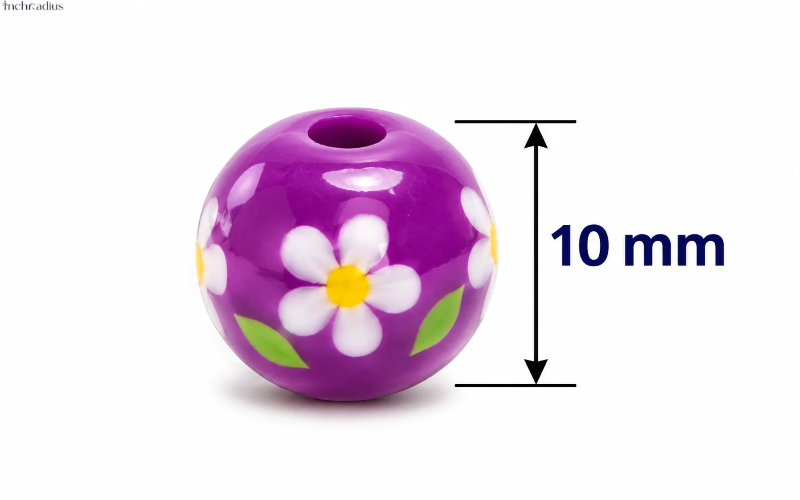
Small craft beads are available in many diameters, including 10mm. They are commonly used for making bracelets, necklaces, keyrings, decorative items, and children’s craft projects.
A round bead measuring 10mm across has a diameter of exactly one centimetre. Its size is easy to picture because you can hold it between your thumb and index finger.
The important detail is the distance across the widest part of the bead, not the size of the hole through its centre. Some beads are also slightly flattened or oval, so their dimensions can differ depending on which direction you measure.
A 10mm bead is a particularly useful example if you enjoy jewellery making or small DIY projects. It shows how much space one centimetre occupies in a compact object.
4. Standard Rubber O-Ring Thickness
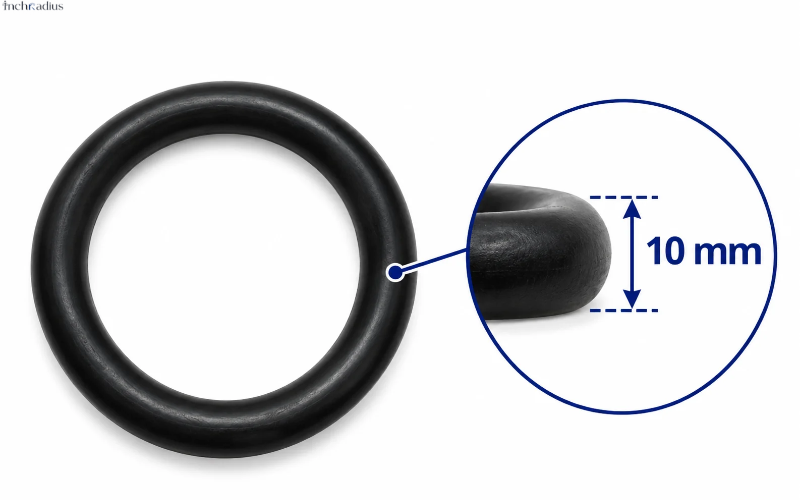
Rubber O-rings are circular seals used in plumbing, machinery, pumps, and various household appliances. They come in a wide range of dimensions, and some thicker O-rings have a cross-sectional thickness of approximately 10mm.
Unlike the diameter of a button or bead, this measurement refers to the thickness of the rubber material itself. Imagine cutting through the ring and looking at the rounded rubber section. That section may measure close to one centimetre across.
This distinction matters because an O-ring can have a much larger overall diameter while its rubber thickness remains around 10mm.
If you have ever handled a replacement seal for a machine or plumbing fitting, you may have seen several sizes. A thicker 10mm example helps demonstrate how substantial one centimetre can look in a solid rubber component.
Related Post: How Long Is 70 Feet? 10 Common Things That Are 70 Feet Long
5. Small Round Cabinet Knob
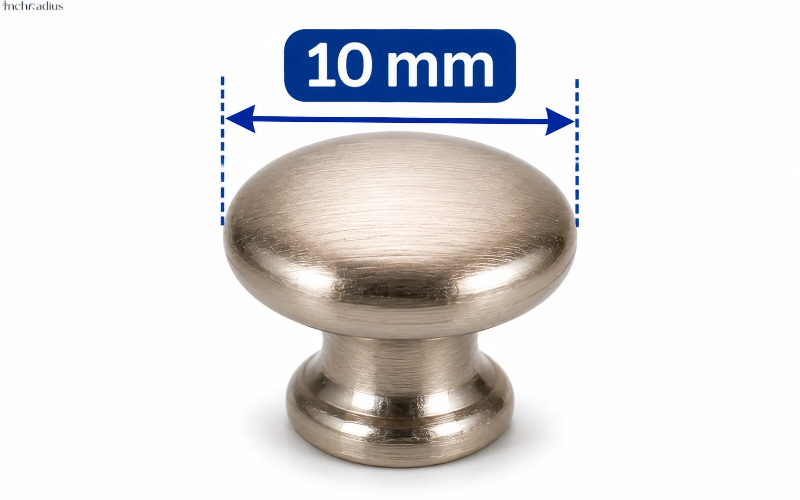
Some compact cabinet and furniture knobs have a circular front measuring around 10mm in diameter. These are generally small decorative fittings used on miniature furniture, craft projects, or specialised cabinets.
Imagine looking directly at the front of the knob. The distance across its circular face may be close to one centimetre. This makes it an easy object to compare with the 10mm marking on a ruler.
Most standard kitchen cabinet knobs are considerably larger, so it is important not to assume every knob has this measurement. The smaller decorative versions are the better comparison.
You may find similar fittings on jewellery boxes, miniature cupboards, and small storage containers. Their compact shape gives you a useful idea of what a 10mm width looks like.
6. Jewellery Spacer Bead
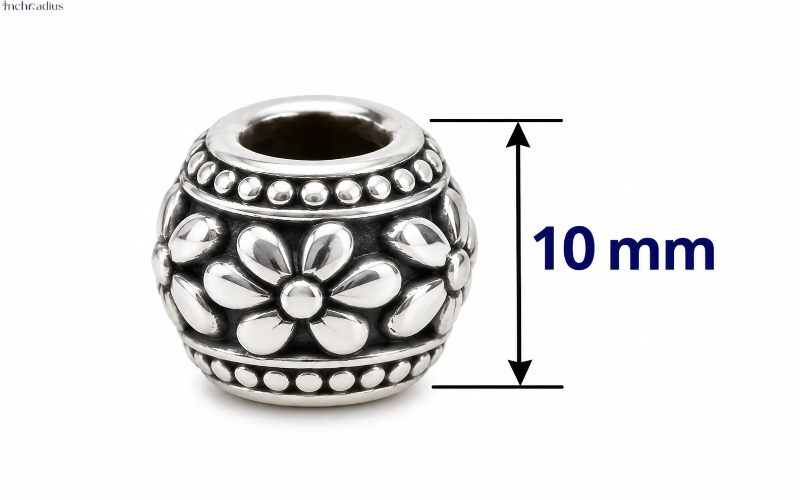
Jewellery spacer beads are small components used to separate larger beads in bracelets and necklaces. Some decorative spacer beads measure approximately 10mm in diameter or length, depending on their shape.
A round spacer bead measuring 10mm across is particularly useful for visualising one centimetre. You can hold it between two fingers and compare its width with the markings on a metric ruler.
These beads are made from different materials, including stainless steel, silver, glass, and acrylic. Their dimensions can vary considerably, so a 10mm example should be checked against the product specifications.
Spacer beads are useful in jewellery design because they help create balanced gaps between larger decorative pieces. Their small size also makes them a practical comparison for understanding how much space 10mm occupies.
Related Post: How Long Is 60 Feet? 11 Common Things That Are 60 Feet Long
7. Miniature Plastic Wheel
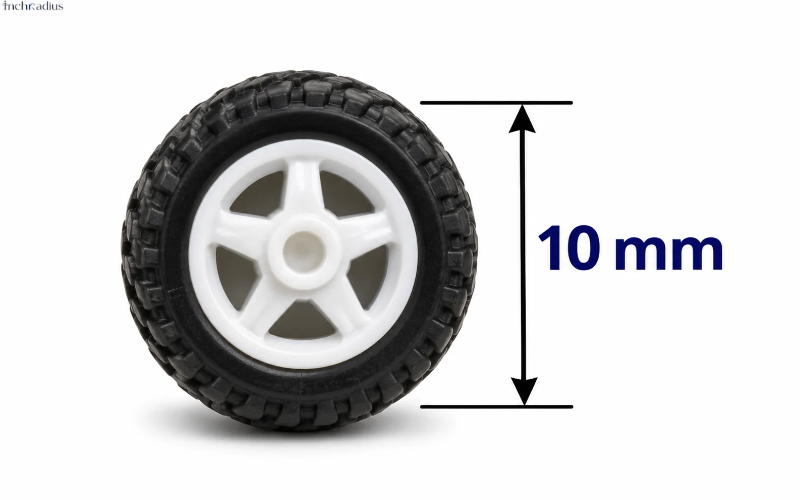
Small plastic wheels used in miniature toys, model vehicles, and craft projects can have a diameter of approximately 10mm. These wheels are much smaller than those found on regular toys, bicycles, or household equipment.
Look at the wheel from the side. Its diameter is the distance from the top edge to the bottom edge, passing through the centre. If that distance measures one centimetre, it gives you a clear example of 10mm.
Miniature wheels are often used in model cars, small robotic projects, and handmade moving displays. Some are made entirely from plastic, while others have a rubber outer layer to improve grip.
Their circular shape makes them easy to measure and compare. A 10mm wheel is also small enough to sit comfortably between your fingertips.
8. Small Washer Outer Diameter
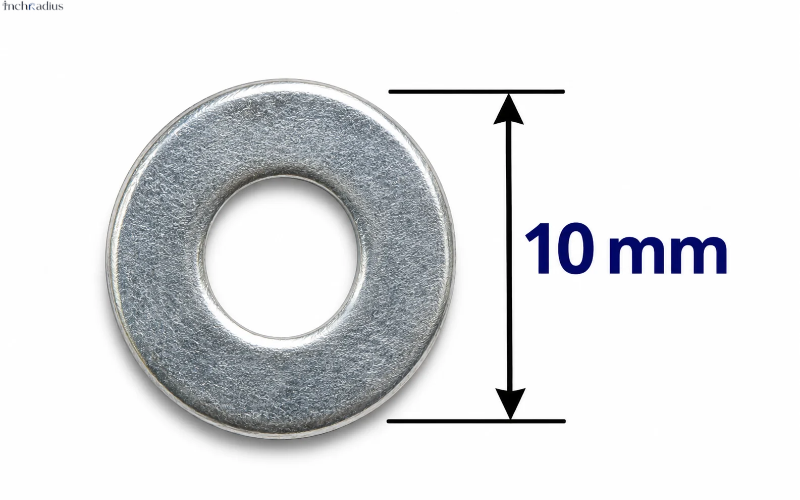
A small metal washer can have an outer diameter of approximately 10mm. Washers are flat, circular components with a hole in the middle. They are commonly used with screws, bolts, and other fasteners to spread pressure across a surface.
For this comparison, focus on the full outside width of the washer. Measure from one outer edge to the opposite outer edge, passing through the centre. This distance may be close to 10mm.
The central hole is not included in the outer diameter. A washer with a 10mm outside diameter may have a much smaller opening.
Washers are available in different materials and sizes, including steel, stainless steel, and brass. They are particularly useful examples because they show how one centimetre can be represented by a small but solid metal component.
Related Post: How Long Is 50 Feet? 12 Common Things That Are 50 Feet Long
9. Short Sewing Needle Eye
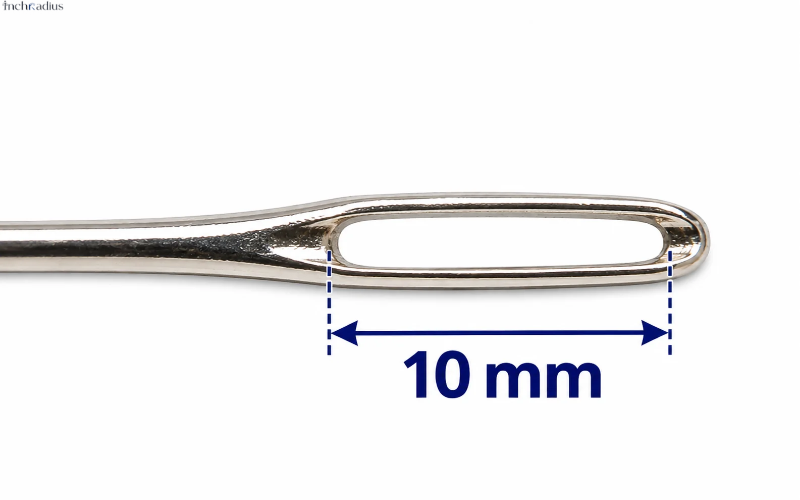
The eye of a sewing needle is the small opening near its blunt end where the thread passes through. On some larger sewing needles, the eye section and its surrounding metal area may measure close to 10mm in length.
This is not a universal measurement. Needle designs differ depending on their purpose, and many ordinary sewing needle eyes are much shorter than 10mm.
For a visual comparison, look at the thicker upper section of a suitable needle rather than assuming the opening itself is one centimetre long. A ruler can help confirm the actual dimensions.
Sewing needles are useful for understanding small measurements because their narrow shape makes even a few millimetres noticeable. They also demonstrate why checking the precise part of an object matters when comparing measurements.
Related Post: How Long Is 40 Feet? 11 Common Things That Are 40 Feet Long
How to Measure 10mm Without a Ruler
You do not always need a measuring tape to estimate 10mm. A few familiar objects and simple methods can help you picture a centimetre.
1. Use Your Fingernail
Look at the width of your little fingernail. For some people, it may be close to 10mm. Place your finger beside the object you want to estimate and compare their widths.
Remember that fingernails vary between people, so this method is only a rough guide.
2. Use a Small Bead
If you have a craft bead measuring 10mm, keep it as a reference object. Place it beside another small item to compare their widths.
This method works particularly well with buttons, jewellery components, and small DIY parts.
3. Use a Metric Ruler
A metric ruler is the most reliable household option. Find the centimetre markings and look at the space between two neighbouring centimetre numbers.
That complete space represents 10mm. You can also use the smaller millimetre markings to measure objects more accurately.
For a slightly larger comparison, 10mm is just under half an inch. You can use that relationship when estimating small objects in an imperial measurement system.
Related Post: How Long Is 30 Feet? 10 Common Things That Are 30 Feet Long
FAQs
1. Is 10mm the same as 1cm?
Yes. 10mm is exactly equal to 1cm. Both measurements describe the same length, but they use different units. Millimetres are often preferred for smaller objects, while centimetres are convenient for everyday measurements such as the width of a button or the length of a small item.
2. How many inches is 10mm?
10mm is approximately 0.3937 inches. For everyday estimates, you can round this to 0.39 inches. It is slightly shorter than half an inch, which measures exactly 12.7mm.
3. Is 10mm bigger than half an inch?
No. Half an inch is 12.7mm, so it is 2.7mm longer than 10mm. The difference may seem small, but it can matter when measuring screws, fittings, and other parts that need to fit precisely.
4. What does 10mm look like on a ruler?
On a metric ruler, 10mm is the distance between two centimetre markings. It covers ten individual millimetre intervals. If you start at zero and move to the 10mm mark, you have measured exactly one centimetre.
5. Is a fingernail about 10mm wide?
Some fingernails, particularly those on smaller fingers, may be close to 10mm wide. However, nail widths vary according to finger size and individual anatomy. Use your fingernail for a quick visual estimate rather than an exact measurement.
6. How can I measure 10mm accurately?
Use a metric ruler or digital calliper. Place the object at the zero mark and check where its opposite edge reaches. A digital calliper is particularly useful for measuring small components, such as washers, beads, and metal fittings.
7. How many millimetres are in half an inch?
Half an inch is exactly 12.7mm. This means 10mm is slightly shorter than half an inch. The conversion is useful when comparing metric measurements with products or tools that use inches.
8. What common object is closest to 10mm?
A small round craft bead with a 10mm diameter is an excellent example because its dimensions are often clearly stated by the manufacturer. A small button or fingernail may also look similar, although their actual sizes can vary.
- Discover more everyday objects and their measurements in inches
- 9 Common Things That Are 26 Inches Long
- 9 Common Things That Are 25 Inches Long
- 9 Common Things That Are 24 Inches Long
- 9 Common Things That Are 23 Inches Long
- 10 Common Things That Are 22 Inches Long
Conclusion
10mm is a small measurement, but it is easy to picture when compared with everyday objects. It is exactly 1 centimetre or approximately 0.39 inches, making it slightly shorter than half an inch. A small craft bead, shirt button, or pencil eraser can help you visualise this size. Your fingernail may also provide a rough reference, although its width depends on your finger size. For a quick reminder, think of the 1cm mark on a metric ruler.
It represents exactly 10mm and is a simple way to estimate this measurement whenever you need it.
