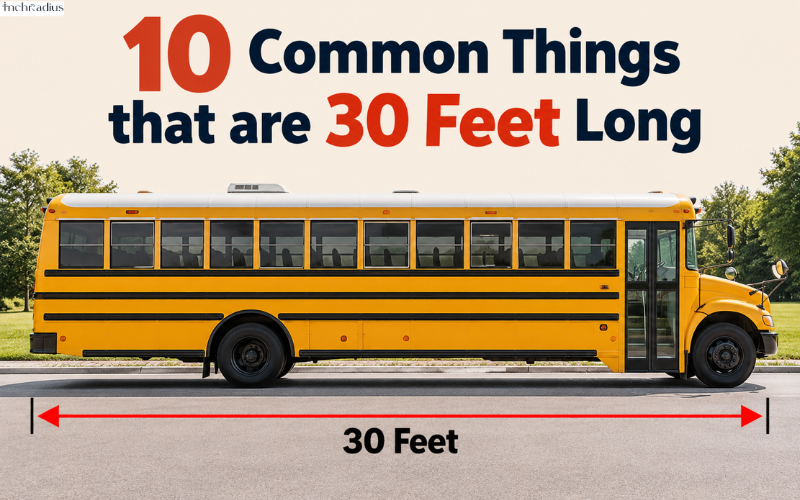
30 feet is equal to 360 inches, 9.144 metres, 914.4 centimetres, or 9,144 millimetres. It is a substantial length, roughly the distance covered by three average-sized cars parked end to end, depending on their sizes. To picture 30 feet more clearly, imagine a large recreational vehicle, a long shipping container, or a section of garden fencing stretching across a yard. These familiar comparisons make it easier to estimate the distance when you do not have a tape measure nearby.
Whether you are planning a home improvement project, measuring a garden, checking the space needed for a vehicle, or simply curious about everyday dimensions, a few real-world examples can help turn 30 feet into a measurement you can visualise.
How Long Is 30 Feet?
Thirty feet is a linear measurement equal to 10 yards or 360 inches. In metric units, it measures 9.144 metres, which is 914.4 centimetres or 9,144 millimetres. These are exact conversions, so they remain the same regardless of what you are measuring.
In everyday terms, 30 feet is about the length of a small bus, a long recreational vehicle, or a sizeable section of fencing. The precise dimensions of these objects vary, so they are useful visual references rather than exact measuring tools. A 30-foot distance can also describe the length of a room in a commercial building, a driveway section, or an outdoor space.
This measurement is particularly useful when estimating larger areas that are awkward to measure in inches. Thinking in feet makes it easier to plan furniture layouts, assess vehicle parking space, or work out how much fencing may be needed. For an accurate result, use a tape measure or another suitable measuring instrument.
How Big Is 30 Feet?
Thirty feet is nearly as long as a standard tennis court is wide and a little longer than the length of many family cars placed in a row. Picture standing at one end of a 30-foot stretch of garden and looking towards the other: it is a distance that would take several ordinary walking steps to cover, rather than just one or two.
Household objects can help establish smaller reference points. A typical sheet of A4 paper is about 11.7 inches long, so lining up roughly 31 sheets end to end would cover around 30 feet. This is only a theoretical comparison, as small gaps or overlaps can affect the result. You could also use a 12-inch ruler repeatedly, although moving it carefully would take time.
For outdoor spaces, fence runs, vehicle lengths, and marked distances on the ground are usually easier to picture. Remember that an object’s overall length may include projecting parts, so use its actual dimensions if precision matters.
Related Post: 11 Common Things That Are 19 Feet Long
10 Common Things That Are 30 Feet Long
Several familiar objects and structures can help you visualise a distance of 30 feet. Some are manufactured in this exact length, while others come in different sizes and are useful as approximate comparisons. The table below gives ten examples to consider when picturing this measurement.
| Everyday Item | Actual Size |
| 1. Recreational vehicle (motorhome) | 30 feet |
| 2. Sailboat | 30 feet |
| 3. Travel trailer | 30 feet |
| 4. Garden fence run | 30 feet |
| 5. Extension ladder | 30 feet |
| 6. Swimming pool | 30 feet |
| 7. Garden hose | 30 feet |
| 8. Small bus | 30 feet |
| 9. Driveway section | 30 feet |
| 10. Boat mooring space | 30 feet |
These examples describe a target length rather than a universal size. Some products are available in 30-foot versions, while the dimensions of vehicles, boats, pools, and outdoor spaces vary by model and design.
1. Recreational Vehicle (Motorhome)
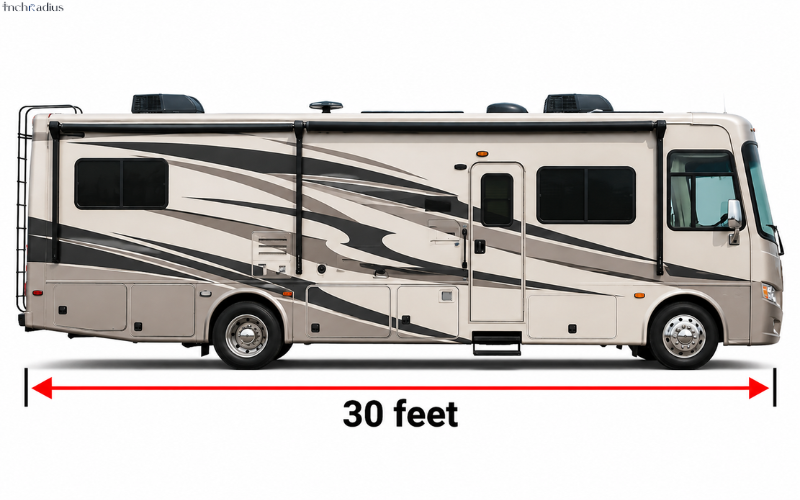
A 30-foot motorhome provides a useful way to picture a long, enclosed vehicle. Motorhomes are designed to combine transport with living space, often including sleeping areas, a small kitchen, storage cupboards, and a bathroom. Some models measure around 30 feet from front to rear, although the length depends on the manufacturer and floor plan.
Imagine a motorhome parked beside a house. Its front bumper and rear end could span approximately 30 feet of driveway. That is a considerable amount of space, which explains why owners need to consider parking arrangements before purchasing one.
To use this example as a measuring reference, check the vehicle’s published overall length rather than estimating from a photograph. Some motorhomes have projecting bumpers or other features that affect their total dimensions. A model that is exactly 30 feet long gives you a direct visual comparison with the measurement.
2. Sailboat
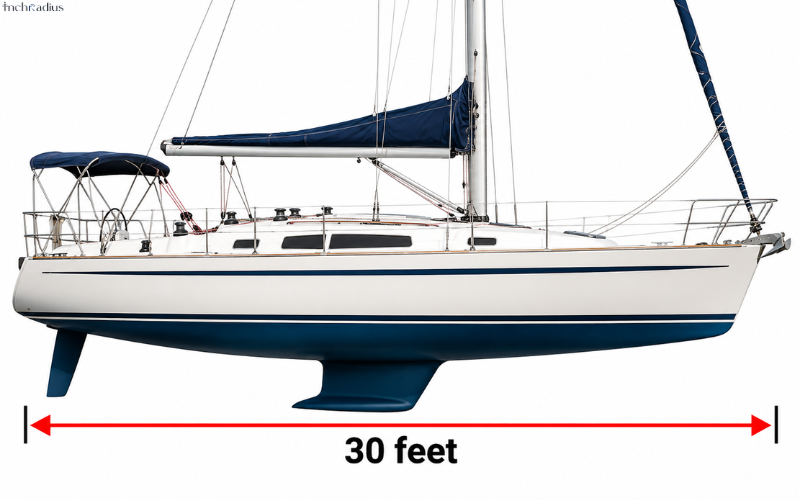
A 30-foot sailboat is another practical comparison. Boats are often described by their overall length, which is measured from the foremost to the rearmost point of the vessel. A sailboat in this size range may have a cabin, sleeping berths, a small galley, and enough deck space for recreational sailing.
Although the mast rises far above the hull, the boat’s length is measured horizontally along its overall dimensions. This distinction matters because height and length describe different measurements.
Picture a sailboat sitting in a marina berth. Its bow-to-stern distance may occupy around 30 feet, giving you a clear idea of how far that measurement extends. Sailboats are available in many sizes, so check the manufacturer’s specifications before using a particular vessel as a reference. An accurately measured 30-foot boat is a helpful comparison for planning a space of similar length, especially around docks and storage areas.
3. Travel Trailer
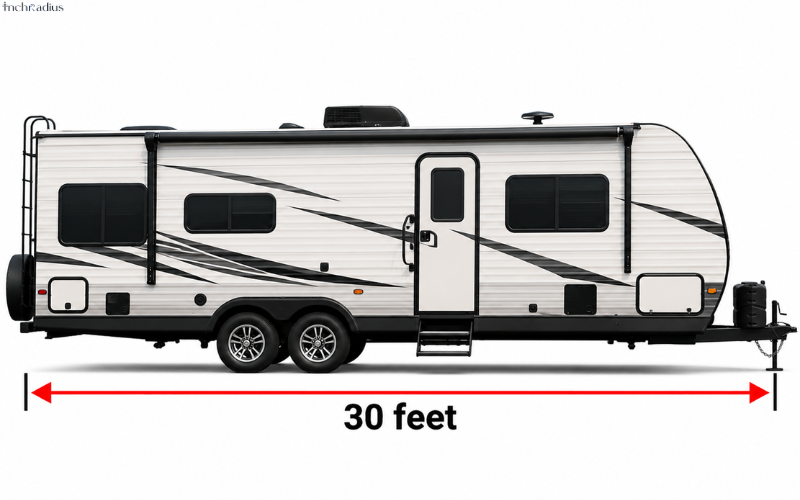
A travel trailer measuring 30 feet long can make the measurement easier to imagine because it has a clearly defined front and rear. These towable recreational vehicles are used for holidays and camping trips. Depending on the layout, the interior may contain beds, a dining area, a kitchenette, a bathroom, and storage space.
A 30-foot trailer takes up a significant amount of room when parked. Owners need to account for the trailer’s length as well as the towing vehicle, turning space, and clearance around obstacles. This is why the overall length is important when choosing a campsite or storage location.
For a simple comparison, imagine marking two points 30 feet apart on a driveway. A trailer with that overall length would span approximately the same distance. Be careful when comparing product listings, though: some manufacturers state the body length, while others advertise the overall length, including the hitch. Check the measurement definition before relying on it.
4. Garden Fence Run
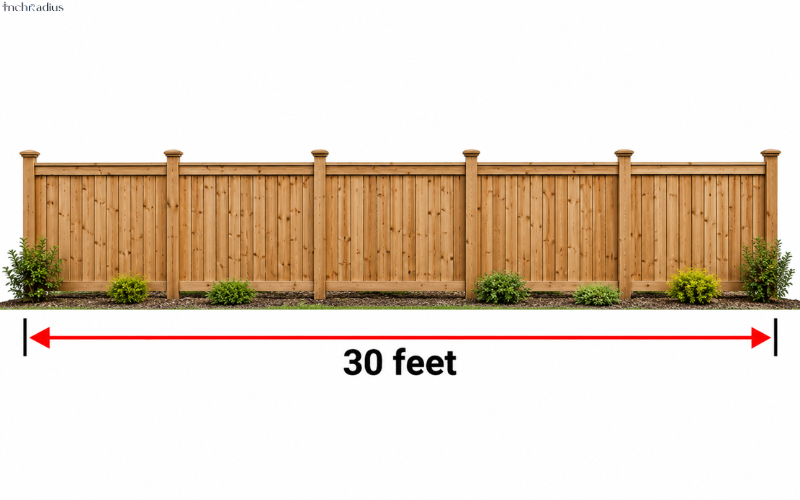
A garden fence is an especially useful reference because you can measure its length in a straight line along the ground. A run of fencing extending for 30 feet covers a noticeable section of a garden boundary, patio, or lawn. It might consist of several shorter panels connected between posts.
For example, six five-foot-wide panels would cover 30 feet when fitted edge to edge, assuming the stated panel widths represent the full span and there are no additional gaps. Actual fence layouts may differ because of post thickness, overlaps, gates, and uneven ground.
This comparison is practical for anyone planning a garden improvement project. If you want to estimate how much fencing to buy, measure the boundary rather than assuming every panel has the same dimensions. Marking a 30-foot line with string can also help you picture the finished fence before installation begins.
5. Extension Ladder

A 30-foot extension ladder gives you a familiar object with a clearly stated length. Extension ladders have two or more sliding sections that allow the user to adjust their reach. A ladder described as 30 feet long may refer to its maximum extended length rather than the length of each individual section.
This distinction is important because an extension ladder is shorter when its sections overlap in the stored position. Its usable reach is also different from its overall length. When leaning against a wall, the ladder sits at an angle, so its vertical height is less than the distance measured along the rails.
For visualising 30 feet, imagine the ladder fully extended and laid horizontally on level ground. It would span a distance of roughly 9.14 metres. Never use an extended ladder as an improvised measuring device or climb it just to estimate a distance. Check the manufacturer’s specifications and follow the safety instructions whenever using one.
6. Swimming Pool
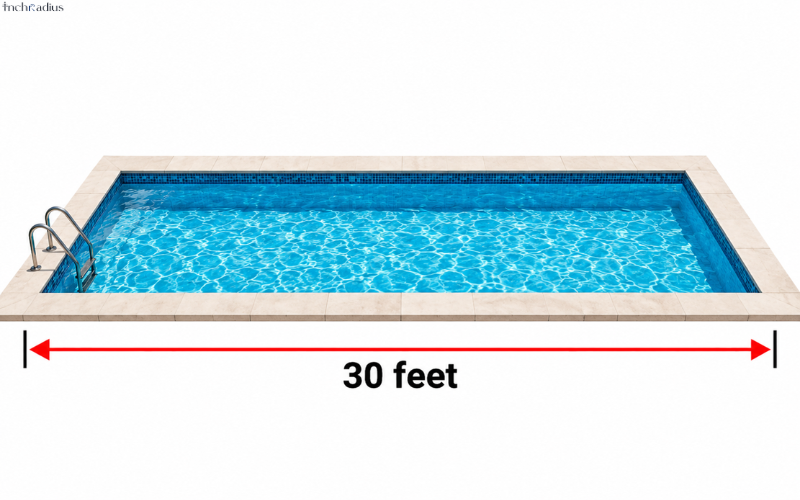
A swimming pool measuring 30 feet from one end to the other provides an easy outdoor comparison. Pools come in many shapes and dimensions, including compact rectangular designs for residential gardens. A 30-foot pool can provide enough space for recreational swimming, floating, and water games, depending on its width and depth.
It is shorter than a standard 25-metre swimming pool used for short-course competitive swimming. The difference is clear when you compare 30 feet with 25 metres, which equals about 82 feet. This comparison also shows why checking the unit is essential when reading pool specifications.
If you are planning a pool installation, the stated water length may not include surrounding coping, paving, or equipment space. The complete installation will therefore require a larger area than the pool’s dimensions alone suggest. To picture 30 feet in your own garden, mark out a straight line of that length and consider how much surrounding space the project would need.
7. Garden Hose
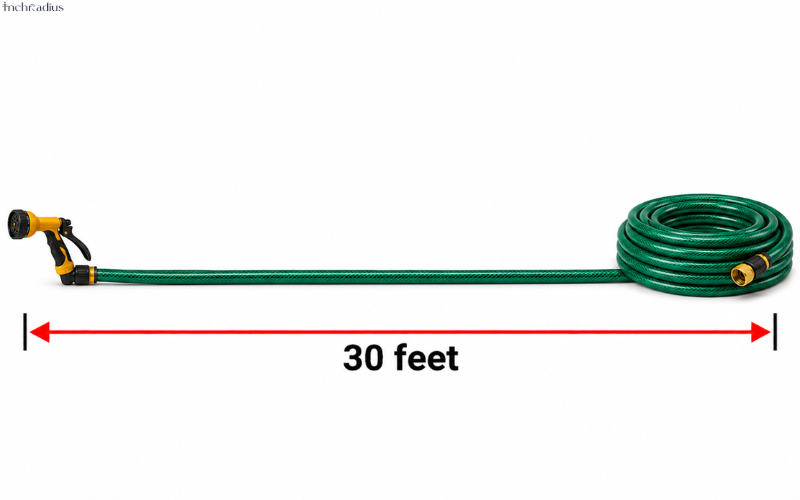
A 30-foot garden hose is a straightforward example because hoses are commonly sold in specified lengths. A hose of this size measures 30 feet from one end to the other when stretched out, excluding any measurement differences associated with connectors if the stated product length refers only to the hose itself.
In a garden, 30 feet of hose can help reach flower beds, containers, or lawn areas some distance from an outdoor tap. Its usefulness depends on the location of the tap, obstacles in the garden, water pressure, and how the hose is routed.
To visualise the length, lay the hose out in a straight line on clear ground. It will cover about 9.14 metres. A coiled hose can look much shorter because the length is wrapped into a compact circle, so it is the uncoiled measurement that matters. If you are buying a hose, check the listed length and allow extra distance for bends around buildings and garden furniture.
8. Small Bus
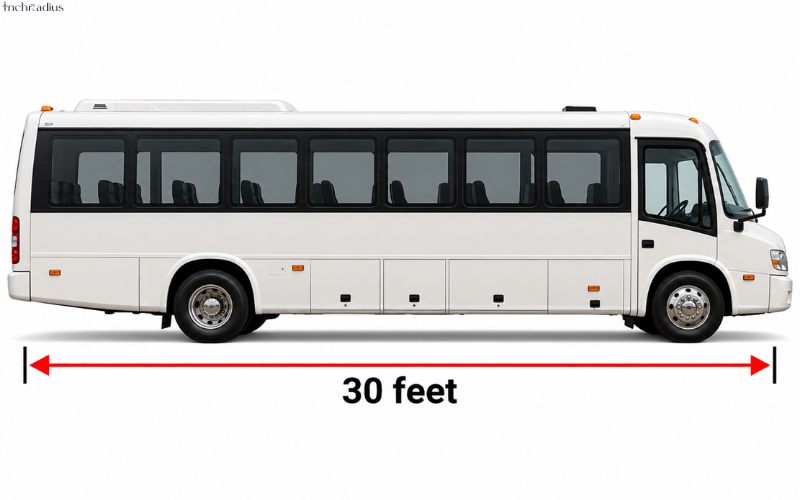
A small passenger bus can be a useful visual reference for 30 feet, although not every small bus has this length. Vehicle dimensions depend on the seating capacity, body design, engine layout, and intended use. Some compact buses are around 30 feet long, while larger city and school buses can be considerably longer.
Imagine a bus parked alongside a pavement. Its front and rear ends provide two visible points, making it easier to appreciate the distance than trying to picture an abstract number. A bus of around 30 feet can span much of a residential driveway or a substantial section of a parking area.
For an accurate comparison, use the manufacturer’s overall vehicle length. Do not rely on the number of seats or the vehicle’s appearance, as neither provides a dependable measurement. This example is most helpful for estimating space for parking, access, and turning, where a difference of even a few feet can matter.
9. Driveway Section
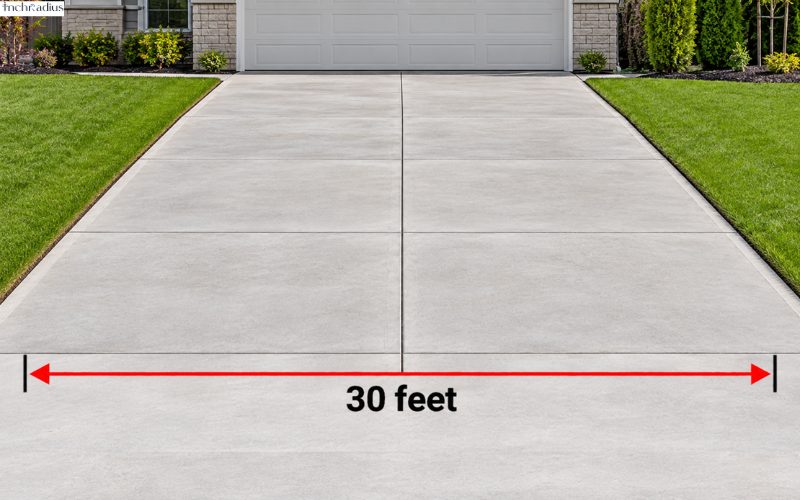
A 30-foot section of driveway is a practical way to understand the measurement around the home. Driveways vary in length, but a straight section measuring 30 feet can provide space for a parked vehicle and additional clearance, depending on the vehicle and the layout of the property.
To picture this distance, imagine standing at the garage entrance and walking 30 feet towards the road. The point you reach marks the end of the measured section. This can be useful when planning a parking space, deciding where to place planters, or estimating how much paving material a project may need.
The measurement should follow the driveway’s actual line. A sloping or curved driveway can make visual estimation more difficult, and a 30-foot path along a curve is not the same as a 30-foot straight-line distance between two points. Use a tape measure or measuring wheel for reliable planning, particularly when materials are being ordered.
10. Boat Mooring Space

A 30-foot boat mooring space helps illustrate the length in a marina or harbour. A mooring berth is the area where a boat is secured while not in use. Berths are often allocated according to vessel size, with additional room needed for safe access and manoeuvring.
A space measuring 30 feet from one end to the other may suit a smaller recreational boat, but suitability depends on the boat’s actual overall length, the berth layout, and local marina rules. The bow, stern, and any projecting fittings can affect how much room is required.
Picture a line running along the dock from the front boundary of a berth to its rear boundary. If that distance is 30 feet, it provides a useful reference for the measurement. Before booking or purchasing a mooring space, confirm the usable length with the marina. A nominal 30-foot berth should not automatically be assumed to accommodate every boat listed as 30 feet long.
How to Measure 30 Feet Without a Ruler
You do not always need a long tape measure to estimate 30 feet. Several everyday methods can help you get close, although you should use proper measuring equipment when accuracy matters.
1. Count Your Walking Steps
For many adults, an ordinary walking step covers roughly 2 to 2.5 feet, depending on height, stride, and walking speed. At that rate, 30 feet might take around 12 to 15 steps.
To try this method, mark your starting point and walk naturally towards your destination, counting each step. This provides a quick estimate for a garden or driveway. However, walking strides vary, so do not treat the result as an exact measurement. If you need a more reliable estimate, measure your usual stride over a known distance first.
2. Use a Measured Rope or Hose
A rope or garden hose marked at 30 feet can serve as a convenient reference. Stretch it out along the ground in a straight line, keeping it reasonably taut without pulling it excessively. The distance between its ends will show you how far 30 feet extends.
If you already own a hose labelled as 30 feet long, check whether the manufacturer includes connectors in that stated length. This method is particularly handy for garden planning, marking out a fence, or estimating the size of an outdoor project.
3. Combine Shorter Measurements
If you have a one-foot ruler, you can build up the distance using repeated measurements. Thirty feet equals 30 one-foot lengths, or 360 inches. Mark each completed foot along the ground until you reach the target.
This approach is accurate when performed carefully, but it can take time. Overlapping marks or leaving gaps may affect the final result. For larger areas, a long tape measure or measuring wheel is usually more convenient.
Related Post: 10 Common Things That Are 20 Feet Long
FAQs
1. How many inches are in 30 feet?
There are exactly 360 inches in 30 feet. One foot contains 12 inches, so multiplying 30 by 12 gives 360. This conversion is useful when working with construction plans, furniture dimensions, or other measurements that use inches instead of feet.
2. How many metres is 30 feet?
Thirty feet equals exactly 9.144 metres. To convert feet into metres, multiply the number of feet by 0.3048. For practical estimates, you can round 30 feet to approximately 9.14 metres, but use the unrounded figure when accuracy is important.
3. How many centimetres is 30 feet?
Thirty feet equals 914.4 centimetres. Since one foot is 30.48 centimetres, multiplying 30 by 30.48 produces the exact conversion. This is useful when comparing imperial measurements with metric specifications for building materials, outdoor spaces, or equipment.
4. How many millimetres are in 30 feet?
Thirty feet is equal to 9,144 millimetres. There are 304.8 millimetres in one foot, so the conversion is 30 multiplied by 304.8. Millimetres are especially useful for detailed technical work, although metres or centimetres are generally easier to visualise for a distance this long.
5. Is 30 feet considered a long distance?
Thirty feet is a substantial length for a room, vehicle, or garden feature, but it is relatively short compared with a road or sports field. It is long enough to affect parking arrangements, fence planning, and the layout of many outdoor spaces. The practical significance depends on what you are measuring.
6. What everyday object is closest to 30 feet long?
A motorhome, sailboat, or travel trailer with a published overall length of 30 feet can provide a close comparison. However, these objects come in different sizes, so their dimensions should be checked before using them as measuring references. A marked 30-foot hose or measured fence run provides a more direct example.
7. Can three cars fit within 30 feet?
It depends on the cars and how they are parked. Three small cars may have a combined length close to 30 feet, but many family cars are longer than 10 feet, making the total greater than 30 feet. Bumpers, gaps between vehicles, and parking angles also affect the space required.
8. How can I mark out 30 feet in my garden?
Use a tape measure to mark a straight line from your chosen starting point to a point 30 feet away. Place small markers at both ends, and use string between them if you need a visible boundary. For fencing, paving, or other permanent work, check the measurements again before buying materials or beginning installation.
Conclusion
Thirty feet is equal to 360 inches, 9.144 metres, 914.4 centimetres, and 9,144 millimetres. The easiest way to picture it is to imagine a motorhome of that length, a 30-foot sailboat, or a garden fence stretching across a sizeable part of a yard. A marked garden hose or a measured driveway section can also help you visualise the distance in a real setting.
If you need to estimate 30 feet without measuring equipment, counting your walking steps can provide a rough starting point. For anything that requires precision, such as installing fencing, planning parking space, or laying paving, use a suitable measuring tool. Real-world comparisons help you picture the distance, but accurate measurements ensure your plans fit the available space.