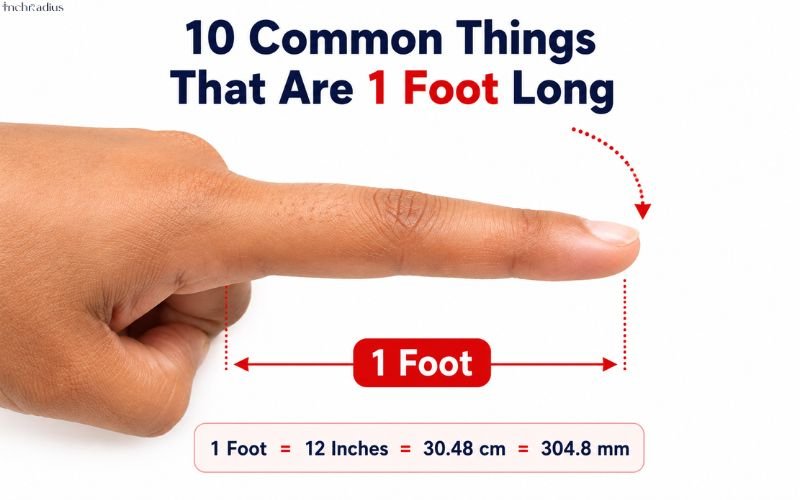
If you are searching for how long is a foot, the answer is straightforward. One foot equals 12 inches, 30.48 centimetres (centimeters), or 304.8 millimetres (millimeters). It is one of the most common measurements used in homes, schools, workshops, and construction projects.
Although the number is easy to remember, it is often much easier to picture a foot by comparing it with familiar objects. Many household items are close to this length, helping you estimate measurements without always reaching for a ruler or tape measure.
In this guide, you will find practical examples that make it simple to recognise what 1 foot looks like. Instead of using the same examples found in many articles, these comparisons focus on everyday items that are useful and easy to imagine.
1 Foot Conversion Table
How Long Is a Foot?
A foot is a standard unit of length equal to 12 inches, 30.48 cm, or 304.8 mm. You will often see this measurement when buying furniture, choosing storage boxes, installing shelves, planning home improvements, or measuring small spaces.
One foot is large enough to notice but still short enough to estimate with everyday objects. Once you become familiar with its size, you can quickly judge whether an item is longer or shorter without using measuring tools.
For example, imagine a square scrapbook paper sheet, a ceiling tile, or the depth of many kitchen cabinets. These objects are close to one foot, making them excellent visual references. Instead of remembering numbers, you simply picture something you have already seen.
Many readers also search for what does 1 foot look like or how big is 12 inches because both measurements describe exactly the same length. Learning a few reliable comparisons makes shopping, decorating, gardening, and DIY projects much easier.
If you already know the size of 10 inches, adding just a little more length gives you a full foot. Small comparisons like this help you estimate measurements naturally in everyday situations.
10 Common Things That Are 1 Foot Long
| Common Item | Approximate Length |
| 12×12 Scrapbook Paper | 1 foot |
| Standard Ceiling Tile | 1 foot |
| Kitchen Cabinet Depth | 1 foot |
| Storage Cube Organiser (Organizer) | 1 foot |
| Square Garden Paver | 1 foot |
| Wooden Rolling Pin | 1 foot |
| Medium Wall Clock | 1 foot |
| Dining Chair Seat Width | 1 foot |
| Plant Pot Saucer | 1 foot |
| Chrome Wrench | 1 foot |
1. 12×12 Scrapbook Paper
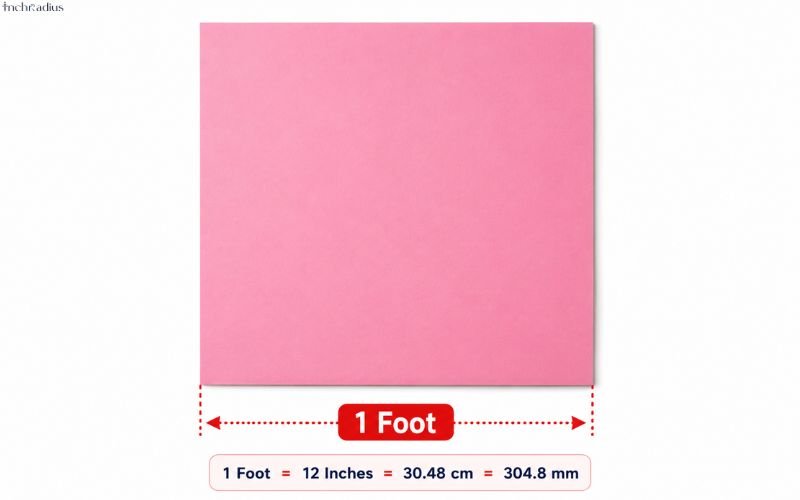
A 12×12 scrapbook paper sheet is one of the easiest ways to picture 1 foot because both its width and height measure exactly one foot. Unlike many everyday objects that come in different sizes, scrapbook paper follows a standard size, making it a reliable reference whenever you need to estimate a foot.
People use these paper sheets for scrapbooking, greeting cards, school projects, memory albums, and craft decorations. If you have ever visited a craft shop, you have probably seen stacks of colourful square sheets displayed together. Each one gives you a perfect example of what one foot looks like.
The square shape also makes it easy to compare with other items around your home. Picture the sheet lying flat on a table. The distance from one edge to the opposite edge is one foot, while the diagonal appears much longer. This simple image helps you judge the size of books, trays, storage boxes, and photo frames.
If you already have a good idea of 1 inch, imagine placing twelve of those small sections together in a straight line. That creates one foot, making it much easier to estimate larger objects without measuring them.
Because scrapbook paper has an exact standard size, it is one of the most practical examples for anyone trying to understand how long is a foot.
2. Standard Ceiling Tile
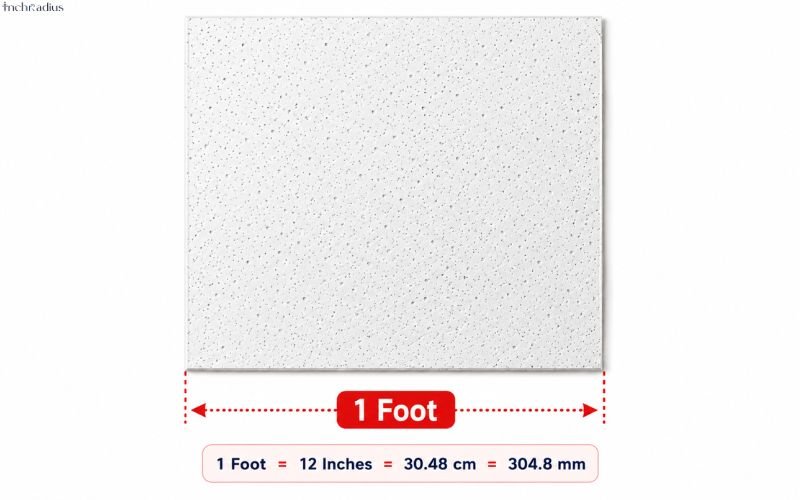
A standard 12×12 ceiling tile is another excellent example of something that measures 1 foot. These tiles are commonly used in offices, classrooms, hospitals, libraries, shops, and finished basements. Since they fit into ceiling grid systems, manufacturers produce them in consistent sizes.
Even if you have never measured one, you have probably looked at hundreds of ceiling tiles over the years. Once you know each side measures one foot, it becomes much easier to picture this length whenever you need it.
Ceiling tiles are especially useful as a visual reference because they have straight edges and equal sides. Unlike soft items that can change shape, these panels remain the same size, making them dependable for estimating measurements.
This comparison is helpful when planning lighting, ceiling fans, storage racks, or decorative wall panels. You can also use it to estimate the width of cupboards, shelving, or workspaces.
If you already know what 2 inches looks like, imagine six of those lengths placed together. The total equals one foot. Thinking this way helps you estimate larger dimensions quickly without needing measuring tools.
Since ceiling tiles are found in many public buildings, they provide a practical example that many readers can recognise immediately.
3. Kitchen Cabinet Depth
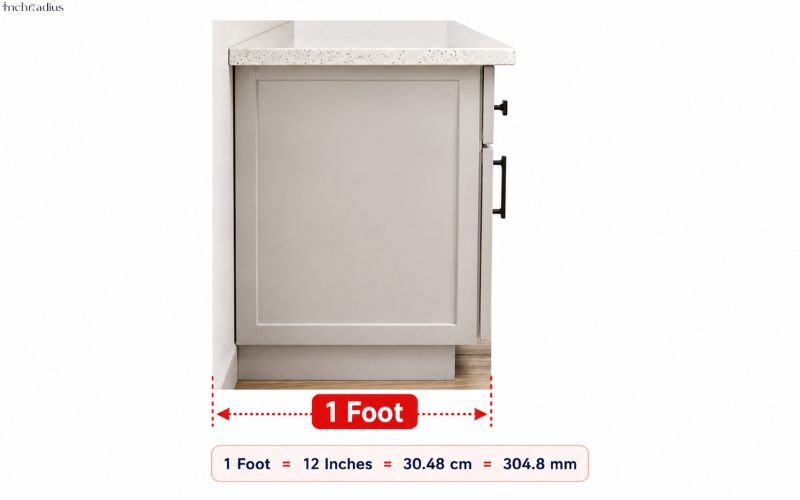
One household feature that many people overlook is the depth of a standard kitchen cabinet. In many homes, base kitchen cabinets are designed with a depth of around 1 foot before the worktop extends beyond the front.
This makes kitchen cabinets a useful everyday comparison because they are part of nearly every home. The next time you stand in your kitchen, look at how far the cabinet extends from the wall. That distance gives you a good picture of one foot.
Cabinet depth is carefully planned so there is enough room for plates, bowls, food containers, and cooking equipment while still leaving enough space to move around comfortably. Because builders often follow similar dimensions, cabinet depth remains fairly consistent across many homes.
This comparison also helps when buying storage baskets, drawer organisers, or kitchen appliances. If a product description says it measures around one foot, you can quickly compare it with your cabinet depth.
If you can already picture 3 inches, placing four of those lengths together creates approximately one foot. This simple method helps when estimating shelves, cupboards, and storage spaces without reaching for a tape measure.
Kitchen cabinets are something people use every day, making them one of the most practical examples in this guide.
4. Storage Cube Organiser (Organizer)
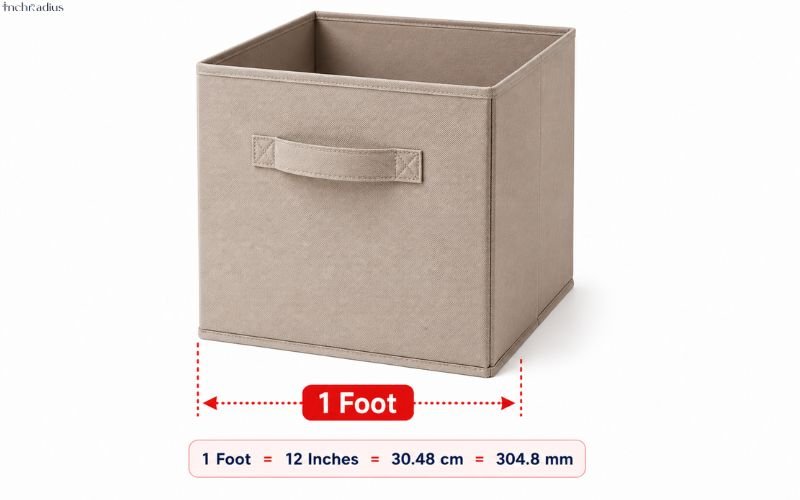
A storage cube organiser (organizer) is another excellent object for visualising 1 foot. Many cube storage systems are designed with compartments measuring about 12 inches in both width and height. These organisers are commonly used in bedrooms, living rooms, offices, and children’s playrooms.
Their simple square design makes them easy to recognise and compare with other household objects. Whether you use them for books, toys, clothes, or decorative baskets, each compartment provides a clear picture of one foot.
Because cube organisers are built to hold standard fabric storage bins, manufacturers keep their dimensions fairly consistent. This means the size remains similar across many brands.
Imagine looking directly at one cube compartment. The opening is roughly one foot wide and one foot tall. Once you remember that image, you can use it to estimate shelves, picture frames, small tables, and storage boxes throughout your home.
If you already know the size of 4 inches, placing three of those lengths side by side creates one foot. This comparison makes estimating everyday measurements much easier.
Storage cube organisers are practical, widely available, and more unique than many traditional measurement examples, making them an excellent reference for readers trying to picture one foot.
Related Post: 10 Common Things That Are 5 Inches Long
5. Square Garden Paver
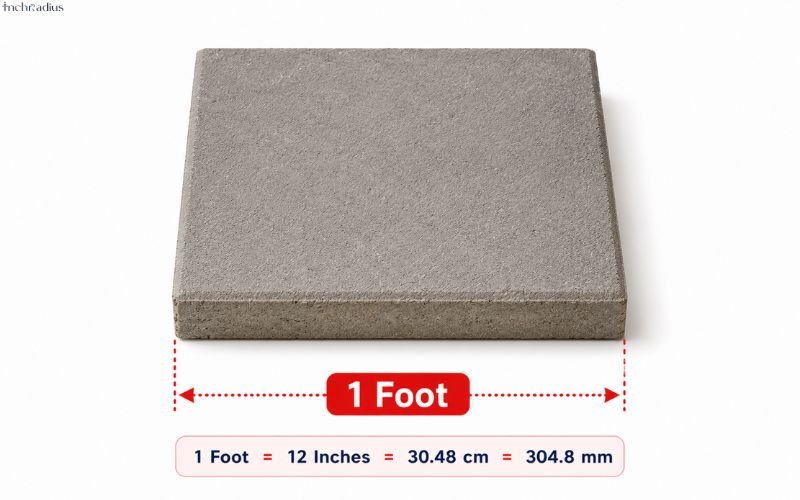
A square garden paver is a great way to picture 1 foot. Many pavers used for patios and garden paths measure about 1 foot by 1 foot. Because they are made to standard sizes, they offer a reliable reference.
You may have seen these pavers in gardens, parks, or outdoor seating areas. Looking at one paver helps you estimate the size of flower beds, walkways, and outdoor furniture. It is also useful when planning a small landscaping project.
Unlike many household items, garden pavers have fixed dimensions. That makes them one of the easiest outdoor examples for anyone asking what does 1 foot look like.
Related Post: 10 Common Things That Are 6 Inches Long
6. Wooden Rolling Pin
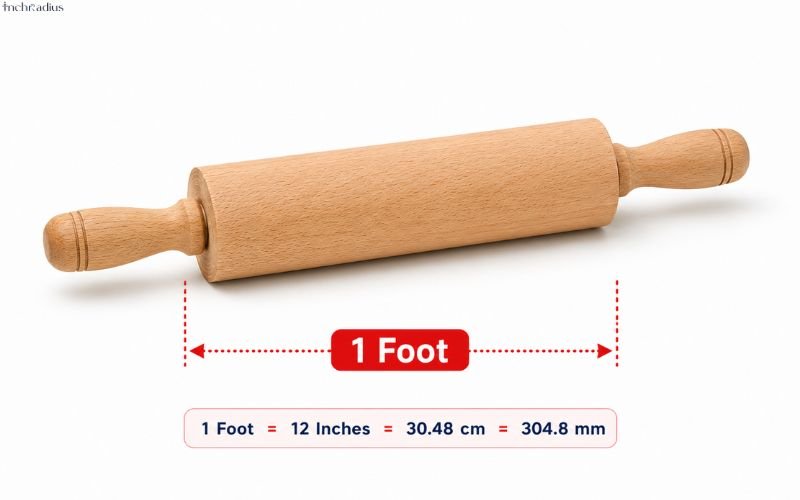
A wooden rolling pin is another useful object for estimating 1 foot. Many traditional rolling pins are close to this length, making them easy to remember if you enjoy baking.
Rolling pins are used to flatten dough for bread, biscuits, pies, and pizza. Their straight shape makes them a simple visual guide for measuring narrow spaces or kitchen items.
You can compare a rolling pin with baking trays, chopping boards, shelves, or kitchen drawers. Since it is a common household tool, most people can picture its size without much effort. It is a practical example that helps you estimate one foot during everyday tasks.
Related Post: 10 Common Things That Are 7 Inches Long
7. Medium Wall Clock
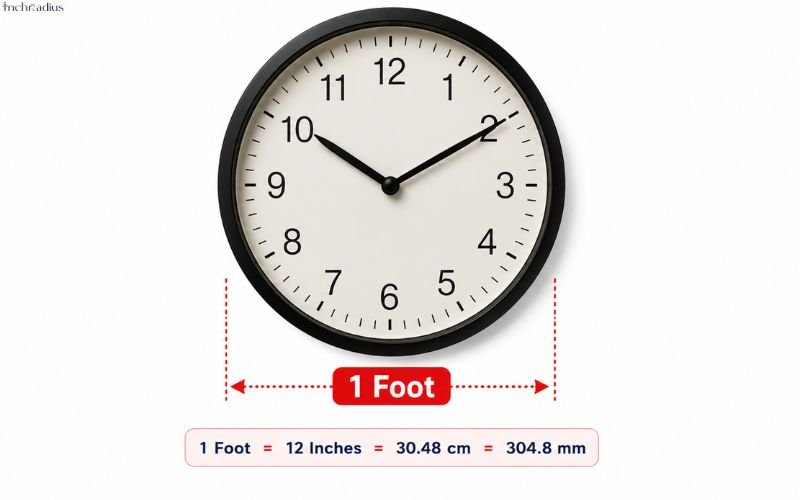
A medium wall clock often measures about 1 foot across. The measurement is taken from one side of the clock to the other through the centre, which is called the diameter.
These clocks are popular in kitchens, offices, and living rooms because they are easy to read without taking up too much wall space. Once you picture a 12-inch wall clock, you have a clear idea of how large one foot appears.
This comparison is helpful when choosing mirrors, wall art, serving trays, or decorative signs. It shows that one foot is not only used to measure long objects but also round ones.
Related Post: 12 Common Things That Are 8 Inches Long
8. Dining Chair Seat Width
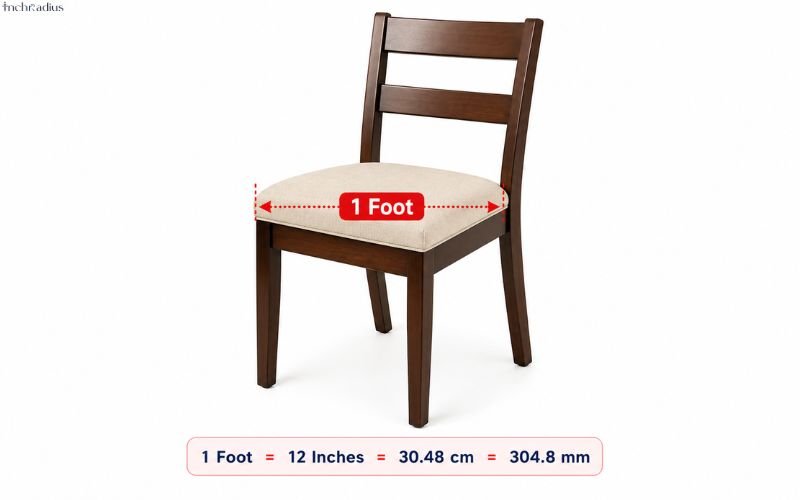
The seat of a standard dining chair is often close to 1 foot wide. This size gives enough space for comfortable seating while allowing several chairs to fit around a dining table.
Since dining chairs are used every day, they provide an easy comparison that most people can recognise. Looking at the seat helps you picture one foot without using a ruler.
This example is useful when shopping for chair cushions, benches, storage stools, or compact furniture. It also helps when planning the layout of a dining room or small kitchen where space matters.
Related Post: 12 Common Things That Are 9 Inches Long
9. Plant Pot Saucer
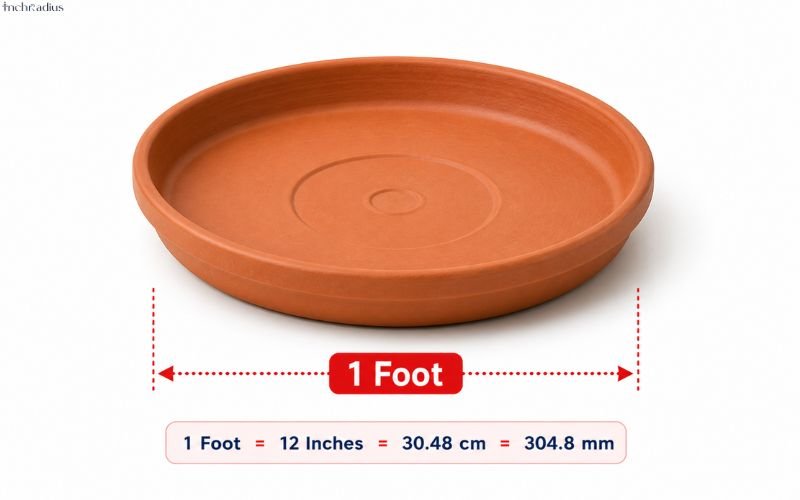
A large plant pot saucer is another object that is often about 1 foot wide. These saucers sit under flower pots to catch extra water and protect floors or patios.
They are commonly used for indoor plants, balcony gardens, and outdoor containers. Because many larger plant pots use 12-inch saucers, they make a simple size reference.
Imagine placing one on a table. The distance across the saucer is about one foot, making it easy to compare with trays, baskets, or decorative items. If you enjoy gardening, this is one of the easiest ways to picture the length.
Related Post: 10 Common Things That Are 10 Inches Long
10. Chrome Wrench
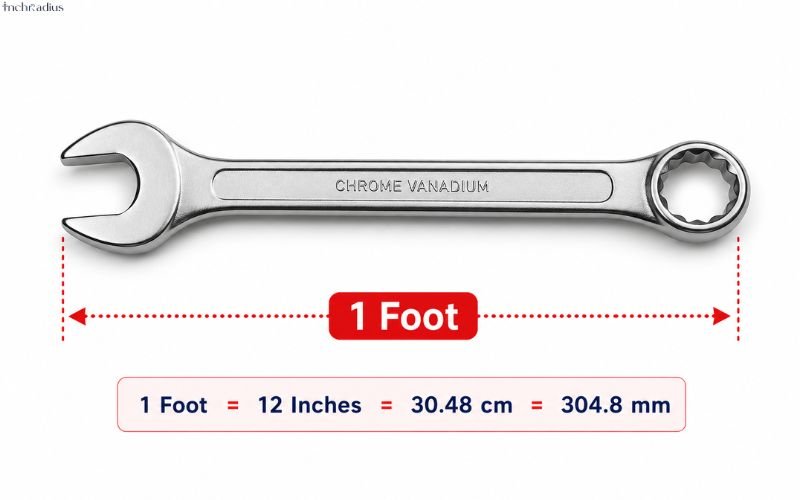
A chrome combination wrench can be a handy visual guide when you need to estimate 1 foot. Many medium and large combination wrenches are made close to this length, making them easy to compare with other objects. While not every wrench measures exactly one foot, several common workshop models are very close.
If you already have a chrome wrench in your toolbox or garage, place it next to the item you want to measure. If the object’s length is similar, it is likely around 1 foot (12 inches). This method works well for checking the size of shelves, pipes, timber, toolboxes, and other workshop materials before using a tape measure.
A chrome wrench is especially useful because it is straight, rigid, and easy to line up against an object. Although it should not replace a measuring tape for precise work, it provides a quick estimate when you only need an approximate measurement. For DIY projects, home repairs, and garage tasks, it is a practical reference that many homeowners and mechanics already have nearby.
Related Post: 11 Common Things That Are 11 Inches Long
How to Estimate 1 Foot Without a Ruler
You do not always need a ruler to estimate 1 foot. A few simple methods can help you make a quick measurement.
Use Your Hand
For many adults, the distance from the wrist to the tip of the middle finger is close to one foot. Hand sizes vary, but this gives a quick estimate for everyday tasks.
Use Common Household Items
Look for objects that are about one foot long, such as a square ceiling tile, a rolling pin, or a storage cube. Comparing an object with these items helps you judge its size more accurately.
Measure with Paper
A sheet of 12×12 scrapbook paper measures exactly one foot on each side. If you have one at home, place it next to the object you want to measure for a quick comparison.
What Does 1 Foot Look Like?
If you are wondering what does 1 foot look like, think about objects you see every day. A storage cube, a garden paver, a medium wall clock, or a square serving tray are all close to this size.
Once you become familiar with these examples, estimating one foot becomes much easier. You can quickly compare the length of furniture, storage boxes, shelves, or decorations without using a measuring tape.
Frequently Asked Questions
Is 1 foot the same as 12 inches?
Yes. 1 foot is exactly equal to 12 inches.
How many centimetres are in 1 foot?
One foot is equal to 30.48 centimetres (30.48 cm).
How many millimetres are in 1 foot?
One foot equals 304.8 millimetres (304.8 mm).
What is an easy way to picture 1 foot?
A 12×12 scrapbook paper sheet or a standard ceiling tile provides one of the easiest ways to picture one foot because both have fixed dimensions.
What household items are about 1 foot long?
Many everyday items are close to one foot, including a rolling pin, a storage cube organiser (organizer), a dining chair seat, a square serving tray, and a large plant pot saucer.
Can I estimate 1 foot without a ruler?
Yes. You can compare the object with common household items that measure about one foot or use your hand as a rough guide.
Conclusion
Now you know the answer to how long is a foot. It measures 12 inches, 30.48 centimetres (30.48 cm), or 304.8 millimetres (304.8 mm).
Instead of relying only on a ruler, you can compare the length with everyday objects such as scrapbook paper, a ceiling tile, a storage cube, a rolling pin, or a serving tray. These practical examples make it easier to estimate one foot when shopping, decorating, gardening, or working on DIY projects.
With these real-life comparisons in mind, you can quickly recognise what 1 foot looks like and make more accurate estimates during everyday tasks.