
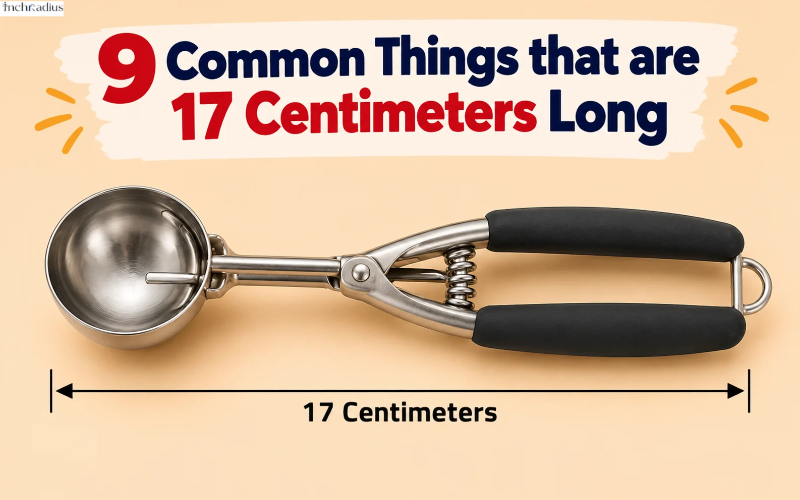
17 centimetres is exactly 6.69 inches or 170 millimetres. It is a relatively short length, but you can find similar dimensions in many everyday tools, grooming accessories and outdoor items. A compact bicycle pump, folding pocket comb or short camping tent peg can help you picture this distance.
These objects are useful references when you need to estimate a measurement for a craft project, choose a small accessory or check whether an item will fit inside a storage space. Their dimensions vary by model, so they should be treated as approximate comparisons unless measured. With a few familiar examples, it becomes easier to visualise what 17 centimetres looks like without relying on a ruler every time.
How Long Is 17 Centimetres?
17 centimetres is a fixed metric measurement equal to 170 millimetres, approximately 6.69 inches, or 0.17 metres. It is just under 7 inches, making it a useful reference for small household objects, personal accessories and compact tools.
Imagine a ruler starting at zero and ending at the 17-centimetre mark. The distance between those points is the length you are trying to picture. On an imperial ruler, it would fall a little short of 6¾ inches.
You might encounter a similar length when looking for a compact bicycle accessory, a grooming tool or a small camping item. It can also help when measuring a shelf compartment, a craft piece or a storage pouch.
Keep in mind that 17 centimetres is the exact target, not the guaranteed size of every object used for comparison. Products that look similar can differ in length. If an item needs to fit a particular space, measure it or check its published dimensions before buying it.
Related Post: How Long Is 14 Centimeters?
How Big Is 17 Centimetres?
A length of 17 centimetres is slightly shorter than 7 inches. It is easy to picture as a straight line running across a small tool or accessory held in your hand.
For a paper-based comparison, look at the shorter edge of an A4 sheet, which measures 21 centimetres. A 17-centimetre line would cover a little over four-fifths of that edge. This gives you a helpful visual reference using something commonly found at home, school or work.
Your hand can also help you estimate the distance. For some adults, the span between the thumb and little finger when the hand is spread may be close to 17 centimetres. However, hand sizes vary, so this is only a rough guide.
The shape of an object matters, too. A straight camping peg is easier to compare with a straight ruler than a curved comb or a bulky bicycle pump. For accurate work, use a ruler rather than relying entirely on appearance.
9 Common Things That Are 17 Centimetres Long
The following nine objects offer a fresh set of comparisons for visualising 17 centimetres. They come from different categories, including cycling, grooming, cooking, crafts and outdoor equipment. Their dimensions are approximate examples; check a specific model before treating any item as exactly 17 centimetres long.
| Everyday Item | Actual Size |
| Mini bicycle pump | 17 centimetres |
| Folding pocket comb | 17 centimetres |
| Leather hole-punch pliers | 17 centimetres |
| Compact foot massage roller | 17 centimetres |
| Short camping tent peg | 17 centimetres |
| Mini lint roller | 17 centimetres |
| Wooden shoe-cleaning brush | 17 centimetres |
| Long-handled vegetable peeler | 17 centimetres |
| Mini barbecue tongs | 17 centimetres |
1. Mini Bicycle Pump
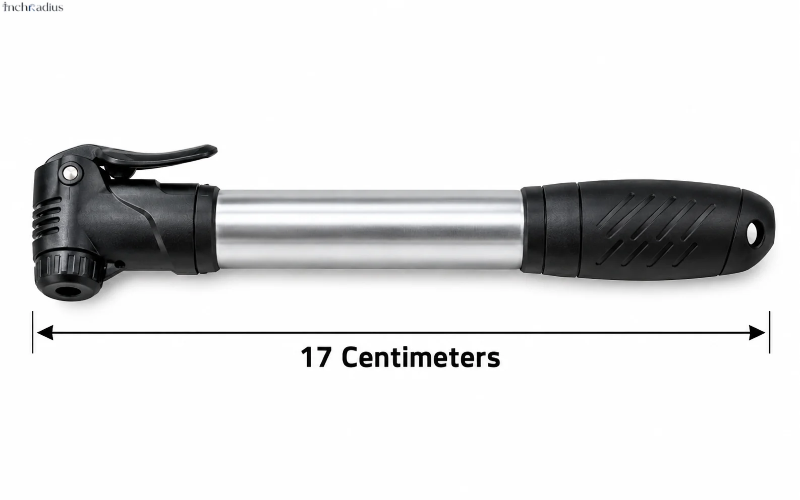
A mini bicycle pump is a portable tool cyclists carry to inflate a tyre when the pressure drops. Some compact models measure around 17 centimetres when stored, although others are longer or shorter depending on their design.
Its narrow body makes it easy to compare with a straight measurement. Place the pump on a table and imagine a line running from one end to the other. If the pump measures close to 17 centimetres, it provides a practical reference for the target length.
Small pumps are often attached to a bicycle frame or kept inside a cycling bag. Their compact size helps riders carry basic repair equipment without taking up much room.
Check whether the stated dimensions refer to the pump alone or include a hose, handle or mounting bracket. An extended pump can be much longer than its stored size. Measuring the complete item in its usual carrying position gives you the most useful comparison.
2. Folding Pocket Comb
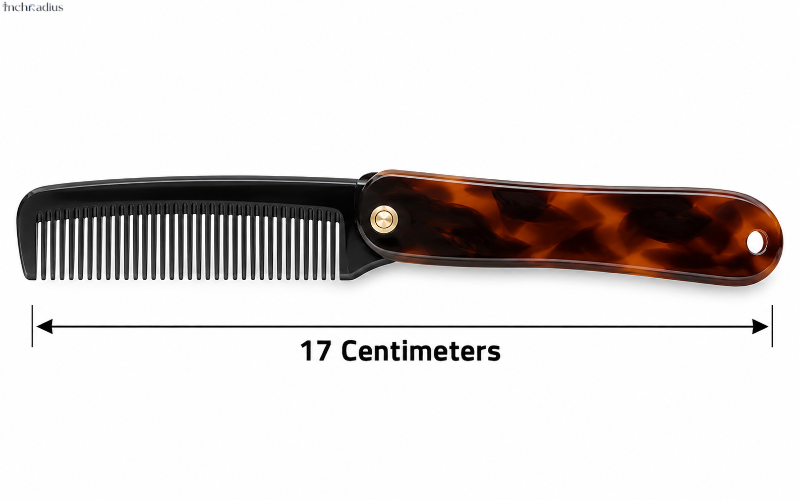
A folding pocket comb is designed for grooming while travelling or away from home. It folds into a compact shape for storage, and some opened models are close to 17 centimetres long.
For this comparison, measure the comb when it is fully opened. The folded length may be considerably shorter, so it does not represent the same dimension. Follow the comb from the end of the handle to the tip of the teeth or outer edge, depending on its design.
A comb of this size is easy to keep in a wash bag, desk drawer or travel kit. Its straight shape also makes it convenient to compare visually with a ruler.
Pocket combs come in different styles, from small folding versions to longer grooming combs. Do not assume every model has the same dimensions. If you need a comb that fits a particular case, check the measurements in both its folded and opened positions.
3. Leather Hole-Punch Pliers
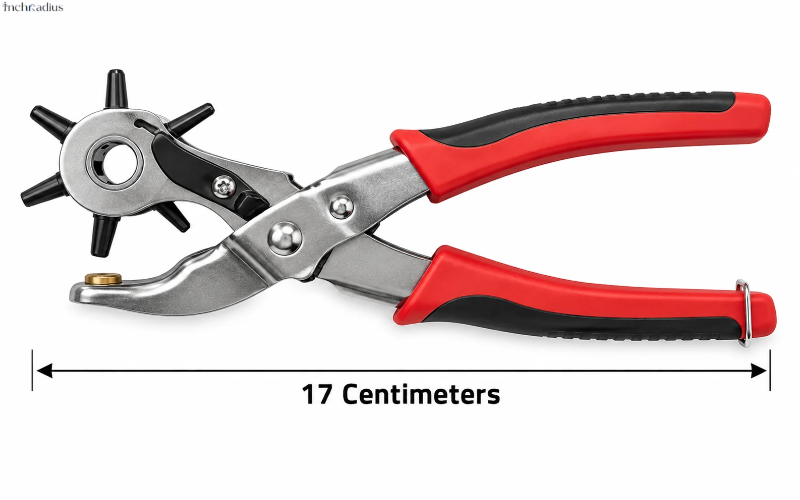
Leather hole-punch pliers are used to make small holes in materials such as leather, belts and some craft fabrics. Compact models can measure around 17 centimetres from the ends of the handles to the opposite end of the tool.
This tool offers a useful comparison because its overall length is clearly defined. Place the pliers on a flat surface with the handles closed, then measure from one end to the other. Keep the jaws and handles within the measurement rather than measuring only the grip.
A tool of this size may fit inside a small craft toolbox or repair kit. It gives you an idea of how much space a compact hand tool can occupy.
Different pliers have different handle lengths and jaw designs. Some models are much larger, particularly those intended for heavy-duty work. If you are choosing a tool for a specific storage compartment, use its stated overall dimensions rather than relying on a general size estimate.
4. Compact Foot Massage Roller
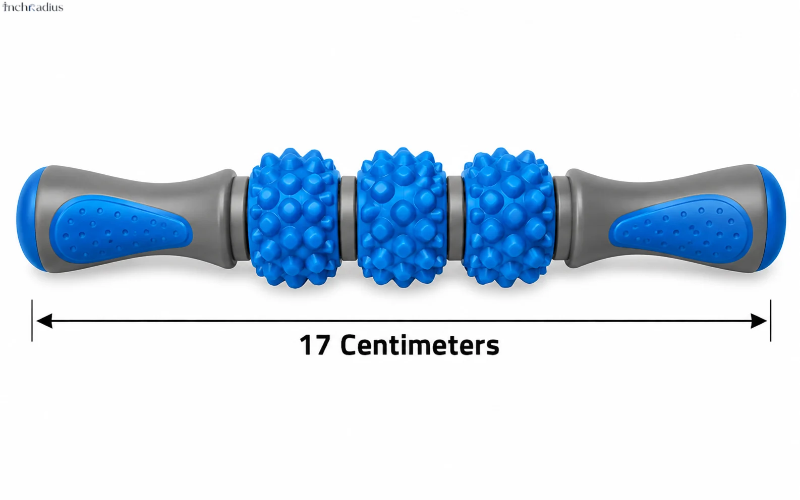
A compact foot massage roller is designed to roll beneath the foot, helping users apply gentle pressure to the sole. Some small rollers are close to 17 centimetres long, although the size depends on the design and intended use.
The roller’s straight body makes it easy to picture the target measurement. Imagine a line running from one circular end to the other. If the roller is around 17 centimetres long, it provides a useful visual reference without needing to compare complicated shapes.
Small massage rollers can be stored beside exercise equipment, in a bedside drawer or inside a gym bag. Their length can help you estimate whether a similar item will fit into a compact storage space.
Not every foot roller has the same shape. Some are short cylinders, while others are longer or have several sections. Measure the full body from end to end, excluding any separate packaging, if you want to use it as a reliable reference.
Related Post: How Long Is 15 Centimeters?
5. Short Camping Tent Peg
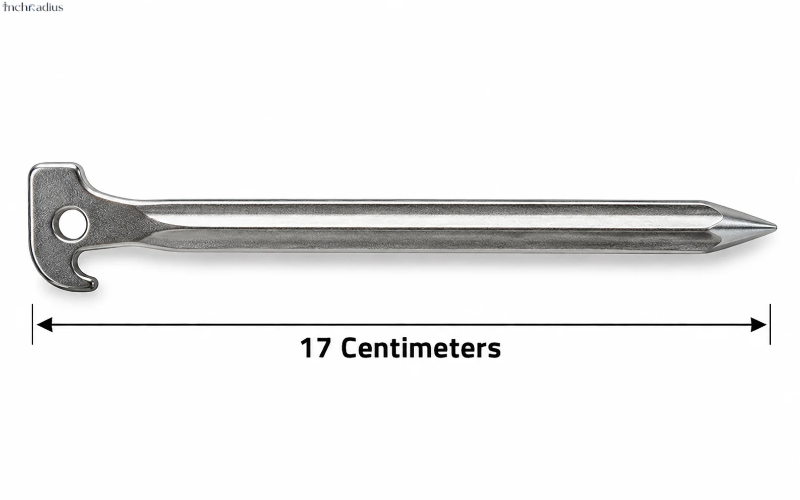
A short camping tent peg is used to secure tent corners, guy lines or groundsheets. Pegs around 17 centimetres long are available, making them a useful example of a small outdoor item with a defined length.
To picture 17 centimetres, imagine the peg lying flat on the ground. Measure from the tip that enters the soil to the opposite end, including any hook or head that forms part of the peg. This gives you its overall length.
Camping pegs are often kept together in a small equipment bag, and their size affects how easily they can be stored. A peg close to 17 centimetres offers a helpful reference when organising outdoor gear or comparing replacement stakes.
Pegs vary according to the ground and the type of shelter they are designed to support. Some are longer for softer soil, while others are shorter and suited to different uses. Always check the length of the actual peg rather than assuming all camping stakes are 17 centimetres long.
6. Mini Lint Roller
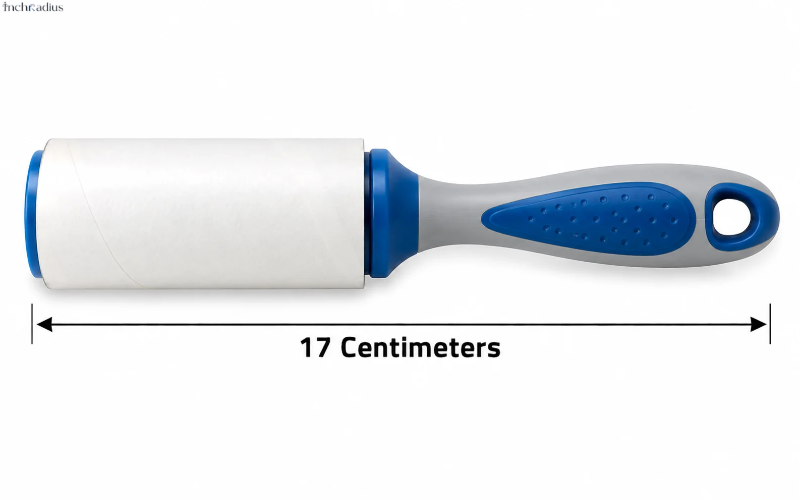
A mini lint roller removes loose hair, dust and lint from clothing. Travel-sized models are designed to fit into a handbag, desk drawer or luggage pocket, and some have an overall length close to 17 centimetres.
The roller head and handle together determine the full length. To compare one with 17 centimetres, measure from the outer edge of the roller to the end of the handle. Measuring only the handle would give you an incomplete result.
A compact lint roller is a useful household reference because its shape is familiar and easy to inspect. Place it beside a ruler to see how close it comes to the 17-centimetre mark.
Some models have a protective cover that increases their stored length, while others use a wider roller head. If you want to keep one in a small pouch, check the dimensions with the cover fitted. This is more reliable than estimating its size from a product photograph.
7. Wooden Shoe-Cleaning Brush
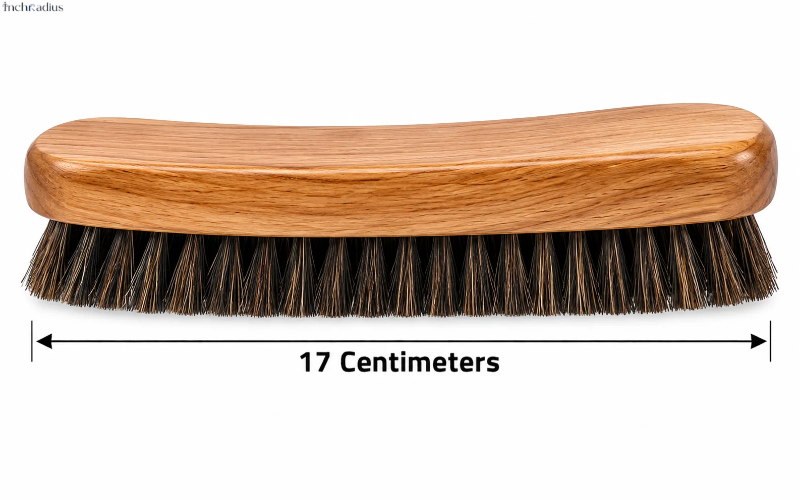
A wooden shoe-cleaning brush is used to remove dirt from shoes and boots. Some handheld designs measure close to 17 centimetres along the longest edge, although larger brushes are also available.
Its simple shape makes it easy to use as a visual comparison. Lay the brush on a table and measure from one end of the wooden base to the other. This provides a clear reference without needing to account for a curved handle or a moving part.
A brush around this size can fit in a shoe-care box or a cupboard near the entrance. It is also a practical example of how a 17-centimetre object might look in an everyday setting.
The wooden base, bristles and handle design can all affect the overall dimensions. Some shoe brushes are long and narrow, while others are shorter and wider. For an accurate comparison, use the longest overall dimension and check the specific brush before relying on it.
8. Long-Handled Vegetable Peeler
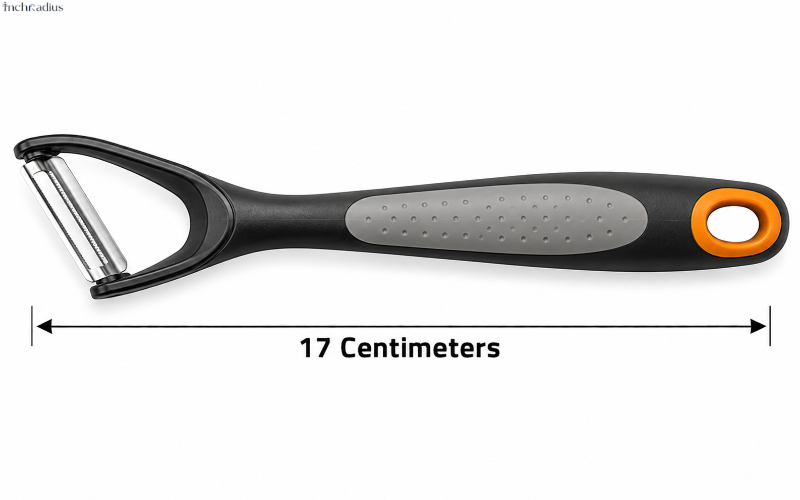
A vegetable peeler is a kitchen tool used to remove thin layers of skin from vegetables and fruit. Some longer-handled designs approach 17 centimetres in overall length, although many standard peelers are shorter.
The measurement includes the handle and peeling head. Lay the utensil flat and measure from the far end of the handle to the outer tip of the head. This gives you a fair comparison with the 17-centimetre target.
A peeler of this size may be stored in a cutlery drawer alongside other small kitchen tools. Its narrow profile helps you visualise the length of an object that takes up little space but still has a clear end-to-end measurement.
Peelers vary in shape, handle thickness and blade design. A long handle does not always mean the complete tool is 17 centimetres long. If you are comparing kitchen utensils for a drawer organiser, measure the whole item before choosing a suitable compartment.
9. Mini Barbecue Tongs
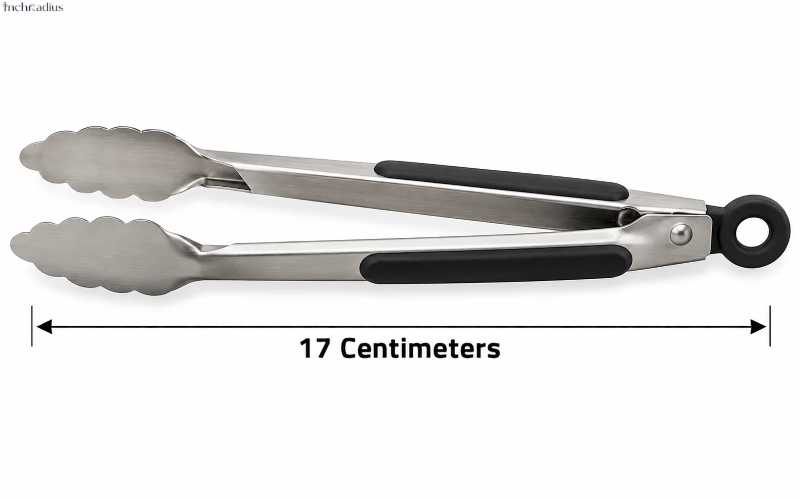
Mini barbecue tongs are used to grip and turn small pieces of food. Compact versions can be close to 17 centimetres long, making them a helpful comparison for this measurement.
Their two arms create a recognisable shape, but the overall length is still straightforward to measure. Close the tongs in their normal stored position and measure from the handle ends to the tips. If the tips curve, follow the overall end-to-end distance rather than measuring along the curve.
Short tongs can be useful for serving small snacks, handling food in a compact pan or arranging items on a plate. They may also fit into a kitchen drawer with other utensils.
Full-sized barbecue tongs are often considerably longer because they help keep hands away from heat. For that reason, choose a genuinely compact model if you want to use tongs as a reference for 17 centimetres. Always check the product dimensions rather than assuming all mini tongs are the same length.
How to Measure 17 Centimetres Without a Ruler
You can estimate 17 centimetres with everyday objects if a ruler is not available. These methods are useful for rough comparisons, but they should not replace accurate measuring when precision matters.
Use an A4 sheet of paper. The shorter edge of a standard A4 sheet is 21 centimetres. A 17-centimetre distance is slightly more than four-fifths of that edge. You can use this proportion to estimate the length on a sheet of paper.
Compare your hand span. Spread your thumb and little finger as far apart as comfortably possible. The distance between their tips may be near 17 centimetres for some people, but hand spans vary. Check your own hand against a ruler when one becomes available.
Use a familiar tool. A mini bicycle pump, wooden shoe-cleaning brush or folding comb can provide a reference if you have measured it before. Place it beside the item you want to estimate and compare their lengths.
For reliable results, mark the starting point clearly and measure in a straight line. If the task involves cutting material, fitting a component or purchasing a precisely sized item, use a centimetre ruler or tape measure.
Related Post: How Long Is 16 Centimeters?
FAQs
1. How many inches is 17 centimetres?
17 centimetres is approximately 6.69 inches. It is slightly shorter than 6¾ inches and just under 7 inches. This conversion is useful when comparing metric measurements with products sold using imperial dimensions, such as compact tools, grooming accessories and outdoor equipment.
2. How many millimetres are in 17 centimetres?
17 centimetres equals exactly 170 millimetres. Since every centimetre contains 10 millimetres, you multiply 17 by 10 to get the result. Millimetres can be useful for checking small components, craft materials and objects that need to fit into a narrow space.
3. Is 17 centimetres close to 7 inches?
Yes, but it is not exactly the same. Seven inches equals 17.78 centimetres, which is 0.78 centimetres longer than 17 centimetres. The difference can be difficult to judge by eye, so use a ruler when a close fit or accurate measurement is required.
4. What is a good object to compare with 17 centimetres?
A compact bicycle pump, short camping tent peg or wooden shoe-cleaning brush can provide a useful comparison if its actual length is close to 17 centimetres. These objects come in different sizes, so check the specific item before using it as a reference for another measurement.
5. Can I measure 17 centimetres with my hand?
You can estimate this distance using the span between your thumb and little finger when your hand is fully spread. However, hand sizes differ considerably. This method works best as a rough visual guide rather than an exact measurement for DIY projects, crafts or fitting parts.
6. How do I convert 17 centimetres into metres?
Divide 17 by 100 to convert centimetres into metres. The result is exactly 0.17 metres. Centimetres are often easier to use for small objects, while metres are more convenient for describing larger distances, furniture dimensions and room measurements.
7. Is 17 centimetres a suitable length for a compact tool?
It can be. Many small tools and accessories are designed to be portable, and some measure around 17 centimetres. However, suitability depends on the tool’s purpose. A compact pump may be convenient to carry, while a longer tool may provide better reach or leverage for a particular task.
8. Why do similar objects have different lengths?
Manufacturers design products for different uses, storage needs and user preferences. A folding comb, bicycle pump or camping peg may be available in several sizes. Product photographs can also make dimensions difficult to judge. Check the stated length or measure the item yourself whenever accuracy matters.
Conclusion
17 centimetres is a little under 7 inches and exactly 170 millimetres. A mini bicycle pump, folding pocket comb or short camping tent peg can help you picture this distance, while a wooden shoe-cleaning brush offers another practical comparison. These examples cover different everyday settings, from cycling and grooming to outdoor activities.
The key is to treat familiar objects as visual aids rather than guaranteed standards. Two products that look almost identical can have different dimensions. If you are estimating a space, planning a craft project or choosing a replacement part, compare the object with a ruler marked in centimetres. Once you have seen the 17-centimetre mark on a ruler, these everyday references become easier to use for quick estimates.
