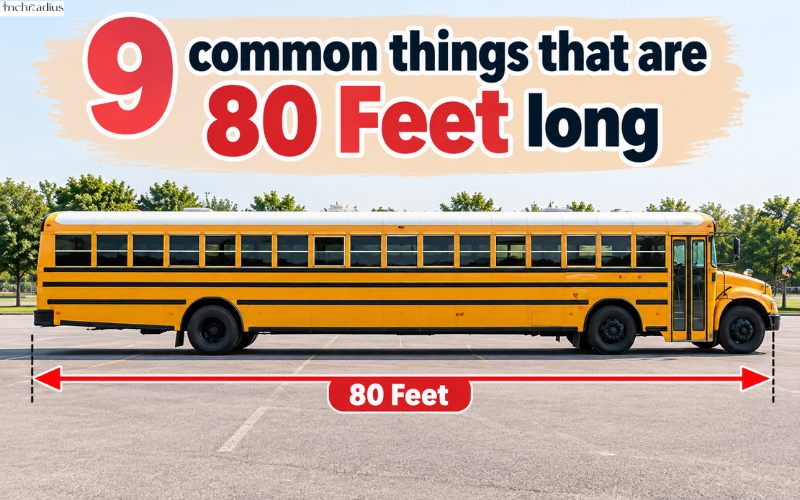
80 feet is exactly 960 inches, 24.384 metres, 2,438.4 centimetres, or 24,384 millimetres. It is a substantial length, roughly comparable to the height of an eight-storey building or the length of several large vehicles placed end to end. Although the precise size of real objects varies, familiar structures, boats and recreational facilities can help you picture this distance.
An 80-foot measurement can be useful when planning a garden, checking a property boundary, estimating the space needed for a project or comparing the size of a large structure. Looking at everyday examples makes the distance easier to imagine without having to rely entirely on numbers.
How Long Is 80 Feet?
Eighty feet is a unit of length equal to 80 individual feet placed end to end. Since each foot contains 12 inches, the total is 960 inches. In metric units, this distance equals 24.384 metres, or 2,438.4 centimetres. For a quick mental estimate, you can round it to about 24.4 metres.
This is considerably longer than most rooms, domestic gardens and ordinary cars. It is a useful reference for larger spaces, such as a long driveway, a recreational area or a sizeable boat. A building that reaches approximately 80 feet in height may also look impressive from ground level, although its apparent height depends on the number and height of its floors.
The exact figure remains 80 feet regardless of the object used for comparison. Real-world examples are usually approximate, so their dimensions should be checked before using them for construction, purchasing materials or setting out a boundary.
How Big Is 80 Feet?
Picture a line stretching across a large open space. At 80 feet, it would extend for almost the length of a tennis court, depending on whether you compare it with the court’s playing area or its full layout. It would also be longer than a typical family home and much longer than a standard garden shed.
A practical way to picture this distance is to imagine several familiar objects arranged in a straight line. Four 20-foot sections would make 80 feet, as would eight 10-foot sections. This method is particularly helpful when looking at a garden, driveway or open field.
Paper and hand spans are useful for smaller measurements, but repeating them hundreds of times would be impractical for a distance this large. Instead, use a known building dimension, a measured length of rope or a set of marked intervals. These references provide a more reliable visual estimate while keeping the distinction between an approximate comparison and an exact measurement clear.
Related Post: How Long Is 60 Feet? 11 Common Things That Are 60 Feet Long
9 Common Things That Are 80 Feet Long
The following examples show how a distance of 80 feet compares with large structures, vehicles, boats and recreational features. Some are close to 80 feet in length, while others reach approximately that measurement in height or diameter. Check the description for the type of measurement being compared.
| Everyday Item | Actual Size |
| Competition swimming pool | 80 feet |
| Large sailing yacht | 80 feet |
| Ferris wheel | 80 feet |
| Long water slide | 80 feet |
| Large grain silo | 80 feet |
| Mature tree | 80 feet |
| Recreational zipline | 80 feet |
| Large motor yacht | 80 feet |
| Tall communications tower | 80 feet |
1. Competition Swimming Pool
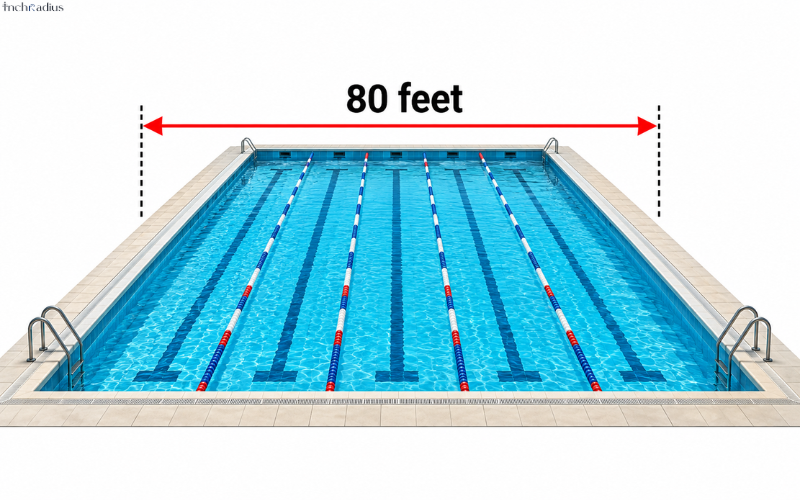
A swimming pool provides a helpful way to picture a long, straight distance. Some pools measure close to 80 feet, although standard competition pools are usually built to recognised lengths such as 25 metres or 50 metres. A 25-metre pool is approximately 82 feet long, making it a particularly useful comparison.
Imagine standing at one end of a pool measuring around 80 feet and looking towards the opposite end. The distance would be far greater than that of a typical home swimming pool. It would give swimmers plenty of room for repeated lengths and training sessions.
For a visual estimate, picture the pool divided into four equal sections. Each section would be about 20 feet long. Four such sections placed end to end would total 80 feet. The exact dimensions of a pool should always be checked before using it as a measurement reference.
2. Large Sailing Yacht

A large sailing yacht can measure approximately 80 feet from the bow to the stern. Boats of this size are substantial vessels, often equipped with cabins, sleeping areas, kitchens and spaces for spending several days at sea. Their exact dimensions depend on the design and whether the stated length refers to the hull or includes other projecting parts.
Imagine a yacht measuring 80 feet alongside a harbour wall. Its length would be comparable to the distance across a large open garden or along a sizeable section of a waterfront property.
This example is useful because a boat’s full length is easier to imagine when viewed from the side. If you need to estimate 80 feet on land, you can picture the yacht positioned in a straight line. Remember that not every sailing yacht is this long; many are considerably smaller.
3. Ferris Wheel
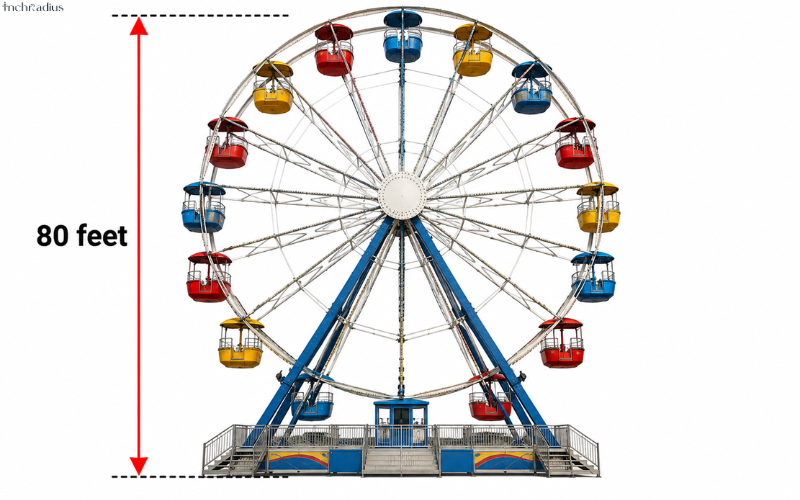
An amusement park Ferris wheel with a diameter of approximately 80 feet offers a striking visual comparison. Unlike a boat or a swimming pool, this example represents a vertical measurement across a circular structure rather than a horizontal length.
Imagine drawing a straight line from the lowest point of the wheel’s circular rim to the highest point directly above it. If the wheel has a diameter of 80 feet, that line would measure 80 feet. The overall structure may be taller because its supporting frame extends below the wheel.
This distinction matters when estimating the height of an amusement ride. A Ferris wheel’s advertised height might refer to the top of its structure rather than its diameter. Nevertheless, a wheel measuring around 80 feet across helps you picture the scale of a large outdoor attraction. It also shows how the same measurement can describe width, height or length, depending on the object.
4. Long Water Slide
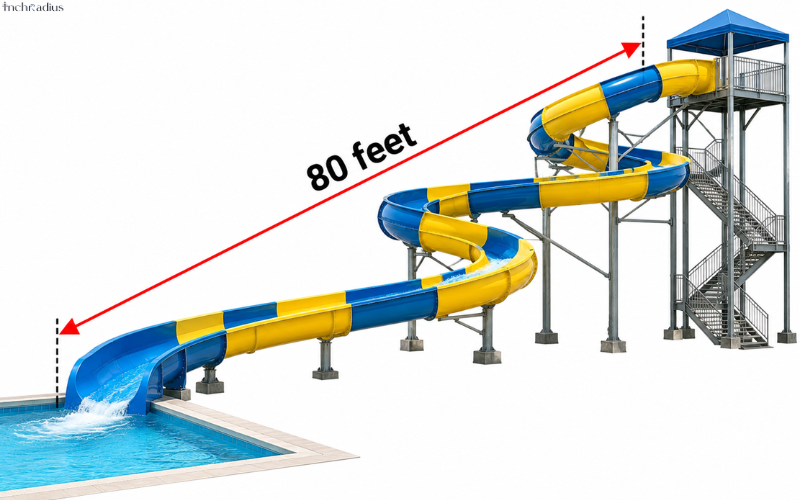
A long water slide can provide another useful comparison, particularly at a water park where slides wind around towers or supports. An individual slide measuring around 80 feet along its path would stretch a considerable distance, even though it might occupy a smaller area of ground.
The important difference is that the length of a slide follows its actual route. A curved slide could have an 80-foot surface while the straight-line distance between its starting point and ending point is much shorter.
To picture the measurement, imagine laying an 80-foot rope along the slide’s route rather than stretching it directly from top to bottom. This helps explain why a slide that looks relatively compact from the ground may have a much longer riding surface.
Water slides vary widely in size, so 80 feet should be treated as an example rather than a standard dimension. Always check the manufacturer’s measurements if the precise length matters.
5. Large Grain Silo

A large grain silo can reach approximately 80 feet in height. These structures are used on farms and at grain-handling facilities to store crops such as wheat, maize and barley. Their tall, cylindrical shape allows substantial quantities of grain to be stored without requiring an equally large area of land.
Imagine standing at the base of a silo that rises 80 feet above the ground. Looking up towards its roof would give you a clear sense of the scale. The structure would tower over many nearby farm buildings and ordinary houses.
This comparison is especially useful when estimating vertical distances. An 80-foot silo is not necessarily 80 feet wide, nor does its height indicate how much grain it can hold. Actual dimensions depend on its design and storage capacity.
If you are comparing the height of a building with a silo, use the same reference points for both measurements. That keeps the comparison meaningful rather than relying on appearance alone.
6. Mature Tree
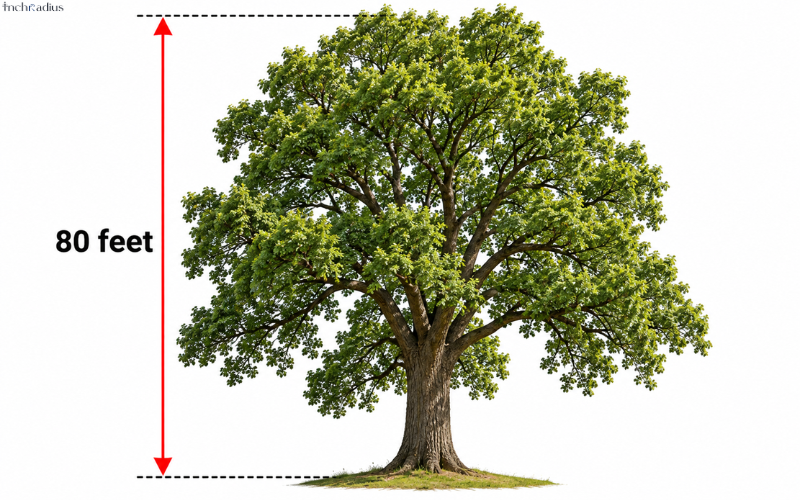
Some mature trees grow to around 80 feet tall, depending on their species, age and growing conditions. Large oaks, certain maples and other established trees can reach this height, although many trees remain shorter.
Picture an 80-foot tree standing in an open park. Its trunk and spreading crown would rise well above most garden fences, sheds and single-storey buildings. Looking at the tree from a distance can help you imagine how much vertical space 80 feet occupies.
Tree height is not the same as the length of its branches. A tree that reaches 80 feet upwards may have a canopy much narrower than that, or branches that extend widely beyond its trunk.
For a useful comparison, imagine laying the tree’s full height horizontally along a field. The resulting line would cover 80 feet. This is an approximate visual reference, however, because trees differ considerably in shape and overall size.
7. Recreational Zipline
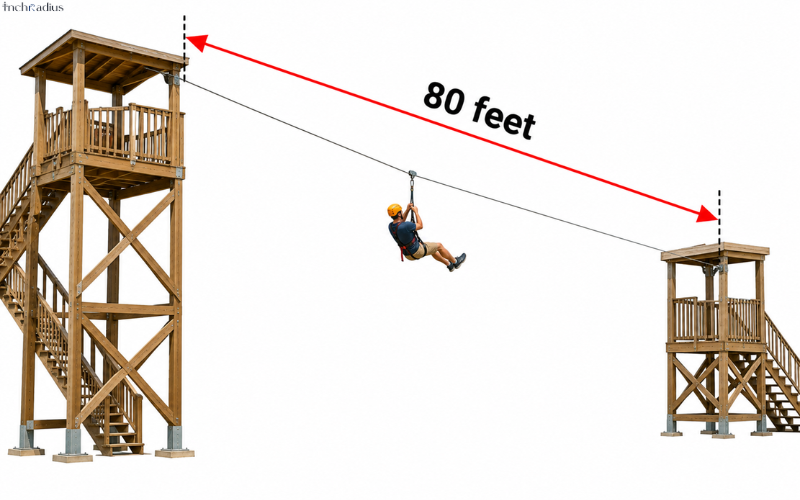
A recreational zipline spanning around 80 feet offers a practical example of a long, straight distance. Short ziplines are sometimes installed in adventure parks, outdoor activity centres and private recreational spaces. They allow a rider to travel along a cable between two supported points.
Imagine the cable stretched across a small valley or an open section of a park. An 80-foot span would create a noticeable gap between the starting platform and the landing area. From the ground, the distance may look shorter than it really is, especially when there are no objects nearby to provide scale.
The cable’s actual length can differ from the straight-line distance between the two platforms. Its slope, tension and layout affect the final dimensions.
A zipline is therefore a useful illustration of 80 feet, but it is not a fixed standard. If you are planning an installation, use the manufacturer’s specifications and professional safety guidance rather than estimating from appearance.
8. Large Motor Yacht

A large motor yacht measuring around 80 feet from bow to stern is a substantial vessel. It may include several cabins, indoor lounges, a dining area and outdoor deck space. Some designs also have separate areas for entertaining guests or relaxing while travelling.
The length is easier to appreciate when the yacht is viewed from the side while moored at a marina. Its hull may extend along much of a small waterfront plot, making it a useful reference for comparing long objects.
Not all yachts of this size have the same layout. Some prioritise indoor accommodation, while others provide more open deck space. The advertised length may also be measured differently depending on the manufacturer.
For a simple mental picture, imagine four 20-foot sections running along the yacht’s length. Together, they would equal 80 feet. This is a conceptual comparison, not a claim that every yacht is divided into equal sections.
9. Tall Communications Tower

A communications tower standing approximately 80 feet tall can help you visualise the height of a large outdoor structure. Towers support equipment used for radio transmissions, mobile communications and other wireless services. Their designs range from slender lattice frameworks to poles with antennas mounted near the top.
Imagine standing at the base of an 80-foot tower and looking up at its highest point. It would rise well above the roofs of many houses and could be visible from a considerable distance, depending on the surrounding buildings and landscape.
The total height can include antennas and other equipment, so two towers with similar supporting structures may have different overall measurements. A tower’s height also says nothing about its width or the distance between its supports.
This is a useful comparison for understanding vertical measurements, particularly when planning outdoor installations. For any construction or clearance decision, use verified technical dimensions rather than judging the tower by eye.
How to Measure 80 Feet Without a Ruler
Measuring 80 feet without a tape measure is possible, although the result will be an estimate. For greater accuracy, use a long measuring tape, a measuring wheel or a properly calibrated distance-measuring device.
Use Four 20-Foot Sections
If you have access to a known 20-foot length of rope, cable or marked ground, measure it four times in a straight line. Four sections of 20 feet equal exactly 80 feet.
Make sure each section starts where the previous one ends. Overlapping sections or leaving gaps will affect the final result. This method is useful for marking out a garden, checking a recreational area or estimating the length of an outdoor project.
Count Your Walking Steps
You can estimate 80 feet by walking across the space and counting your steps. First, measure or estimate your average step length on level ground. If your step covers roughly 2.5 feet, about 32 steps would cover 80 feet.
This is only a rough calculation. Step length changes with your height, walking speed, footwear and the ground surface. For a better estimate, walk a known distance first and calculate your average step length before counting across the larger area.
Use a Familiar Building or Sports Area
A known building dimension or marked sports facility can provide a visual reference. For example, a 25-metre swimming pool measures approximately 82 feet, which is close to the target distance.
If you have access to a measured field or a site plan, compare the intended distance with a clearly marked section. This is generally more reliable than estimating from hand spans or finger widths, which are unsuitable for measuring such a long distance directly.
Related Post: How Long Is 70 Feet? 10 Common Things That Are 70 Feet Long
FAQs
1. How many metres are in 80 feet?
Eighty feet equals exactly 24.384 metres. For everyday estimates, you can round this to 24.4 metres. This conversion is useful when reading metric building plans, comparing the length of boats or estimating the dimensions of an outdoor space.
2. How many inches are there in 80 feet?
There are 960 inches in 80 feet because every foot contains 12 inches. Multiply 80 by 12 to calculate the total. This is the exact conversion, not an estimate based on the size of a real object.
3. Is 80 feet longer than a tennis court?
It depends on which part of the court you compare. A tennis court’s playing area measures 78 feet from baseline to baseline, so 80 feet is two feet longer. The full court layout, including space outside the playing lines, requires more room than that.
4. How many storeys tall is an 80-foot building?
An 80-foot building might be around seven or eight storeys tall, depending on floor heights. Residential floors are often shorter than those in commercial buildings. High ceilings, roof structures and mechanical equipment can also affect the total height, so the number of storeys is only an estimate.
5. How long is 80 feet compared with a car?
A typical family car is roughly 12 to 16 feet long, although models vary. Five cars measuring 16 feet each would total 80 feet if placed end to end. This is a useful mental comparison, but actual car lengths and the space between parked vehicles will change the result.
6. What is 80 feet in centimetres and millimetres?
Eighty feet equals 2,438.4 centimetres or 24,384 millimetres. To convert feet into centimetres, multiply the number of feet by 30.48. To convert feet into millimetres, multiply by 304.8. These are exact conversions using the standard definition of a foot.
7. Can I estimate 80 feet by walking?
Yes. First estimate your average step length, then divide 80 feet by that distance. For example, if each step covers about 2.5 feet, you would need roughly 32 steps. This gives an approximate result because step length changes with your pace, body size and the surface.
8. What is the easiest way to picture 80 feet?
A 25-metre swimming pool is a convenient reference because it is approximately 82 feet long. A row of five cars, each around 16 feet long, provides another comparison. Both examples help you picture the distance, but neither should replace a proper measurement where accuracy matters.
Conclusion
Eighty feet is a substantial distance, equal to 960 inches or approximately 24.4 metres. A swimming pool close to 25 metres long offers one of the simplest ways to picture it. You can also imagine five cars placed end to end, with each car measuring around 16 feet, or a tall tree reaching roughly 80 feet above the ground.
For outdoor planning, divide the distance into four sections of 20 feet or use a known length as a reference. Walking steps can help when no equipment is available, but the result will be approximate. If accuracy matters for construction, property boundaries or installations, use a reliable measuring tool rather than relying on visual comparisons alone.