
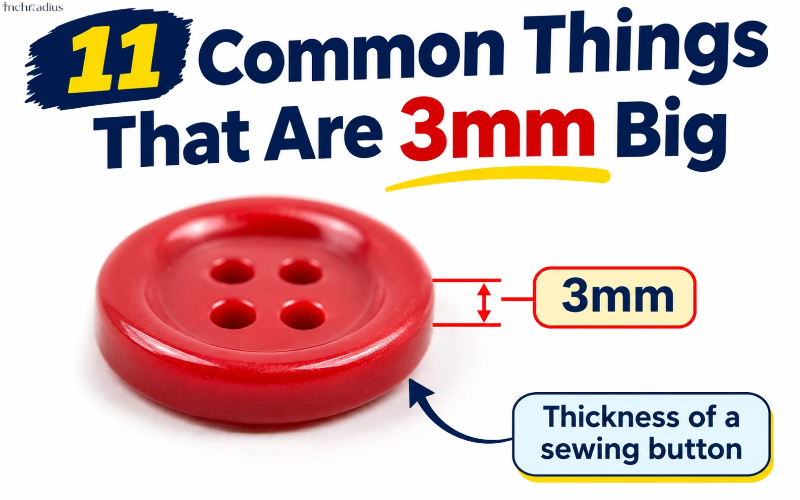
3 millimetres (3mm) is a very small measurement, equal to 0.3 centimetres or approximately 0.12 inches. It is less than one-eighth of an inch, so it can be difficult to picture without a ruler. Although 3mm may seem tiny, it is a useful size for many everyday materials, tools and household objects.
A thin sheet of plywood, a small acrylic panel and a narrow wooden dowel can all help you visualise this measurement. Knowing what 3mm looks like can be helpful when buying craft supplies, checking material thickness, choosing small components or working on DIY projects.
How Long Is 3mm?
Three millimetres is exactly three-thousandths of a metre. It is a small distance, but it is still large enough to see and feel when compared with a very thin sheet or small object.
Here are the exact conversions:
- 3mm = 0.3 centimetres
- 3mm = 0.1181 inches
- 3mm = 0.003 metres
- 3mm = 3,000 micrometres
In everyday terms, 3mm is just under one-eighth of an inch. If you look at a standard ruler, it is slightly less than the distance between the zero mark and the first eighth-inch mark.
This measurement appears in many places. It can describe the thickness of a craft material, the diameter of a small drill bit or the width of a narrow component. You might also come across it when measuring a gap between two surfaces.
A difference of just 3mm can matter in DIY work, especially when fitting materials together or selecting parts that need to fit properly.
Related Post: How Long Is 40 Feet? 11 Common Things That Are 40 Feet Long
How Big Is 3mm?
Three millimetres is small enough to fit comfortably between the edges of a fingertip, but it is not so tiny that you cannot see it. Imagine a narrow strip of material that is slightly thicker than a thin sheet of paper. That gives you a reasonable starting point for visualising the measurement.
Another useful comparison is a small wooden dowel with a diameter of 3mm. It looks like a very thin stick and is often used in miniature crafts and model-making.
You can also picture three millimetres by looking at the thickness of several ordinary sheets of paper placed together. The exact number depends on the paper, but a small stack can help demonstrate the difference between a single sheet and a few millimetres.
Remember that 3mm describes a measurement in one direction. It might refer to an object’s thickness, width or diameter rather than its overall length.
11 Common Things That Are 3mm Big
Several everyday materials, small tools and craft supplies have a thickness, width or diameter of approximately 3mm. These examples make it easier to picture such a small measurement without relying entirely on a ruler.
The table below contains 11 examples. Some are manufactured to a nominal 3mm specification, while others may vary slightly depending on the manufacturer.
| Everyday Item | Actual Size |
| 3mm Acrylic Sheet | 3mm |
| Thin Plywood Sheet | 3mm |
| EVA Craft Foam | 3mm |
| Cork Sheet | 3mm |
| Small Wooden Dowel | 3mm |
| 3mm Drill Bit | 3mm |
| 3mm Hex Key | 3mm |
| Rubber Gasket Cord | 3mm |
| Small Craft Bead | 3mm |
| Silicone Tubing | 3mm |
| Tile Spacers | 3mm |
1. Acrylic Sheet
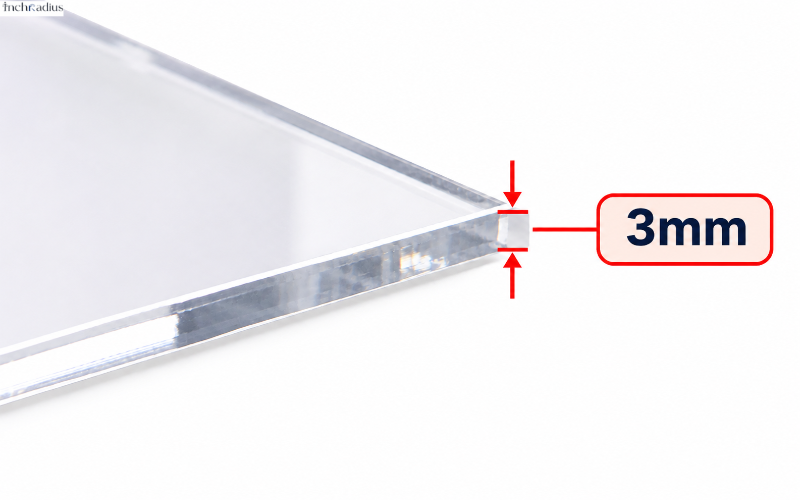
A 3mm acrylic sheet is a useful way to understand how small this measurement really is. Acrylic is a clear plastic material commonly used for display stands, protective covers, signs and small craft projects.
The sheet is thin enough to look lightweight, but it has more structure than ordinary paper or thin plastic film. Its edge provides a particularly useful visual reference because you can see the thickness directly.
Acrylic sheets are sold in several thicknesses, including 2mm, 3mm and 5mm. A sheet labelled 3mm is manufactured to that nominal thickness, although small production differences can occur.
If you have ever handled a small acrylic display or photo stand, you may have seen something similar. Looking at its edge can help you picture 3mm without needing to measure the entire sheet.
Related Post: How Long Is 50 Feet? 12 Common Things That Are 50 Feet Long
2. Thin Plywood Sheet
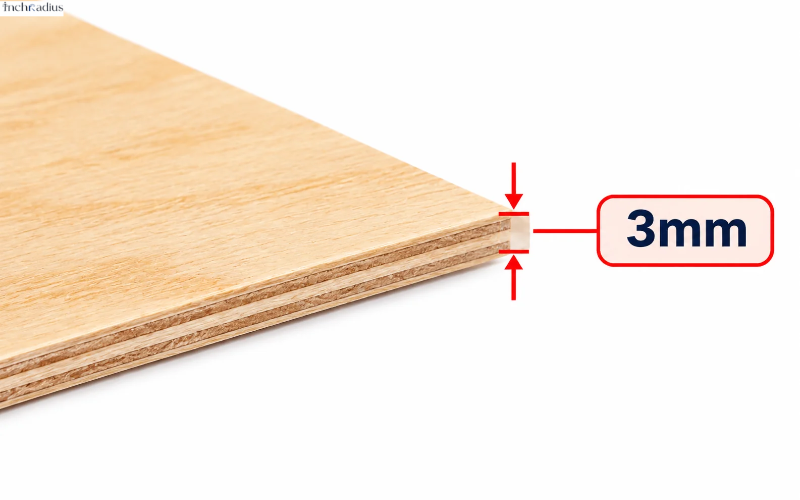
Thin plywood is another practical example of 3mm. It is made by joining several thin layers of wood together, with the grain of neighbouring layers usually arranged in different directions.
Plywood with a nominal thickness of 3mm is commonly used for miniature furniture, model-making, decorative crafts and small home projects. It is much thinner than the plywood sheets used for heavy construction.
Look at the edge of a 3mm plywood panel. You can often see the individual wood layers, which makes its thickness easier to understand.
It is also useful when comparing different material sizes. A 3mm sheet is noticeably thinner than a 6mm panel, even though the difference might seem small when looking at the full sheet.
For anyone working with craft wood, this is a recognisable example of a material that measures around 3mm thick.
3. EVA Craft Foam
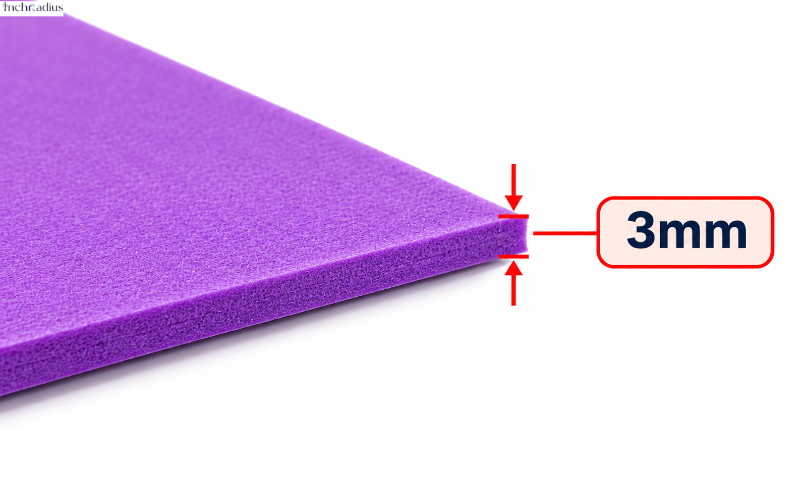
EVA foam is a soft, flexible material used in school projects, decorations, costumes and handmade crafts. It is available in different thicknesses, and 3mm is a popular option for lightweight craft work.
Unlike a rigid acrylic sheet, EVA foam can bend slightly when you press it. This makes it easy to cut into shapes and attach to other materials.
A 3mm foam sheet gives you a simple way to picture the measurement. Look at the exposed edge rather than the flat surface. Its thickness is narrow, but it is clearly visible.
You might find this material in craft shops, where it is sold in individual sheets or packs of different colours. It can be used for making small decorations, shapes and costume details.
A 3mm EVA foam sheet is a useful comparison because its stated thickness closely matches the measurement you are trying to visualise.
4. Cork Sheet
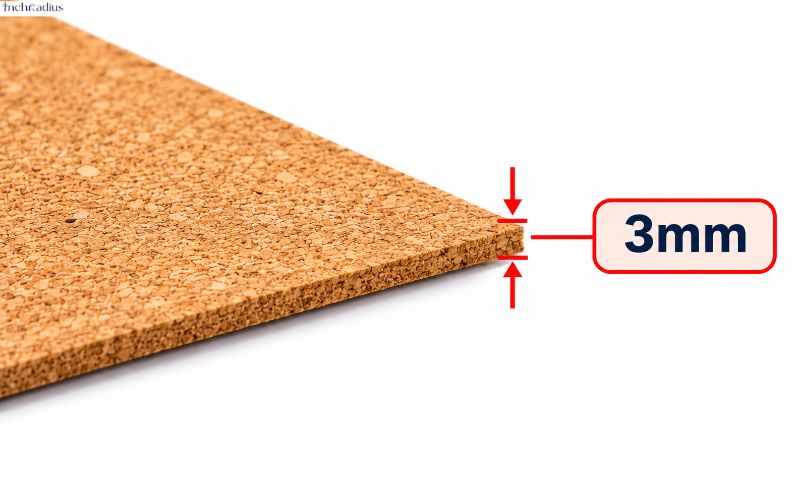
Cork is a lightweight natural material commonly used for noticeboards, coasters, craft projects and protective padding. Thin cork sheets are available in several thicknesses, including 3mm.
Its slightly rough surface makes it look different from plastic or wood. When you handle a thin cork sheet, you can feel its thickness between your fingers.
A 3mm cork sheet is particularly useful for small craft projects where a little cushioning is needed without adding much bulk. It may also be used as a backing material for decorative items.
The best way to visualise its size is to examine the narrow edge. Although the sheet may cover a large area, its thickness remains just 3mm.
Cork can compress slightly under pressure, so its measured thickness may vary depending on how firmly it is handled. A sheet sold as 3mm thick is therefore best treated as a nominal measurement.
Related Post: How Long Is 60 Feet? 11 Common Things That Are 60 Feet Long
5. Small Wooden Dowel
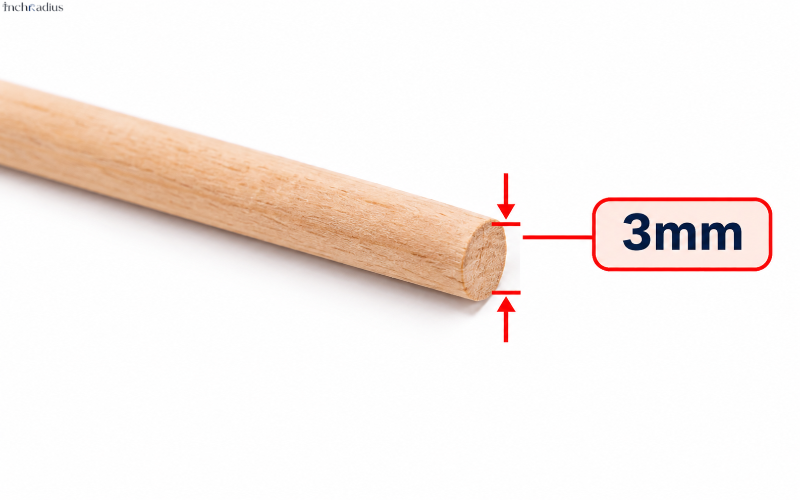
A small wooden dowel measuring 3mm in diameter is a good example of how narrow this measurement can be. A dowel is a round wooden rod used in crafts, model-making and small construction projects.
Unlike a flat sheet, the 3mm measurement describes the distance across the circular rod. This makes it a helpful comparison for understanding diameter rather than thickness.
Small dowels can be used to create miniature furniture, model structures and decorative items. They are also useful when joining lightweight wooden components.
Hold a 3mm dowel between your fingers and look at its end. The circular cross-section gives you a clear picture of the measurement.
You can compare it with a thicker wooden rod to see how a few extra millimetres can change the appearance of a small component.
6. Drill Bit
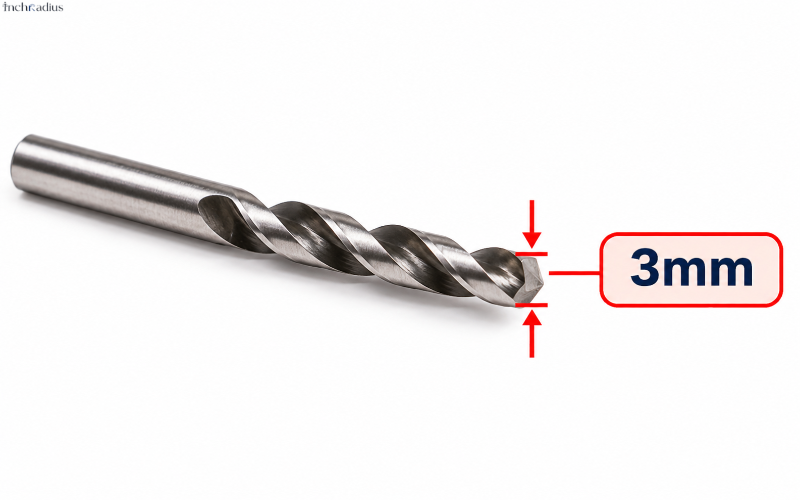
A 3mm drill bit is a familiar tool for anyone who enjoys DIY projects or works with wood, plastic and metal. The number refers to the nominal diameter of the cutting part of the drill bit.
It is noticeably thinner than many general-purpose drill bits used for larger holes. Its narrow shape makes it suitable for creating small openings where a larger drill would remove too much material.
For example, a 3mm drill bit may be used for certain small pilot holes or precision craft projects, depending on the material and the fixing being used.
The cutting end is the best part to examine when visualising the measurement. Its diameter is approximately 3mm, although the shank may have a different shape or size depending on the drill design.
This is a practical example because you can find drill bits with clearly marked metric measurements in many hardware shops.
7. Hex Key
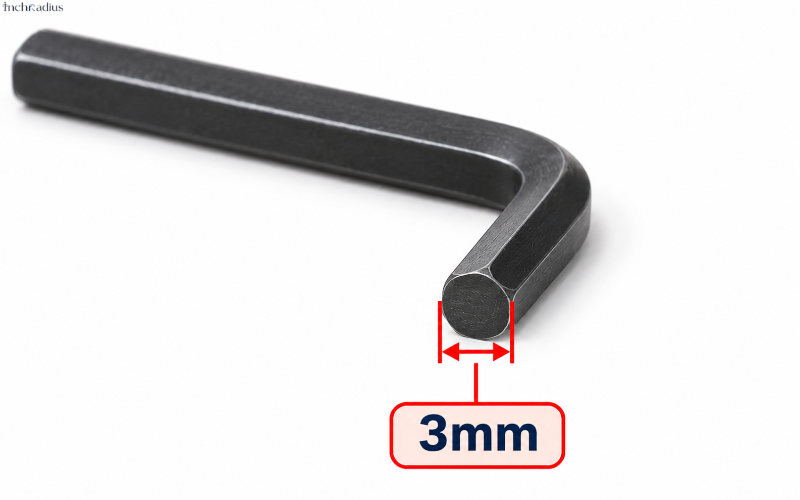
A 3mm hex key, also called an Allen key, is a small L-shaped metal tool used to tighten and loosen hexagonal socket screws.
The 3mm measurement refers to the distance across the flat sides of its hexagonal working end. It does not describe the overall length of the tool.
You may find this size in furniture fittings, bicycle components, small machinery and household equipment. Many flat-pack furniture kits include hex keys in different sizes.
The end of the tool provides an interesting way to understand 3mm. Its small hexagonal shape is designed to fit a screw opening with a matching nominal size.
If you compare a 3mm hex key with a 4mm or 5mm version, you will notice how much the width changes even with a small increase in measurement.
Related Post: How Long Is 70 Feet? 10 Common Things That Are 70 Feet Long
8. Rubber Gasket Cord
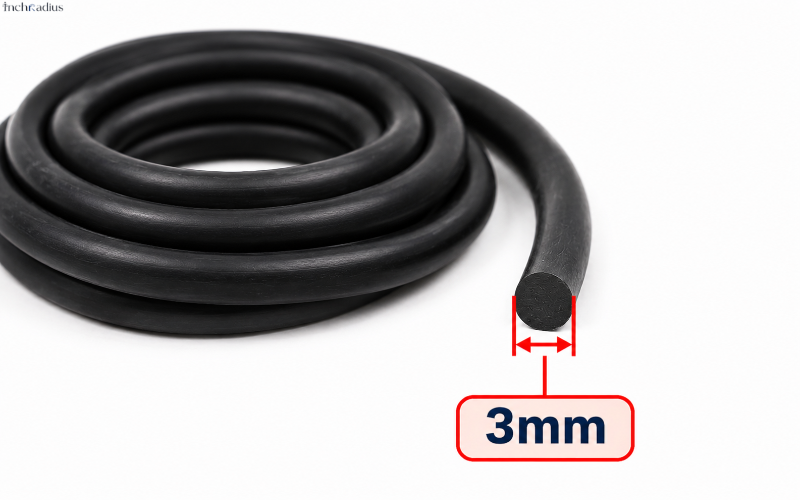
Rubber gasket cord is a flexible material used for making seals and preventing leaks around certain fittings and components. It is available in different diameters, with 3mm being one of the possible sizes.
Unlike a flat rubber sheet, this material usually has a round cross-section. The measurement refers to the diameter across the circular cord.
You might encounter gasket cord in repair work, plumbing-related applications, machinery and DIY projects. Its flexibility allows it to fit into suitable grooves and spaces.
To picture 3mm, look at the cut end of the cord. The circular surface gives you a direct view of its diameter.
This example also shows why it is important to understand which part of an object is being measured. A cord may be several metres long while still having a diameter of only 3mm.
9. Small Craft Bead
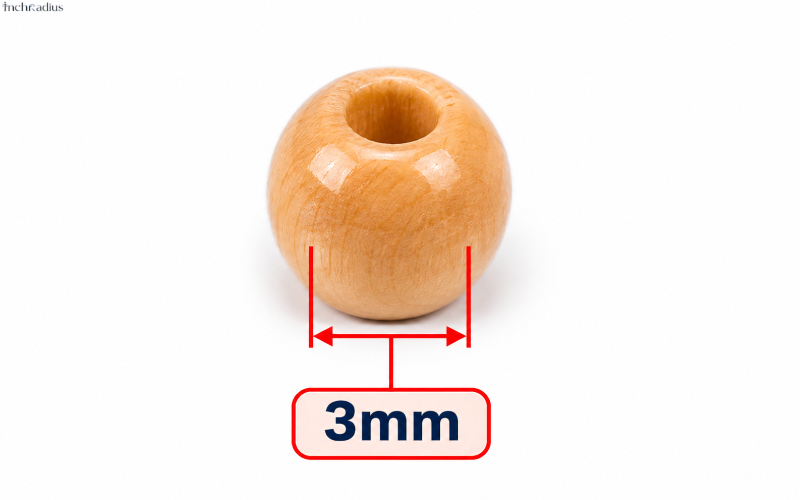
Small craft beads are used in jewellery-making, embroidery, decorative sewing and handmade accessories. Some bead varieties are available in a 3mm diameter, making them useful for visualising this measurement.
A 3mm bead is tiny compared with the larger decorative beads often used in necklaces and bracelets. It can sit comfortably on a fingertip and may be difficult to pick up without using your fingernails.
The round shape makes it easy to understand the measurement. Imagine a small sphere measuring 3mm from one side to the other through its centre.
These beads are often sold in mixed colours and different sizes. Before buying them, check the manufacturer’s listed diameter because not all small beads have the same dimensions.
A 3mm bead is a particularly useful comparison for anyone who wants to picture a small circular measurement rather than the thickness of a flat object.
10. Silicone Tubing
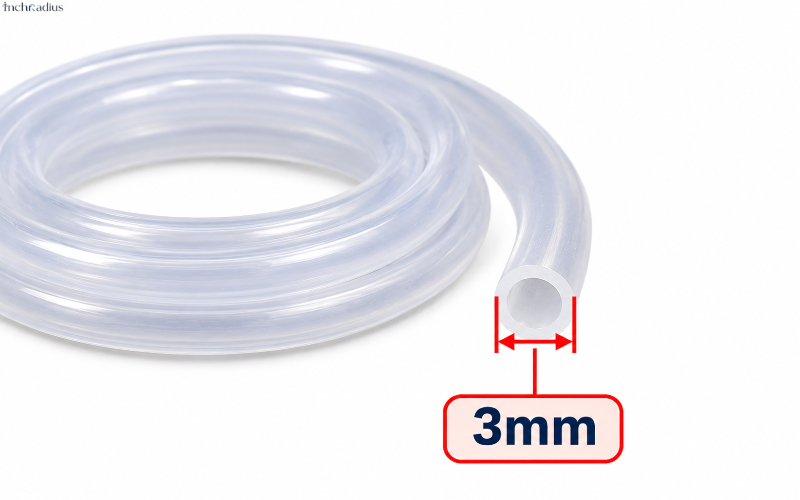
Silicone tubing is a flexible tube used in various household, laboratory, hobby and technical applications. It comes in several sizes, and some versions have an internal or external diameter of 3mm.
This example needs a little care because tubing has two measurements: its inside diameter and its outside diameter. A tube described as having a 3mm internal diameter will not necessarily measure 3mm across its outer surface.
The material is soft and flexible, so it can bend around corners without behaving like a rigid plastic pipe. Small silicone tubes are useful when only a narrow passage is required.
Look at the open end of a correctly specified tube to understand its size. You can see the circular opening and compare its diameter with a ruler.
Always check the product description to establish whether the stated 3mm refers to the inside or outside diameter.
Related Post: How Long Is 80 Feet? 9 Common Things That Are 80 Feet Long
11. Tile Spacers
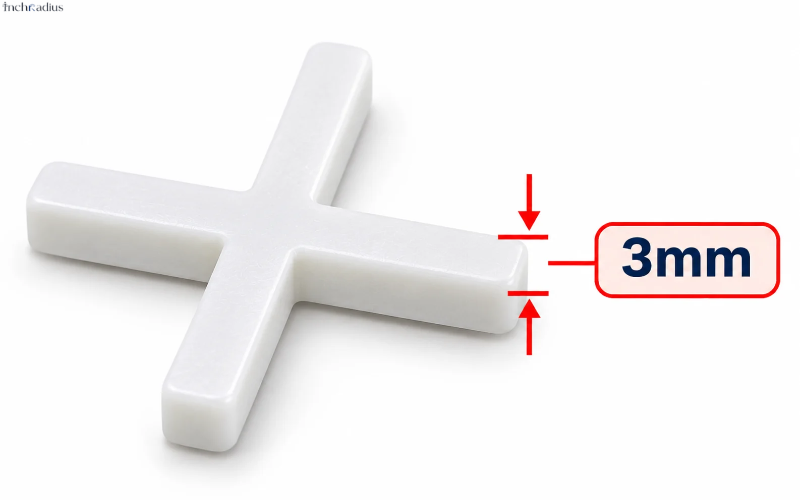
Tile spacers are small plastic pieces used to keep consistent gaps between tiles during installation. They come in different widths, and 3mm spacers are commonly available.
Their job is simple: they help maintain an even gap so that grout lines look consistent across a tiled surface.
The width of a 3mm spacer is a direct example of the measurement. When placed between two tiles, it creates a gap of approximately 3mm, provided the spacer is correctly positioned and the tiles are aligned.
You might see these spacers being used when fitting bathroom tiles, kitchen splashbacks or flooring. They are small enough to fit into narrow spaces but large enough to make a visible difference to the finished pattern.
A tile spacer is one of the more practical examples because its entire purpose is to represent a specific gap size.
Related Post: How Long Is 90 Feet? 10 Common Things That Are 90 Feet Long
How to Measure 3mm Without a Ruler
You do not always need a measuring tool to get a rough idea of how big 3mm is. A few familiar objects can help you estimate this small distance. These methods are useful for quick comparisons, although they should not replace an accurate measurement when precision matters.
1. Use a Small Stack of Paper
A single ordinary sheet of printer paper is usually around 0.1mm thick, although the exact thickness depends on the paper type.
If you stack approximately 30 sheets together, their combined thickness will be around 3mm.
This is a simple household experiment. Place the sheets evenly on top of each other and look at the side of the stack. You will get a useful visual reference for the measurement.
Thicker paper or card will produce a different result, so ordinary printer paper is the better choice for this comparison.
2. Compare It with Your Fingertip
Your fingertip can help you picture small measurements, but it is not an accurate measuring instrument.
Look at the side of your fingertip and imagine a narrow distance of 3mm. You can also place a small 3mm object against your fingertip to see how much space it covers.
Finger sizes vary between people, so avoid using your fingertip width as an exact reference.
This method is useful when you only need a rough idea of how small 3mm is, such as when looking at a tiny craft component.
3. Use a 3mm Drill Bit or Hex Key
If you have a metric drill bit or hex key in your toolbox, check whether it is marked 3mm.
The cutting diameter of a 3mm drill bit or the working width of a 3mm hex key provides a direct reference.
You can place the tool beside another object to compare their sizes. This is more reliable than estimating with your fingers because the tool is manufactured to a stated metric dimension.
It is still sensible to use a proper measuring instrument if the measurement must be precise.
Related Post:How Long Is 100 Feet? 11 Common Things That Are 100 Feet Long
FAQs
1. Is 3mm bigger or smaller than 1/8 inch?
Three millimetres is slightly smaller than one-eighth of an inch. One-eighth of an inch equals 3.175mm, making it just 0.175mm larger than 3mm. The difference is small, but it can matter when working with accurately sized materials or components.
2. How many centimetres is 3mm?
Three millimetres equals exactly 0.3 centimetres. To convert millimetres into centimetres, divide the measurement by 10. Therefore, 3 divided by 10 gives 0.3cm.
3. Can you see 3mm with the naked eye?
Yes, 3mm is visible without a magnifying glass. You can easily see it when looking at a small bead, a thin sheet of material or a narrow drill bit. However, measuring such a small distance accurately can be difficult without a ruler or calliper.
4. Is 3mm thick enough for plywood?
Yes, 3mm plywood is suitable for lightweight projects such as model-making, decorative crafts and miniature furniture. However, it is generally too thin for applications that require substantial structural strength. The correct thickness depends on the project’s weight, design and intended use.
5. How does 3mm compare with 5mm?
Five millimetres is 2mm thicker than 3mm. In percentage terms, 5mm is approximately 67% larger than 3mm. The difference is easy to notice when comparing two sheets of acrylic, plywood or foam placed side by side.
6. What does 3mm look like on a ruler?
On a metric ruler, 3mm is the third small millimetre mark after zero. It is slightly less than one-eighth of an inch on an imperial ruler. A ruler with clear millimetre markings is the easiest way to see this distance accurately.
7. Is 3mm the same as 0.3cm?
Yes. Three millimetres and 0.3 centimetres represent exactly the same distance. There are 10 millimetres in one centimetre, so dividing 3mm by 10 gives 0.3cm.
8. What is the easiest way to measure 3mm accurately?
A metric ruler with clear millimetre markings can measure 3mm accurately enough for many everyday tasks. For greater precision, especially when checking the thickness of a material or diameter of a small component, use a digital calliper.
- Discover more everyday objects and their measurements in inches.
- 10 Common Things That Are 6 Inches Long
- 10 Common Things That Are 7 Inches Long
- 12 Common Things That Are 8 Inches Long
- 12 Common Things That Are 9 Inches Long
- 10 Common Things That Are 10 Inches Long
Conclusion
Three millimetres is a small but useful measurement that appears in many everyday materials and tools. A 3mm acrylic sheet, thin plywood panel, wooden dowel and small craft bead all provide practical ways to picture its size. You can also remember that 3mm equals 0.3cm and approximately 0.12 inches, which is just under one-eighth of an inch.
For a quick estimate, a stack of around 30 ordinary printer-paper sheets gives you a helpful comparison. If you need an exact measurement for DIY work, crafts or repairs, a metric ruler or digital calliper will give you a much more dependable result.
