
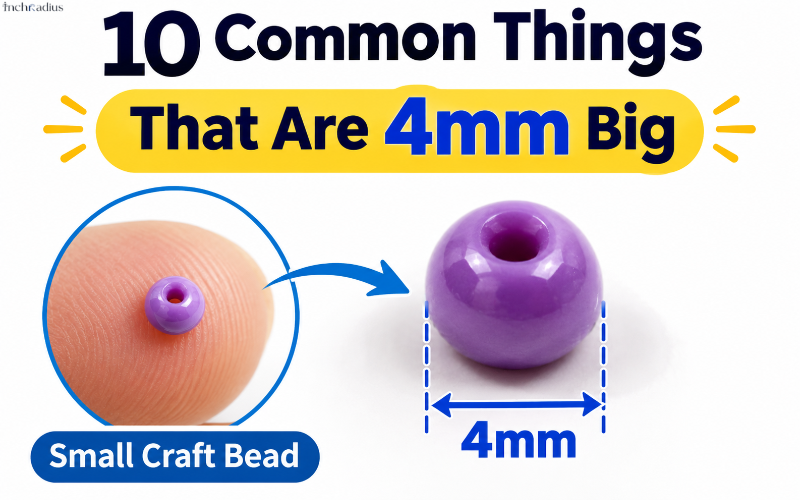
4 millimetres (4mm) is a very small measurement, but it is easier to picture when compared with familiar objects. It equals 0.4 centimetres, 0.157 inches, or approximately 5/32 of an inch. You could fit several 4mm objects across the width of your finger, which gives you an idea of just how small this measurement is.
Although it may seem tiny, 4mm can make a noticeable difference when choosing screws, craft supplies, tools or small household parts. A few everyday items, such as a peppercorn, a small craft bead and a drill bit, offer useful ways to visualise this size without having to reach for a ruler.
How Long Is 4 Millimetres?
4 millimetres is exactly four thousandths of a metre. It is a short distance that is usually easier to measure with a small ruler, calliper or other precision tool than with the naked eye.
Here are its exact conversions:
- 4mm = 0.4 centimetres
- 4mm = 0.1575 inches
- 4mm = 0.01575 feet
- 4mm = 0.004 metres
The inch conversion is particularly useful because many household tools and products use imperial measurements. A length of 4mm is just a little over one-eighth of an inch and slightly shorter than 5/32 of an inch.
You might come across this measurement when working with small screws, jewellery supplies, drill bits or craft materials. It can also describe the diameter of a small round object. Remember that the measurement may refer to an object’s width, thickness or diameter rather than its full length. That distinction matters when comparing real objects.
Related Post: 11 Common Things That Are 17 Feet Long
How Big Is 4mm?
Imagine looking at a standard centimetre on a ruler. It contains ten tiny millimetre divisions. Four of those divisions together give you 4mm. This is a useful starting point because most school rulers have millimetre markings that make the distance easy to see.
Another way to picture it is to look at the edge of a small craft bead or the diameter of a peppercorn. Both can provide a rough visual reference, although their actual dimensions vary.
A 4mm measurement is also much smaller than the width of an adult fingertip. Depending on the person, you could fit several 4mm spaces across it. It is not large enough to cover a substantial part of a phone screen or notebook page, but it is noticeable when looking closely at small components.
For everyday purposes, think of 4mm as a small gap, narrow width or tiny component dimension rather than a length you would normally measure using your hand.
10 Common Things That Are 4mm Long
Several everyday objects have a width, thickness or diameter close to 4mm. Some are manufactured to this measurement, while natural objects tend to vary slightly.
The following examples come from different areas, including tools, crafts, household supplies and food. They can help you picture how big 4mm really is.
| Everyday Item | Actual Size |
| Small craft bead | 4mm |
| 4mm drill bit | 4mm |
| Small peppercorn | 4mm |
| Miniature ball bearing | 4mm |
| 4mm knitting needle | 4mm |
| Small wooden dowel | 4mm |
| 4mm hex key | 4mm |
| Mini craft rhinestone | 4mm |
| Small machine screw shaft | 4mm |
| Aquarium air tubing | 4mm |
1. Small Craft Bead
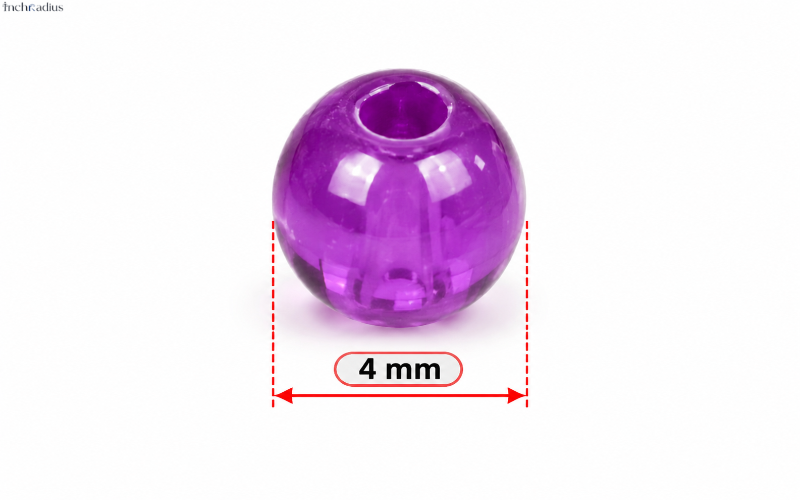
A small craft bead measuring 4mm across is a handy example of this measurement. These beads are commonly used in jewellery making, embroidery and decorative projects. They are available in glass, plastic, wood and other materials.
A bead sold as 4mm usually refers to its outside diameter. This means the distance from one side of the round bead to the opposite side, passing through its centre, is approximately 4mm.
The small size becomes clearer when you place the bead next to a centimetre ruler. It will cover less than half of a centimetre marking. You can also compare it with a larger jewellery bead to see the difference.
If you enjoy making bracelets or necklaces, you may already have beads of this size in your craft box. They provide a useful reference because their dimensions are often listed clearly on the packaging.
Related Post: 10 Common Things That Are 18 Feet Long
2. Drill Bit
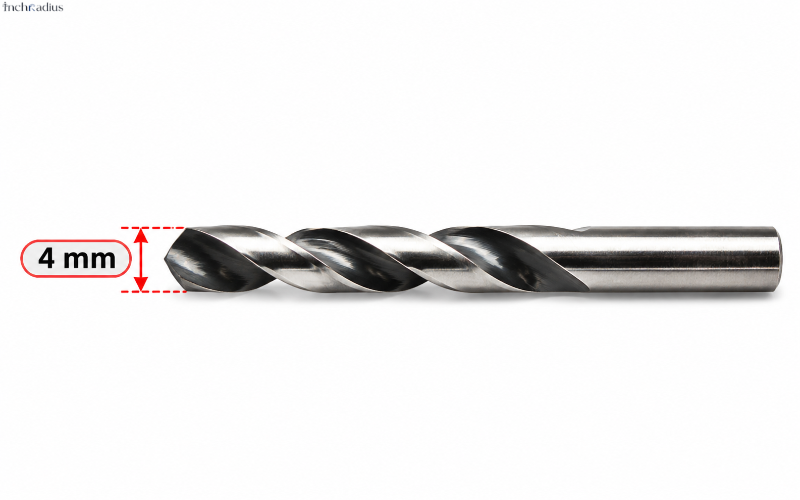
A 4mm drill bit is another practical example. It is a small metal tool used to make holes in materials such as wood, plastic and certain types of metal, depending on the drill bit design.
The 4mm measurement refers to the diameter of the cutting section. It does not describe the entire drill bit, which is much longer. If you look at the cutting end from the front, the width across it measures 4mm.
This is a useful comparison because drill bits are manufactured in standard sizes. Their dimensions are usually printed on the packaging or marked on the shank.
Place the cutting end beside a ruler to see how small 4mm is. The bit will span four of the tiny millimetre divisions. It is a good example of how a measurement this small can still be important in practical work.
3. Small Peppercorn
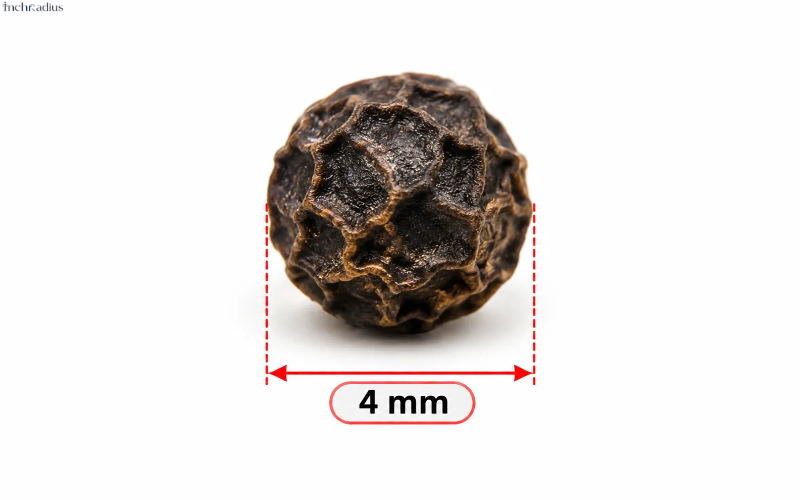
A whole black peppercorn can give you a natural comparison for a measurement close to 4mm. These small dried berries are used in cooking to add flavour and a little heat to food.
Many peppercorns measure around 4–5mm in diameter, although their size depends on the variety and how they have been processed. Some are smaller, while others are noticeably larger.
Take a single peppercorn and look at it from the side. Its rounded shape makes it easy to compare with the 4mm markings on a ruler. It is also small enough to rest comfortably between your fingertips.
Unlike a manufactured bead, a peppercorn will not always measure exactly 4mm. Still, it offers a familiar kitchen comparison that can help you picture the size without needing a specialist measuring tool.
Related Post: 11 Common Things That Are 19 Feet Long
4. Miniature Ball Bearing
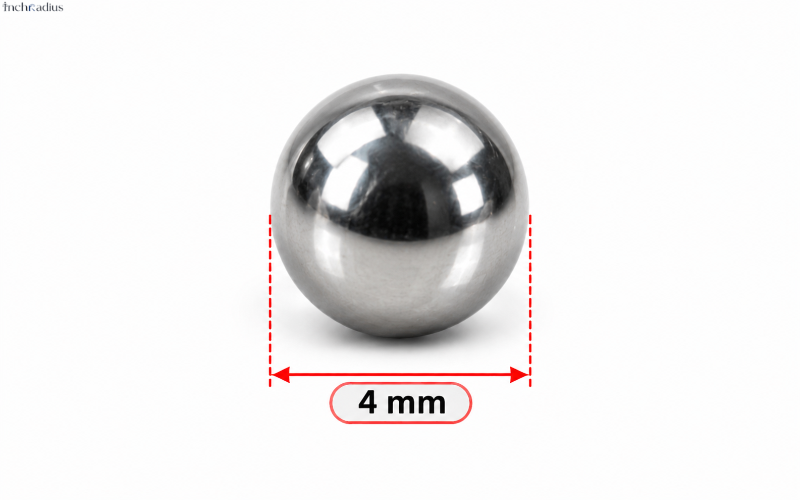
A miniature steel ball bearing measuring 4mm in diameter is a useful example from the mechanical world. Ball bearings are small round components designed to reduce friction between moving parts.
They are used in different types of machinery, model-making projects, small mechanisms and precision equipment. Their smooth round surfaces allow them to roll or move with very little resistance.
For this example, the 4mm measurement refers to the diameter of the ball, not the size of a complete bearing assembly. A bearing unit containing several balls will naturally be larger.
You can picture its size by placing the ball on a millimetre ruler. It will cover four small divisions across its widest point. Its shiny surface may make it look smaller at first, but the ruler gives you a reliable reference.
5. Knitting Needle
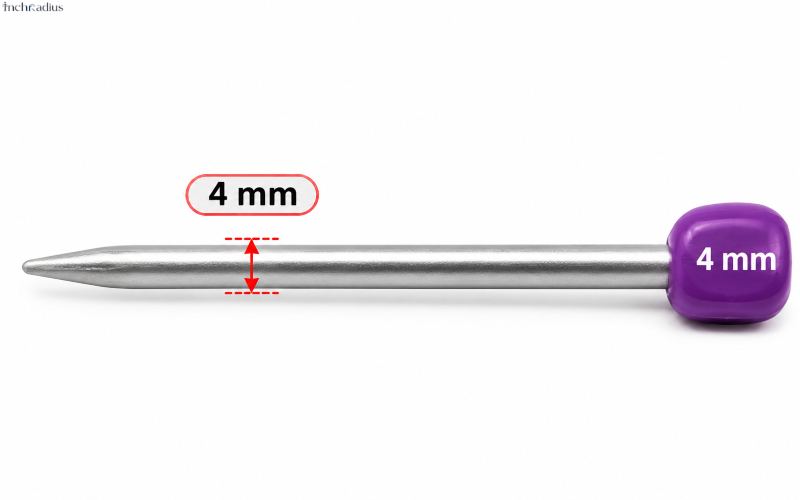
A 4mm knitting needle is a good example from sewing and textile crafts. Knitting needles come in several thicknesses, and 4mm is a common size used for making different types of knitted items.
The measurement refers to the diameter of the needle shaft. In other words, the needle is approximately 4mm thick when measured across its round body.
You can use this measurement to understand the difference between knitting needle sizes. A thinner needle creates a different knitting structure from a thicker one, depending on the yarn and knitting technique.
Hold the needle next to a ruler and compare its width with four millimetre divisions. Although the needle itself may be several inches long, its thickness gives you a clear example of 4mm.
6. Small Wooden Dowel
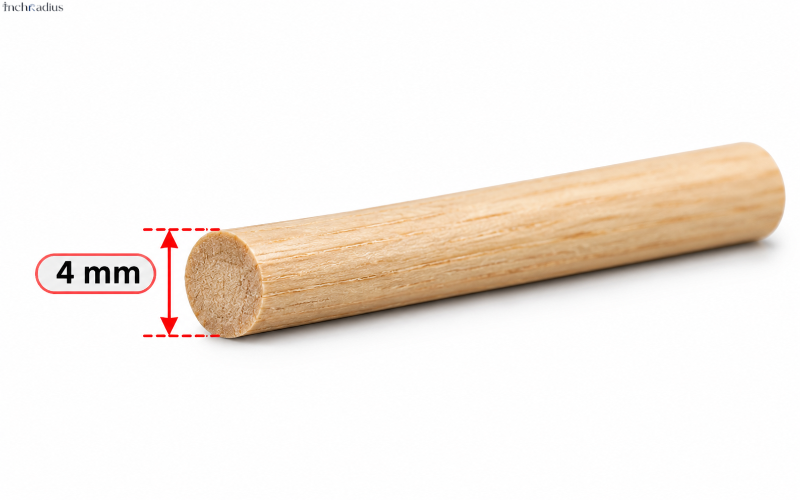
Small wooden dowels are used in furniture assembly, model building, craft work and simple repair projects. A dowel is a cylindrical piece of wood that can help join two parts together or provide support.
A 4mm wooden dowel has a diameter of approximately 4mm. Its length can vary considerably, so it is the thickness rather than the full length that makes it relevant to this comparison.
You may find small dowels in craft shops or specialist woodworking supplies. They are often sold in different diameters to suit particular projects.
To visualise the measurement, look at the circular end of the dowel. The distance across the centre is 4mm. This gives you a clear picture of the size and helps explain why even a small difference in dowel thickness can affect how well two wooden parts fit together.
Related Post: 10 Common Things That Are 20 Feet Long
7. Hex Key
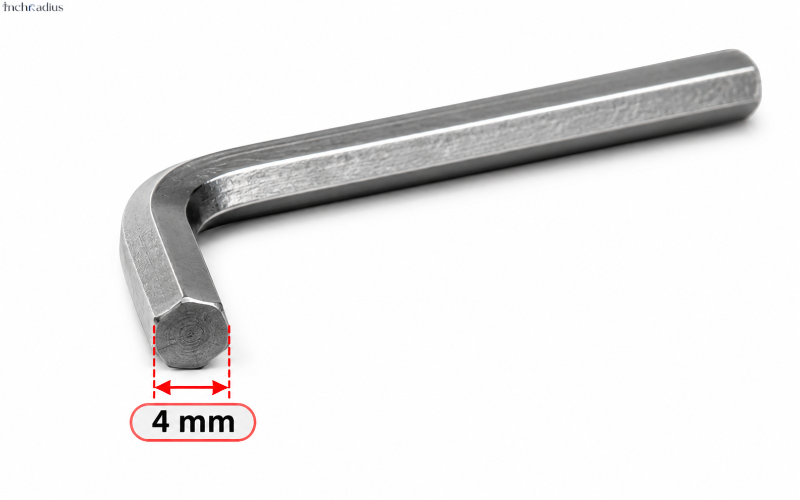
A 4mm hex key, sometimes called an Allen key, is a small hand tool used to tighten and loosen hexagonal socket screws. You may find this tool in furniture assembly kits, bicycle repair sets and general toolboxes.
The 4mm measurement describes the distance across the opposite flat sides of the hexagonal end. It is not the length of the entire tool.
Look closely at the working end of the key. Its six-sided shape is designed to fit inside a matching screw socket. The tool must be the correct size to avoid slipping or damaging the screw.
A 4mm hex key is useful for visualising this measurement because it has a standard manufactured dimension. You can compare its working end with a ruler to see how little space 4mm occupies.
8. Mini Craft Rhinestone
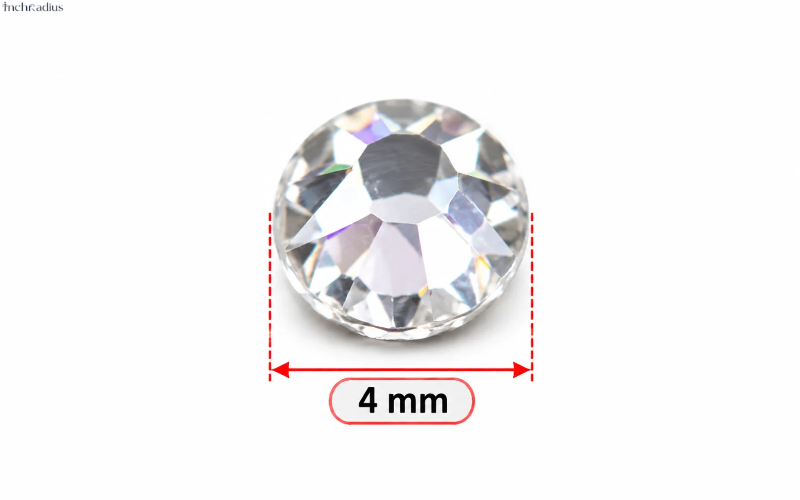
Mini craft rhinestones are small decorative pieces used on clothing, greeting cards, phone cases, shoes and handmade accessories. They are often made from glass, acrylic or crystal-like materials.
A rhinestone sold in a 4mm size generally has an outside diameter of approximately 4mm. Its shape may be round, so the measurement is taken across its widest part.
Although these tiny decorations look small individually, several can be arranged together to create patterns and designs. Their size makes them suitable for detailed work where larger decorative pieces would look out of place.
Place a 4mm rhinestone on a flat surface beside a ruler. Its diameter will match four millimetre divisions. The shiny surface also makes it easy to recognise when comparing it with other small craft materials.
9. Small Machine Screw Shaft
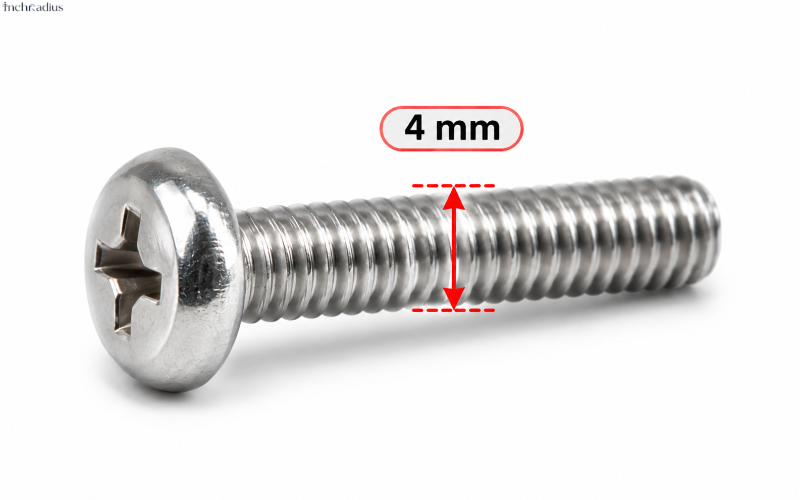
An M4 machine screw provides another useful comparison. These screws are used in furniture fittings, machinery, electronics enclosures and various repair jobs.
The letter M indicates that the screw follows the metric thread system, while the number 4 refers to its nominal outside thread diameter of 4mm.
This does not mean that every part of the screw measures 4mm. The head may be wider, and the threaded shaft extends along the screw’s length. The nominal diameter is measured across the outside of the threads.
If you have an M4 screw at home, look at its threaded section from the end. It will give you a practical idea of how small 4mm is. This is also a useful example of why accurate measurements matter when selecting replacement hardware.
Related Post: 11 Common Things That Are 21 Feet Long
10. Aquarium Air Tubing
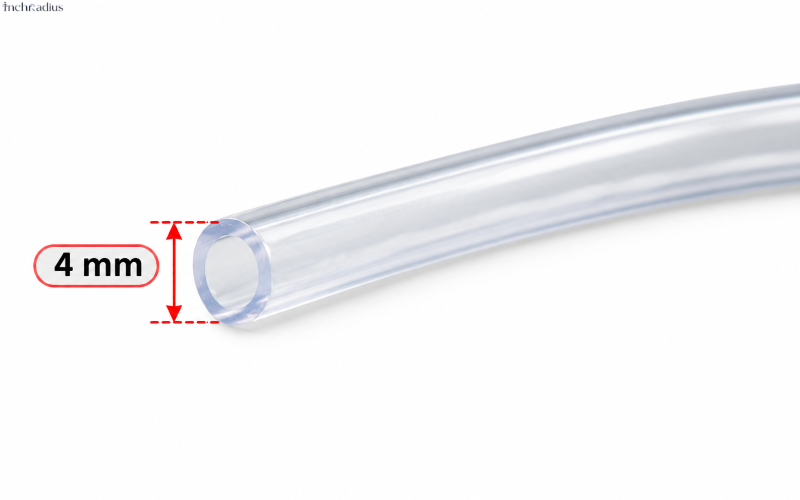
Aquarium air tubing is a familiar item for people who keep fish. It carries air from an aquarium pump to an air stone or another piece of equipment inside the tank.
Some aquarium airline tubing is sold with an outside diameter of approximately 4mm. However, sizes differ between manufacturers, so it is important to check whether the stated measurement refers to the inside or outside diameter.
The tubing itself is much longer than 4mm. Its narrow width is what makes it suitable for this comparison.
You can look at the circular opening at the end of a piece of tubing to get a better idea of its size. Compare the outside edge with a ruler for the most accurate result. This example is particularly useful because it shows how 4mm can describe the width of a flexible household accessory.
Related Post: How Long Is 30 Feet? 10 Common Things That Are 30 Feet Long
Measurement Without a Ruler
You do not always need a measuring tool to get a rough idea of how big 4mm is. A few familiar objects and simple methods can help, although none should replace an accurate measurement when precision matters.
1. Use the Millimetre Markings on a Ruler
If you have a ruler with millimetre markings, find the zero point and count four small divisions. The distance between the starting point and the fourth division is exactly 4mm.
This is the simplest method because it does not depend on the size of your hands or other personal measurements.
2. Compare It With a Small Craft Bead
A 4mm craft bead can serve as a reference object. Keep one beside the item you want to estimate and compare their widths.
This works particularly well when checking small craft supplies, decorative pieces or other objects with a similar round shape.
Remember that the bead must actually be 4mm. Larger or smaller beads will give you a different reference.
3. Use a Peppercorn for a Rough Estimate
A whole peppercorn is another useful household reference. Many black peppercorns are around 4–5mm across, making them reasonably close to the target measurement.
Place one beside the object you are checking and compare their overall widths. This method is only approximate because natural peppercorns are not all the same size.
Related Post:How Long Is 40 Feet? 11 Common Things That Are 40 Feet Long
FAQs
1. Is 4mm bigger or smaller than half a centimetre?
4mm is smaller than half a centimetre. Half a centimetre equals 5mm, so 4mm is just 1mm shorter. The difference is small, but it can matter when measuring small components, craft materials and mechanical parts.
2. How many inches is 4mm?
4mm equals approximately 0.1575 inches. As a fraction, it is slightly more than 1/8 inch and just under 5/32 inch. This conversion is useful when comparing metric measurements with tools or products that use inches.
3. Is 4mm the same as 0.4cm?
Yes. 4mm is exactly 0.4cm because one centimetre contains ten millimetres. To convert millimetres into centimetres, divide the measurement by ten. Therefore, 4 divided by 10 gives 0.4 centimetres.
4. Can I see 4mm with the naked eye?
Yes, most people can see a 4mm object without magnification. However, small details may be difficult to identify, particularly if the object is transparent or has a similar colour to its background. Good lighting makes small measurements easier to judge.
5. How can I measure 4mm accurately?
Use a ruler with clear millimetre markings or a digital calliper. Place the object at the zero mark and check where its opposite edge ends. A calliper is particularly helpful for measuring small diameters, thicknesses and widths.
6. Is 4mm close to 1/8 inch?
Yes, it is slightly larger. One-eighth of an inch equals 3.175mm, while 4mm equals approximately 0.1575 inches. The difference is less than 1mm, so they may look similar when viewed without a measuring tool.
7. What household object is closest to 4mm?
A whole black peppercorn can be close to 4mm in diameter, although its size varies. A small craft bead sold specifically as 4mm is a more dependable comparison because its nominal diameter is provided by the manufacturer.
8. Is 4mm suitable for measuring small gaps?
Yes. A 4mm measurement can describe a small gap between two surfaces, the width of a narrow opening or the thickness of a component. However, use a suitable measuring tool when the gap needs to be exact, particularly during repairs or assembly work.
- Discover more everyday objects and their measurements in inches
11 Common Things That Are 11 Feet Long
10 Common Things That Are 12 Feet Long
11 Common Things That Are 13 Feet Long
12 Common Things That Are 14 Feet Long
10 Common Things That Are 15 Feet Long
Conclusion
4mm may be a tiny distance, but several familiar objects make it easier to picture. A small craft bead, miniature ball bearing and 4mm drill bit are useful manufactured examples, while a peppercorn provides a natural comparison. The easiest way to remember this measurement is to think of four small divisions on a millimetre ruler.
It is also worth remembering that 4mm equals 0.4cm or approximately 0.1575 inches. Some objects in this size range are measured by their diameter or thickness rather than their full length, so always check which dimension is being described before using an object as a reference.
