
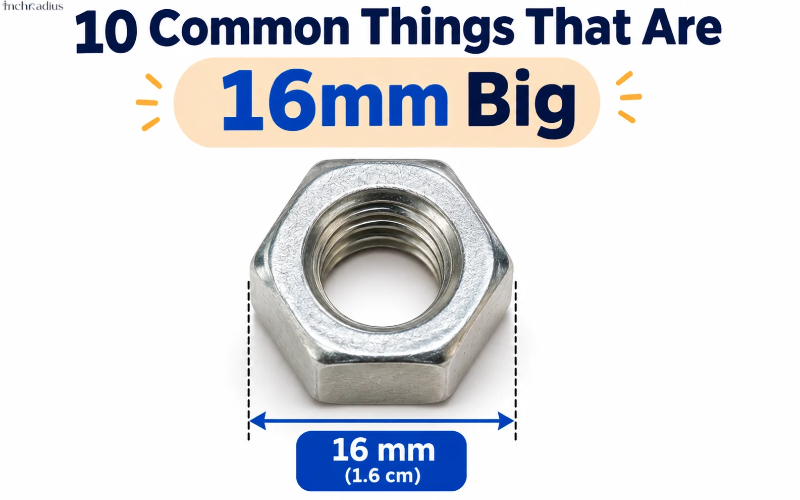
16mm is a small measurement, but it is bigger than you might imagine. It equals 1.6 centimetres, 0.63 inches, or 16 millimetres. To picture this size, think of a small glass marble, a knitting needle or the width of a narrow watch strap. These everyday objects make it easier to understand how much space 16mm takes up without reaching for a ruler.
This measurement can be useful when choosing craft materials, checking small hardware, measuring jewellery or working with tools. Although some objects are exactly 16mm, others are only close to this size, making them helpful visual references rather than precise measuring tools.
How Long Is 16 Millimetres?
16 millimetres is a short distance, measuring just over one and a half centimetres. It is also slightly more than five-eighths of an inch. Although the number may look small on paper, it is large enough to see clearly and compare with several household and workshop objects.
Here are the exact conversions:
- 16 millimetres = 1.6 centimetres
- 16 millimetres = 0.6299 inches
- 16 millimetres = 0.0525 feet
- 16 millimetres = 0.016 metres
A useful way to picture this measurement is to look at a small glass marble or a narrow knitting needle. Both can give you a reasonable idea of the size.
You might come across 16mm when measuring a craft bead, checking a wooden dowel or choosing a watch strap. It is also a common measurement in tools and hardware. Remember that 16mm describes a specific distance, but an object’s overall size may include other dimensions, such as its height, width and thickness.
Related Post: 9 Common Things That Are 15mm Big
How Big Is 16mm?
Imagine looking at a ruler and finding the distance between the 1cm and 2cm marks. The 16mm point sits just past the halfway mark between them, closer to 2cm. This gives you a simple visual reference without needing to think about fractions of an inch.
You can also compare it with the width of a small glass marble. A marble measuring around 16mm has a diameter that is easy to see and hold between your fingers.
Another useful comparison is a narrow watch strap. Some watch straps are made in a 16mm width, giving you a practical example of this measurement in daily life.
On a standard ruler, 16mm covers 16 small millimetre divisions. It is not quite as wide as a typical adult thumb, and it is much shorter than a standard paperclip.
The easiest way to remember the size is to think of a distance of 1.6cm. It is a little more than half an inch, making it small enough for craft materials but large enough to recognise easily.
10 Common Things That Are 16mm Big
Several everyday items and familiar tools have dimensions close to 16mm. Some are manufactured to this exact measurement, while others come in different sizes depending on the brand or purpose.
The following examples cover different categories, including craft supplies, jewellery, workshop equipment and small household objects.
Related Post: 10 Common Things That Are About 14mm Big
| Everyday Item | Actual Size |
| Small glass marble | 16mm |
| Knitting needle | 16mm |
| Wooden dowel | 16mm |
| Watch strap | 16mm |
| Craft bead | 16mm |
| 5/8-inch hex nut | 16mm |
| 16mm film | 16mm |
| Drill bit | 16mm |
| Combination spanner | 16mm |
| Button | 16mm |
1. Small Glass Marble
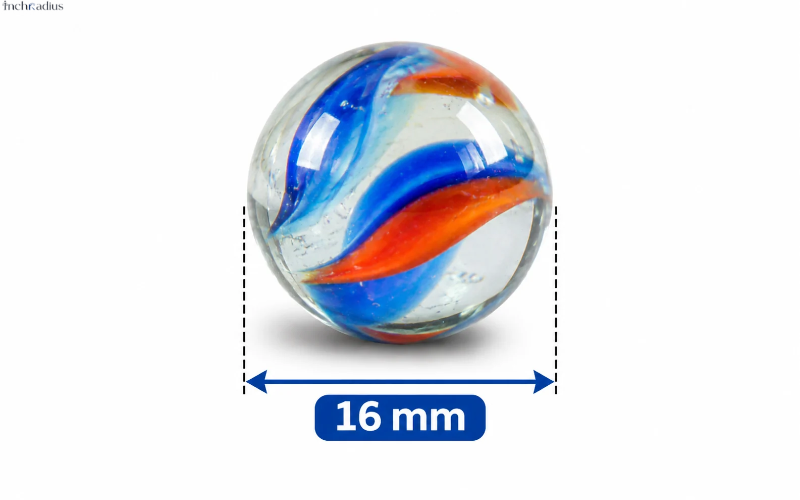
A small glass marble measuring approximately 16mm across is an easy object to use when picturing this measurement. Marbles are usually round, smooth and available in several colours, including blue, green, red and transparent glass.
The measurement refers to the marble’s diameter, which is the distance from one side to the other through its centre. It is not the distance around the curved surface.
A 16mm marble is small enough to fit comfortably between your fingertips. You can place it next to a ruler and see how its width compares with the 1.6cm mark.
Marbles are sold in different diameters, so not every marble will measure 16mm. However, a marble with this specified diameter provides a useful physical reference. It is particularly helpful when explaining small measurements to children or comparing the size of craft materials.
Related Post: 9 Common Things That Are 13mm Big
2. Large Knitting Needle
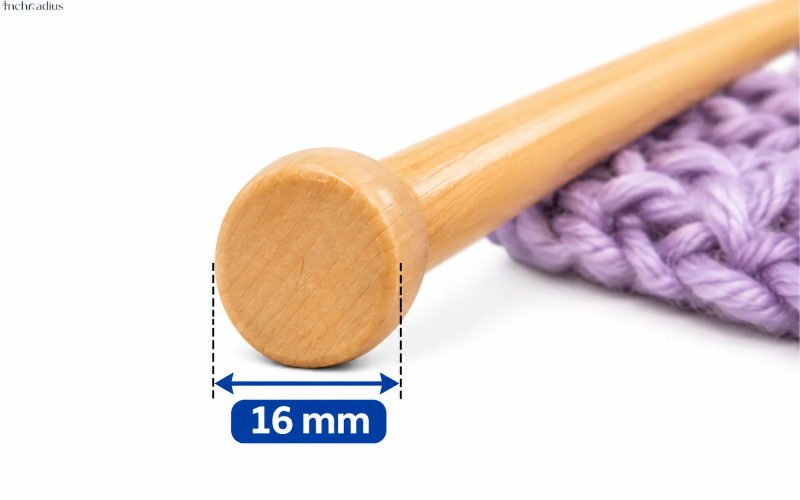
Knitting needles are available in many thicknesses, and some specialist needles measure 16mm in diameter. These are considerably thicker than the needles commonly used for ordinary knitting projects.
A 16mm knitting needle is a useful comparison because its thickness is easy to see. If you look directly at the circular end, the distance across it represents the diameter. This is the same measurement as 16mm.
Thick knitting needles are often used with chunky or super-chunky yarn. They help create large stitches and loose fabric patterns. Wooden, bamboo and plastic versions are available, depending on the type of knitting project.
If you have a 16mm needle, place its end against a ruler to see the measurement clearly. Be careful not to confuse its diameter with its length, as the full needle can be much longer than 16mm.
3. Wooden Dowel
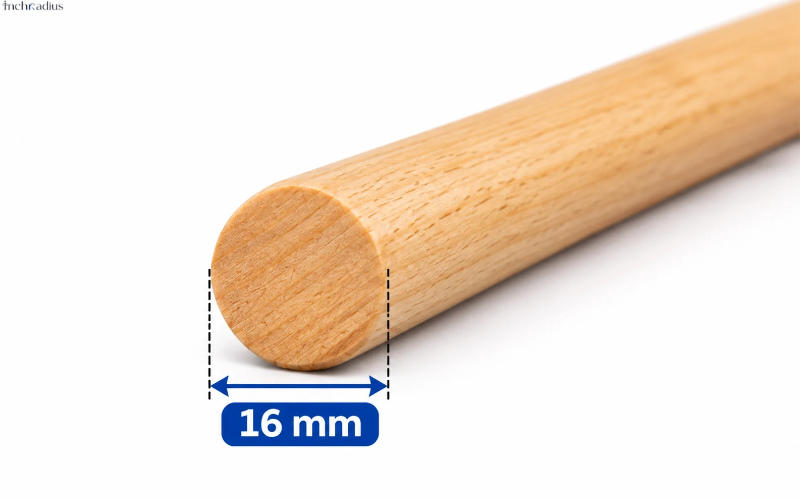
A wooden dowel with a 16mm diameter is another useful example. Dowels are round wooden rods used in furniture making, DIY projects, crafts and home repairs.
The 16mm measurement describes the thickness of the rod rather than its total length. A dowel can be 16mm thick while measuring several centimetres or even metres from end to end.
You might find this size useful when making a simple wooden frame, joining furniture parts or building a small craft project. The round shape also makes the measurement easy to understand because you only need to look at the distance across the circular end.
Wooden dowels are sold in different diameters, so always check the product specifications before buying one. A dowel labelled 16mm provides an accurate reference for this measurement.
Related Post: 11 Common Things That Are 12mm Big
4. Narrow Watch Strap
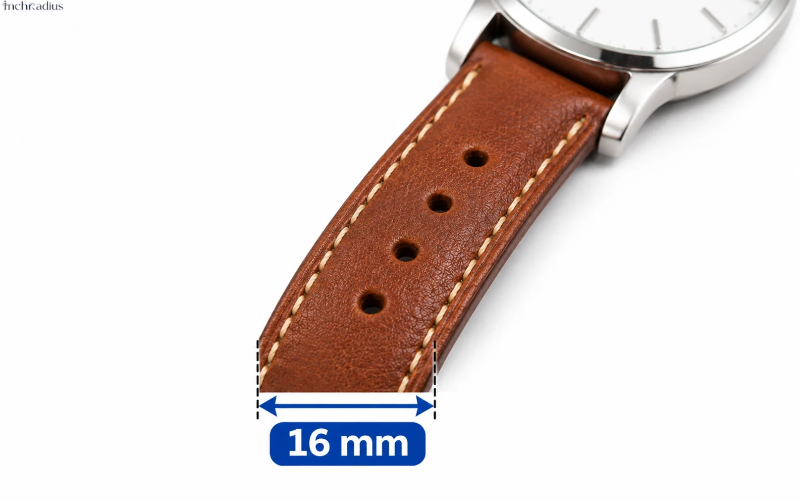
Some watches use straps that are exactly 16mm wide. This measurement is commonly used for smaller watch designs and certain traditional styles.
The width is normally measured across the strap where it connects to the watch case. It is not the length of the strap or the distance around the wrist.
A 16mm watch strap looks relatively narrow compared with wider straps used on larger watches. You can picture the measurement by placing the strap flat on a ruler and checking the distance between its two outer edges.
Watch straps are made from materials such as leather, stainless steel, silicone and fabric. Their thickness can vary, even when their width is the same.
If you are replacing a watch strap, measuring the connection width is important. A strap that is too wide or too narrow may not fit the watch properly.
5. Round Craft Bead
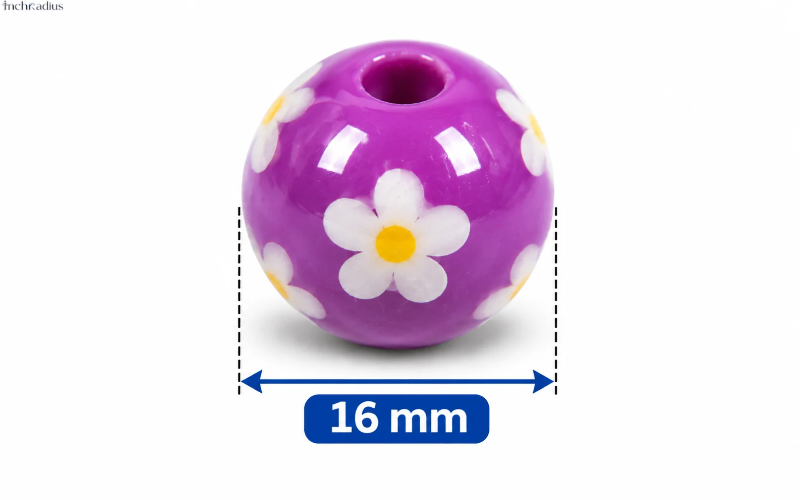
Small round craft beads are available in many sizes, including 16mm. They are commonly used for jewellery making, decorative projects, handmade accessories and children’s craft activities.
A bead measuring 16mm across has a diameter of 1.6cm. This makes it noticeably larger than tiny seed beads but still small enough to use in necklaces, bracelets and other decorative designs.
Many craft beads have a hole running through the centre. This allows thread, elastic or jewellery wire to pass through them. The hole does not change the bead’s overall diameter.
You can use a 16mm bead as a reference by placing it on a flat surface beside a ruler. Measure across the widest part to see the full distance.
Beads are available in glass, acrylic, wood and ceramic. Their colours and finishes may differ, but a bead sold with a 16mm diameter gives you a practical example of the measurement.
Related Post: 10 Common Things That Are 11mm Big
6. 5/8-Inch Hex Nut
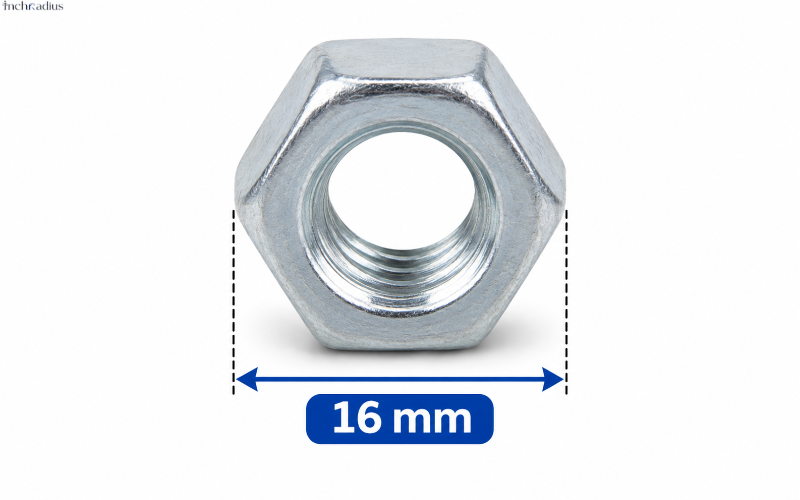
A 5/8-inch hex nut is a particularly interesting example because its width across opposite flat sides is approximately 15.875mm. This is extremely close to 16mm.
Hex nuts are small metal fasteners with six sides and a threaded hole in the middle. They are used with matching bolts to hold parts together in furniture, machinery, vehicles and construction projects.
The measurement refers to the distance across the flat sides, not the overall distance between the nut’s corners. This difference matters because a hexagon is wider from corner to corner.
A 5/8-inch nut gives you an almost exact visual comparison for 16mm. The small difference is less than a fraction of a millimetre, so it is difficult to notice without accurate measuring equipment.
This is a useful workshop example, especially for people who work with bolts, nuts and other small metal fittings.
7. Film
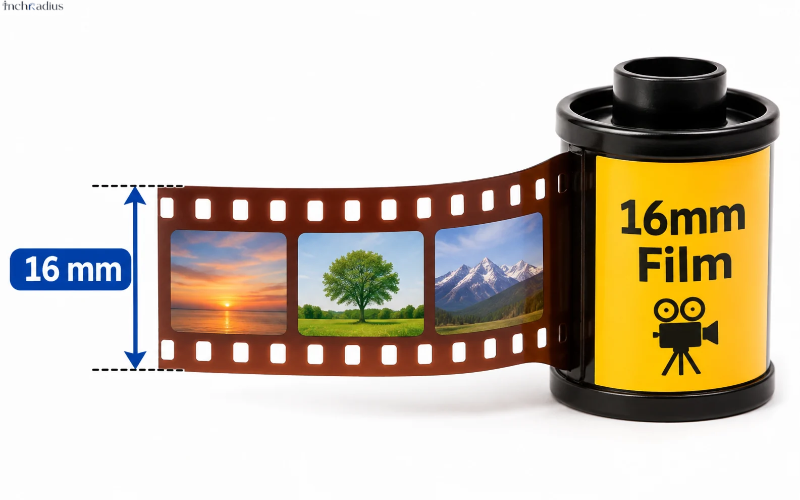
Traditional 16mm film is an interesting example of this measurement. It is a motion-picture film format that uses film stock approximately 16mm wide.
The format became popular for documentaries, educational films, independent productions and television work. Its smaller size made it more practical and affordable than larger professional film formats.
The width of the film is the important measurement here. Its length can be much greater because film is wound into a reel.
You may recognise the format from older film equipment, archival collections or specialist cinema displays. Although digital cameras have replaced much traditional film recording, 16mm film remains relevant to filmmakers who appreciate its distinctive appearance.
A strip of 16mm film gives you a particularly accurate way to visualise the measurement. If you have access to a sample, lay it flat and compare its width with the millimetre markings on a ruler.
Related Post: 9 Common Things That Are 10mm Big
8. Drill Bit
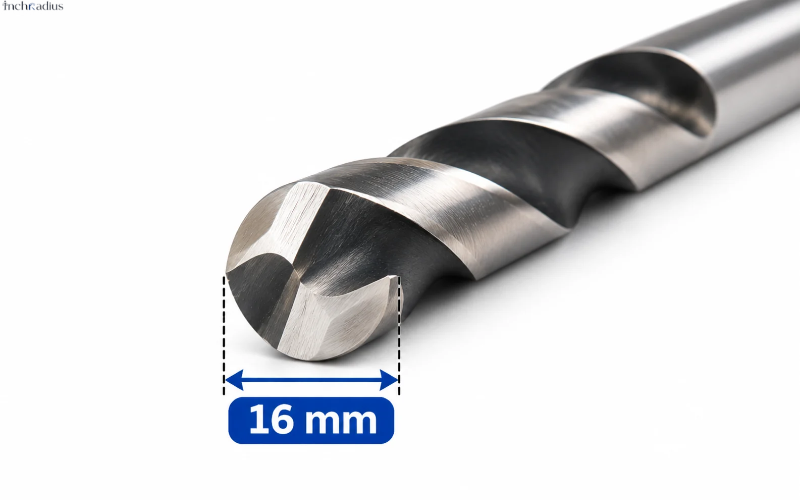
A 16mm drill bit has a cutting diameter of exactly 16mm, although the overall length of the tool is much greater.
Drill bits are available in many diameters to create holes of different sizes. A 16mm bit is used for larger holes in suitable materials, depending on the drill type and the job being completed.
You may encounter this size in woodworking, metalworking and construction. Some bits are designed for timber, while others are manufactured for metal, masonry or other materials.
The cutting end is the part that determines the hole diameter. Its width across the cutting edges is approximately 16mm.
This makes a drill bit a useful example because you can compare its cutting diameter with the measurement on a ruler. Always check the markings before use, as drill bits can look similar even when their sizes differ.
9. Combination Spanner
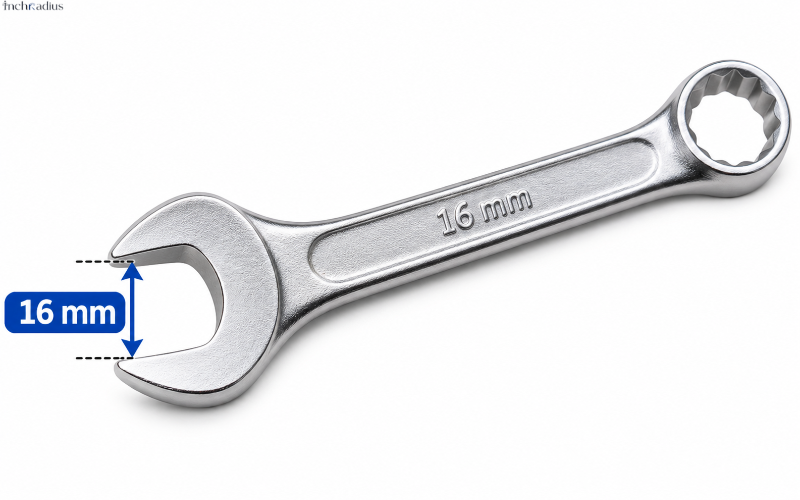
A 16mm combination spanner is a familiar tool for anyone who works on vehicles, machinery or household repairs.
It usually has an open-ended jaw on one side and a closed ring-shaped end on the other. The tool is marked 16mm because it is designed to fit a hexagonal fastener with a nominal 16mm size across its flats.
This does not mean the entire spanner is only 16mm long or wide. Its handle is much longer, giving the user enough leverage to turn a nut or bolt.
The open jaw provides a simple way to picture the measurement. The gap between the parallel inner surfaces is designed for a 16mm fastener.
Keep in mind that the spanner’s jaw opening is not the same as its external width. If you want to compare the size accurately, look at the opening rather than measuring the whole tool.
Related Post: 10 Common Things That Are 9mm Big
10. Round Shirt Button
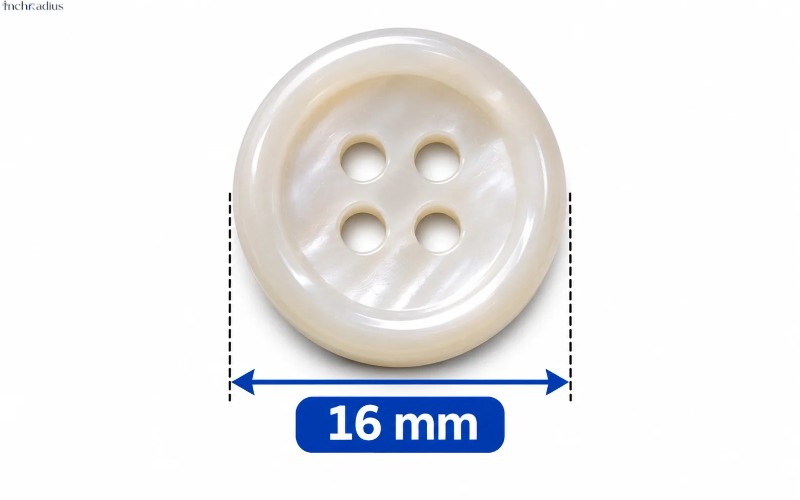
A small round shirt button can also measure approximately 16mm in diameter. Buttons are available in a wide range of sizes, depending on the clothing design and the purpose for which they are made.
A 16mm button is suitable for many shirts, cardigans and lightweight garments. It is large enough to handle comfortably but not so large that it looks out of place on ordinary clothing.
The measurement refers to the distance across the button from one outer edge to the other. It does not include the thread used to attach it to the fabric.
You can find buttons made from plastic, wood, metal, shell and other materials. Their appearance may vary, but the diameter remains the same when they are manufactured to a 16mm specification.
If you have a button at home, place it flat on a ruler and measure across its centre. A button measuring close to 1.6cm is a helpful reference for 16mm.
Related Post: 9 Common Things That Are 8mm Big
How to Measure 16mm Without a Ruler
You do not always need a measuring tool to estimate a small distance. A few familiar objects and simple techniques can help you picture 16mm. These methods are useful for rough estimates, although a ruler or calliper is better when accuracy matters.
1. Use a 16mm Watch Strap
If you own a watch with a 16mm strap, you already have a convenient reference. Place the strap flat on a surface and look at its width.
The distance from one edge to the other should be 16mm if it is the correct size. This method works best with a strap that has a clearly stated width.
2. Compare It With Your Finger
The width of an adult finger can help you estimate small measurements. Many fingers are wider than 16mm, but this varies from person to person.
Look at the width of your index finger and imagine a distance slightly narrower than the full width. This can give you a rough visual idea of 16mm.
Do not rely on your finger for an exact measurement. Hand sizes differ, and even two fingers on the same hand may have different widths.
3. Use a Small Glass Marble
A marble with a diameter of approximately 16mm is another useful reference. Hold it between your fingertips and look at its width.
The distance across its centre is the measurement you want to visualise. If you have a marble with a known diameter, you can use it again whenever you need to estimate a similar distance.
Choose a marble that is actually marked or sold as 16mm. Larger and smaller marbles are also available.
Related Post: 11 Common Things That Are 7mm Big
FAQs
1. Is 16mm bigger than 1cm?
Yes. 16mm is bigger than 1cm because 1cm equals 10mm. The difference is 6mm. In centimetres, 16mm is exactly 1.6cm, making it noticeably longer than a single centimetre.
2. How many inches is 16mm?
16mm equals approximately 0.63 inches. More precisely, it is around 0.6299 inches. This means it is slightly more than five-eighths of an inch, which is approximately 0.625 inches.
3. Is 16mm the same as 5/8 inch?
Not exactly, but the measurements are very close. Five-eighths of an inch equals 15.875mm, while 16mm is slightly larger. The difference is only 0.125mm, making them almost identical for many everyday comparisons.
4. What does 16mm look like on a ruler?
On a standard ruler, 16mm is the sixteenth small division after the zero mark. It sits between the 1cm and 2cm marks, just past the halfway point. It is easier to picture as 1.6cm.
5. How many millimetres are in 1.6cm?
There are exactly 16mm in 1.6cm. Each centimetre contains 10 millimetres, so multiplying 1.6 by 10 gives 16mm.
6. Is a 16mm marble considered small?
Yes, a 16mm marble is relatively small compared with many larger decorative and playing marbles. However, it is still easy to hold and see. It provides a useful reference for visualising a diameter of 1.6cm.
7. What household object is closest to 16mm?
A small glass marble measuring 16mm across is a convenient example. A narrow watch strap with a specified width of 16mm is another accurate comparison. Both are easy to recognise and can help you picture this measurement.
8. Can I measure 16mm with my fingers?
You can estimate 16mm using your fingers, but the result will not be exact. Finger widths vary between people. For a more reliable measurement, use a ruler, calliper or an object with a confirmed 16mm dimension.
- Discover more everyday objects and their measurements in inches
- 10 Common Things That Are 10 Feet Big
- 11 Common Things That Are 11 Feet Long
- 10 Common Things That Are 12 Feet Long
- 11 Common Things That Are 13 Feet Long
- 12 Common Things That Are 14 Feet Long
Conclusion
16mm is a small but easily recognisable measurement. It equals 1.6cm or approximately 0.63 inches, which is just over five-eighths of an inch. A 16mm glass marble, knitting needle, wooden dowel or watch strap can help you picture its size in everyday life. For a particularly close comparison, a 5/8-inch hex nut measures approximately 15.875mm across its flat sides.
You can use these objects to make quick estimates when working on crafts, repairs or small DIY projects. Just remember that visual comparisons are not substitutes for accurate measuring tools when a precise fit is required.
