
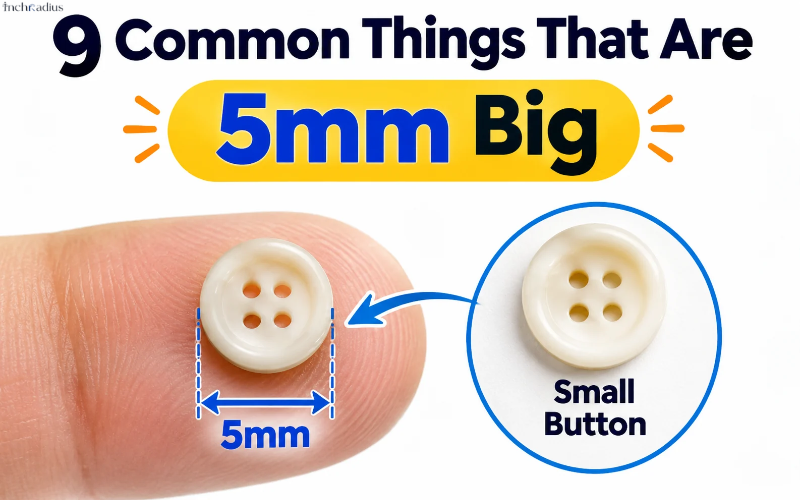
5 millimetres is a very small measurement, equal to 0.5 centimetres, 0.1969 inches, or approximately 3/16 of an inch. It is less than the width of a standard pencil and small enough to fit comfortably between your fingertips. Although half a centimetre may sound difficult to picture, several everyday objects can help you recognise its size.
A small glass bead, a peppercorn and a miniature craft sequin are useful examples. These comparisons can help when measuring tiny items, checking craft materials, working with small components or estimating the size of something without a ruler.
How Long Is 5 Millimetres?
Five millimetres measures exactly half a centimetre. It is also approximately 0.197 inches, which is just under one-fifth of an inch. If you look at a metric ruler, the distance between two numbered centimetre marks is divided into ten smaller sections. Five millimetres reaches exactly halfway between two centimetre marks.
This is a useful measurement for small objects rather than large household items. You might encounter it when looking at jewellery beads, miniature screws, craft decorations or small electronic components. For example, a bead sold as 5mm in diameter has a width of half a centimetre from one side to the other.
The measurement is also easy to compare with an inch. Since one inch contains 25.4 millimetres, 5mm is slightly less than one-quarter of an inch.
Related Post: 11 Common Things That Are 19 Feet Long
How Big Is 5mm?
Five millimetres is roughly the width of a small fingernail detail or a tiny decorative bead. It is small enough that you can hold an object of this size between your thumb and index finger without much difficulty.
Imagine looking at a standard centimetre on a ruler. Half of that distance represents 5mm. This gives you a quick visual reference without needing to think about complicated conversions.
A small peppercorn is another helpful comparison. Many peppercorns measure around 4–5mm across, although their sizes vary. A tiny round craft bead can also provide a useful reference because manufacturers commonly sell beads in 5mm sizes.
Paper, coins and mobile phones are much larger than this measurement, so they are less useful for judging 5mm directly. Small craft supplies, seeds and hardware components provide more realistic comparisons.
9 Common Things That Are 5mm Big
Several small objects can help you picture a measurement of 5mm. Some are manufactured in this exact size, while others are naturally close to it.
The table below contains nine examples from different categories, including jewellery, gardening, crafts, electronics and household hardware.
| Everyday Item | Actual Size |
| Small glass jewellery bead | 5mm |
| Black peppercorn | Approximately 5mm |
| Miniature craft sequin | 5mm |
| Small decorative button | 5mm |
| Miniature LED lens | 5mm |
| Small aquarium gravel stone | Approximately 5mm |
| Miniature screw head | 5mm |
| Mini craft pom-pom | 5mm |
| Small hexagonal nut | 5mm |
1. Small Glass Jewellery Bead
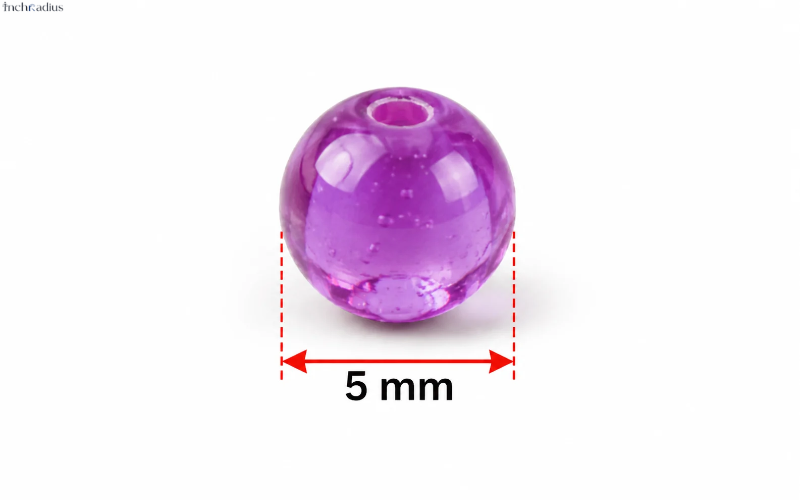
A small glass jewellery bead measuring 5mm in diameter is an easy way to picture this measurement. These beads are commonly used in bracelets, necklaces, earrings and other handmade accessories. They are available in clear, coloured, transparent and metallic finishes.
A 5mm bead measures half a centimetre across its widest point. If you place it next to a ruler, its diameter should cover five small millimetre divisions.
One useful detail is that bead measurements normally refer to the diameter of the bead rather than its circumference. This makes it particularly suitable for understanding how wide 5mm looks in real life.
You can also use several beads to compare different measurements. Placing two 5mm beads side by side gives you a combined width of approximately 10mm, provided they are touching without overlapping.
2. Black Peppercorn
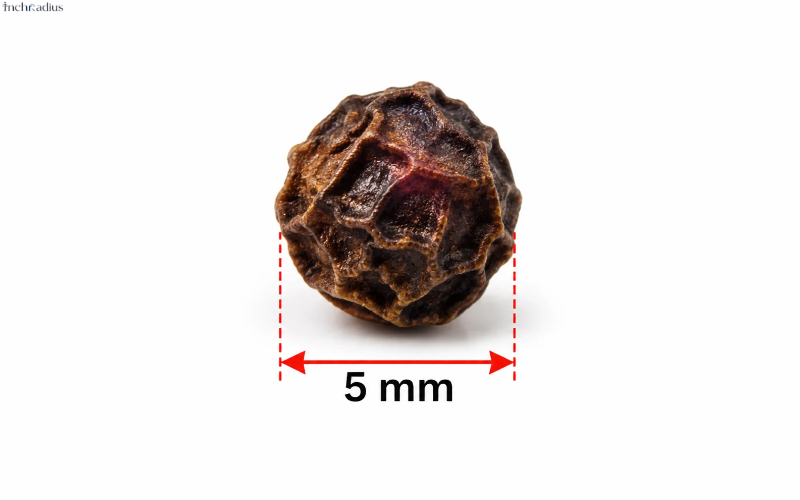
A whole black peppercorn is a familiar kitchen ingredient that can help you visualise something close to 5mm. Many ordinary peppercorns measure around 4–5mm in diameter, although larger and smaller examples are also available.
Its rounded shape makes it particularly useful for comparing small measurements. Unlike a flat object, a peppercorn has a visible width, height and depth. This helps you picture what a small three-dimensional object looks like.
Take a single peppercorn from your kitchen and place it next to a metric ruler. You will see that it is roughly half the width of a centimetre.
Peppercorns are not manufactured to an exact measurement, so do not expect every one to be precisely 5mm. Their natural variation makes them a useful approximate comparison rather than an exact measuring tool.
Related Post: 10 Common Things That Are 20 Feet Long
3. Miniature Craft Sequin
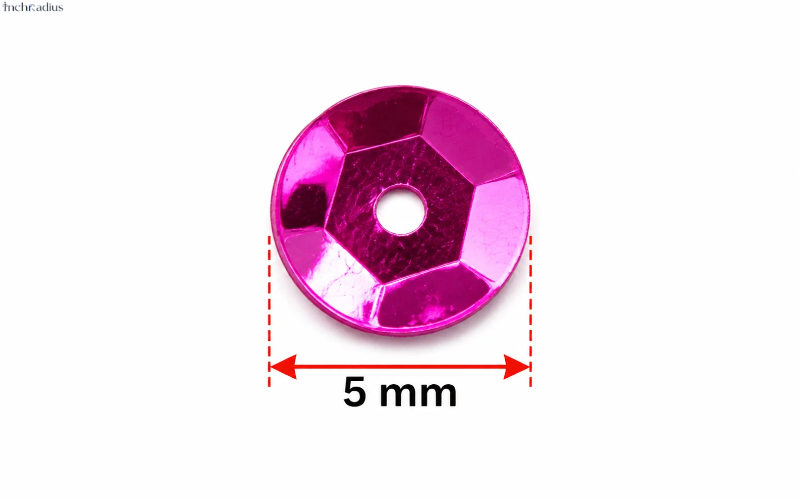
Miniature craft sequins are another useful way to understand a 5mm measurement. Small round sequins are sold in different diameters, including 5mm, and are often used for decorating clothing, greeting cards, handmade gifts and art projects.
A 5mm sequin is particularly easy to recognise because it is flat and circular. Its diameter measures half a centimetre from one edge to the opposite edge.
You can place a sequin on a piece of white paper to make its size easier to see. The contrast between the small decoration and the larger sheet makes the measurement more noticeable.
These tiny decorations are also useful when comparing several measurements. For example, arranging two 5mm sequins in a straight line gives you a combined length of 10mm.
When purchasing sequins, check the listed diameter because some decorative packs contain several sizes.
4. Small Decorative Button
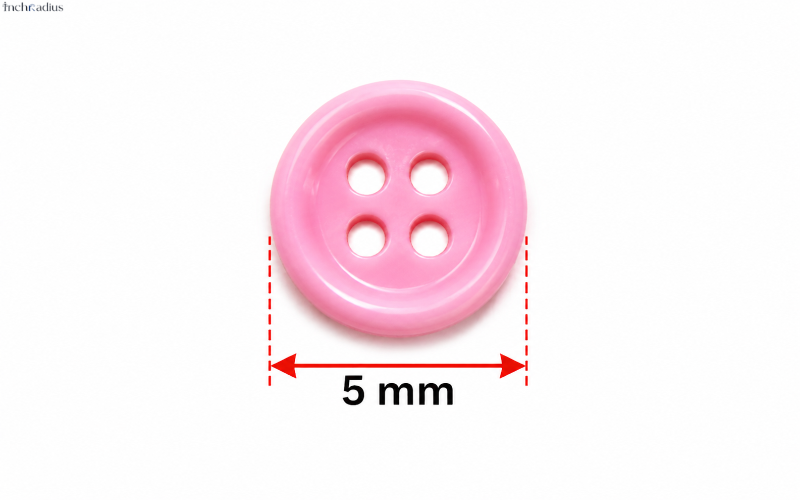
A small decorative sewing button can provide another familiar comparison for 5mm. Although many clothing buttons are considerably larger, miniature buttons are available for delicate sewing, doll clothes, craft projects and decorative work.
A button measuring 5mm across its face has a diameter of exactly half a centimetre. Its flat circular shape makes it easy to compare with the millimetre markings on a ruler.
You might find tiny buttons on miniature garments, handmade decorations or small fabric accessories. They are particularly useful when you need to picture a measurement that is smaller than an ordinary shirt button.
Try placing a miniature button next to a standard button. The difference in size makes it easier to appreciate how small 5mm really is.
Remember that button sizes vary considerably, so use a button specifically labelled as 5mm if you need an accurate comparison.
5. Miniature LED Lens
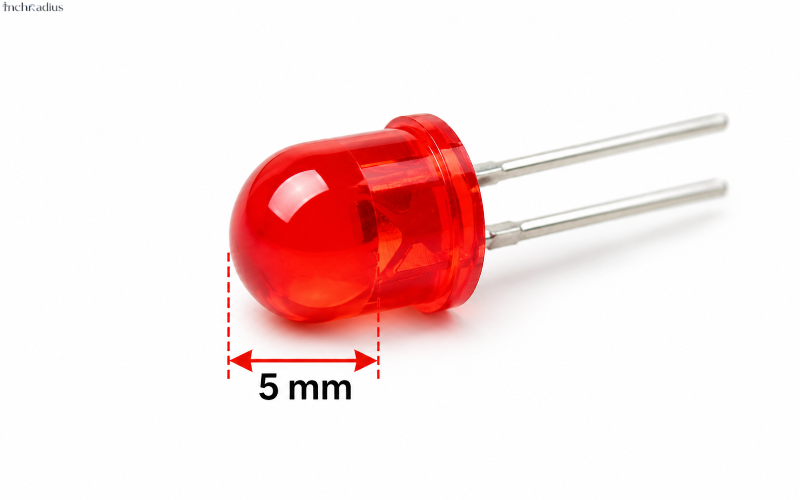
Small electronic components provide some of the clearest examples of manufactured 5mm measurements. A standard 5mm LED is a common component used in electronics projects, indicator lights, hobby circuits and educational experiments.
The rounded lens at the front of this LED has a nominal diameter of 5mm. This means the widest part of the lens measures approximately half a centimetre.
You may have seen these tiny lights in electronic kits, decorative projects and simple circuit boards. They are available in several colours, including red, green, blue and yellow.
An LED is useful as a visual comparison because its size is specified by the manufacturer rather than occurring naturally. This makes the measurement more predictable than using a seed or peppercorn.
Be careful to distinguish the lens diameter from the total length of the component, including its metal legs.
Related Post: 11 Common Things That Are 21 Feet Long
6. Small Aquarium Gravel Stone
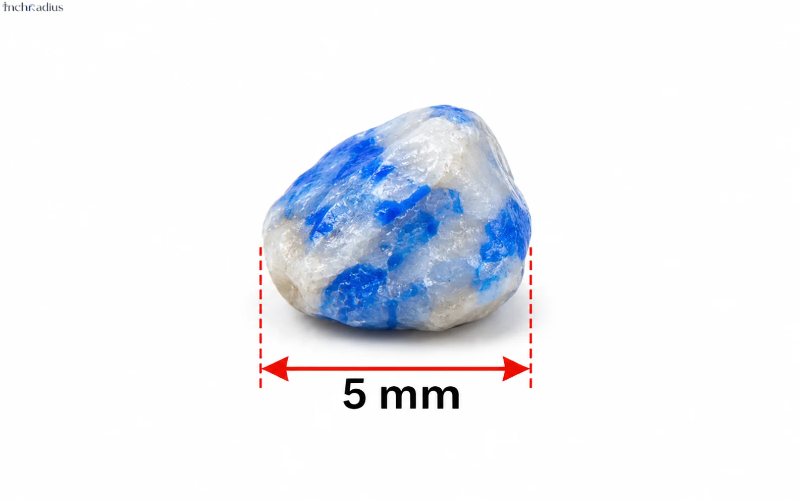
Small aquarium gravel is commonly used to cover the bottom of fish tanks and provide a decorative surface. Some gravel products contain individual stones measuring around 5mm across.
A stone of this size is roughly half a centimetre wide. Its irregular shape gives you a useful example of how a small natural object can have slightly different measurements depending on which direction you measure it.
You can pick up a single piece of aquarium gravel and compare it with the millimetre marks on a ruler. The stone should cover approximately five divisions if it is close to the target size.
Gravel is available in different colours, including white, brown, black and mixed natural shades. However, not every aquarium stone measures 5mm. Some products contain a mixture of smaller and larger pieces.
For a closer comparison, choose a gravel product with a stated size range around 4–6mm.
7. Miniature Screw Head
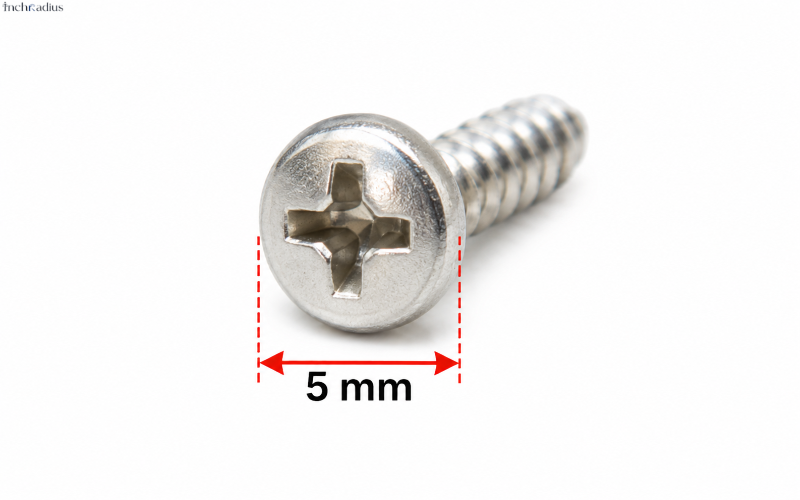
Small screws are found in electronics, household equipment, toys and various repair projects. Some miniature screws have heads measuring approximately 5mm across, making them a useful hardware comparison.
The important detail is that a screw’s head diameter and its overall length are different measurements. A screw may be 5mm wide at the head while its threaded body is considerably longer.
For example, a small machine screw might have a head diameter close to 5mm and a shaft length of 10mm or more. Looking at the head from above gives you a better idea of the target measurement.
This comparison is particularly helpful for people working with small appliances, model-making kits and basic repairs.
Screw dimensions depend on their design and type, so always check the manufacturer’s specifications before treating a particular screw head as an exact 5mm example.
8. Mini Craft Pom-Pom
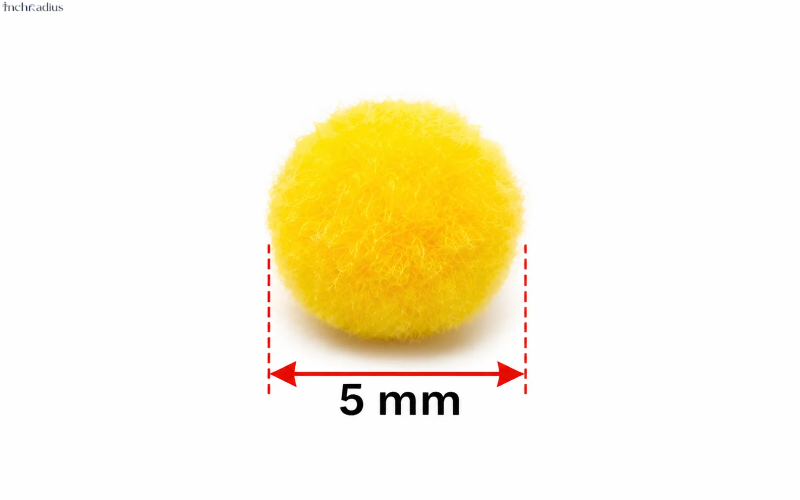
Mini craft pom-poms are small, fluffy balls used for school projects, handmade decorations, card-making and children’s craft activities. They are sold in several sizes, including tiny versions measuring approximately 5mm in diameter.
A 5mm pom-pom is about half a centimetre wide. Its soft, rounded shape makes it easy to recognise, even though its loose fibres can make the exact outer measurement slightly uneven.
Place one on a flat surface and gently measure across its widest point. Avoid pressing it down too firmly, as this can change its shape and affect the measurement.
These miniature decorations are often used to add small details to handmade animals, flowers and other creative projects.
Unlike a rigid plastic bead, a pom-pom is not perfectly round. Treat its listed size as approximate because the fibres can extend slightly beyond the main body.
Related Post: How Long Is 30 Feet? 10 Common Things That Are 30 Feet Long
9. Small Hexagonal Nut
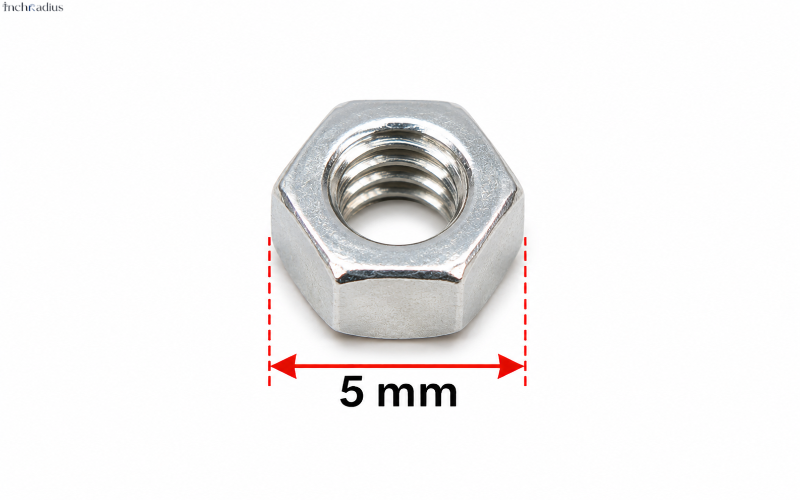
A small hexagonal nut is a useful example from the hardware category. These metal fasteners have six flat sides and are designed to fit onto threaded bolts and screws.
Some miniature nuts have a measurement of 5mm across their flat sides. This is known as the width across flats, and it is commonly used to identify the correct spanner or socket size.
It is important to understand that a 5mm measurement across flats does not mean every part of the nut measures 5mm. The distance between opposite corners is slightly greater because of its hexagonal shape.
If you place a small 5mm nut beside a ruler, its flat-to-flat width gives you a practical reference for the target measurement.
This is particularly useful for people working on small machinery, model kits and electronic equipment. Always check the nut’s specifications because its thread size and external width are separate measurements.
Related Post: How Long Is 40 Feet? 11 Common Things That Are 40 Feet Long
Measurement Without a Ruler
You do not always need a ruler or tape measure to get an idea of how big 5mm is. A few familiar objects and simple methods can help you estimate half a centimetre.
1. Use the Half-Centimetre Mark
If you have a centimetre marked on a piece of packaging, paper or another measuring reference, divide that distance into two equal parts.
Each half represents 5mm. This is one of the easiest methods because it uses a familiar measurement rather than relying on the size of your hands.
For example, if you know where the 1cm mark is on a ruler, the halfway point between zero and that mark represents 5mm.
2. Compare It With a Small Bead
A small jewellery bead labelled as 5mm can act as a reusable reference. Keep one beside your craft supplies or other small objects.
When you need to estimate another item’s width, compare it directly with the bead. If the object looks roughly as wide, it may be close to 5mm.
Make sure you compare the diameter of the bead with the width of the other object. Comparing different dimensions can produce misleading results.
3. Use Your Fingertip Carefully
Your fingertip can help you recognise the scale of a tiny measurement, although it cannot provide an accurate 5mm reference on its own.
For example, you can place a small object between your thumb and index finger to understand how little space it occupies.
However, finger sizes vary between people, and even the visible width of a fingertip is much larger than 5mm. Use this method only to picture the general scale, not to measure an exact distance.
For accurate work, a metric ruler or digital calliper is a better choice.
Related Post:How Long Is 50 Feet? 12 Common Things That Are 50 Feet Long
FAQs
1. Is 5mm the same as half a centimetre?
Yes. Five millimetres is exactly half a centimetre because one centimetre contains 10 millimetres. If you divide a centimetre into two equal sections, each section measures 5mm. This makes converting between these two metric units particularly simple.
2. How many inches are there in 5mm?
Five millimetres is approximately 0.1969 inches. For everyday use, you can round this to 0.2 inches, which is close to one-fifth of an inch. It is slightly smaller than one-quarter of an inch.
3. Is 5mm bigger than 1/4 inch?
No. A quarter of an inch measures 6.35mm, while 5mm measures approximately 0.197 inches. This means 5mm is 1.35mm smaller than a quarter of an inch.
4. What does 5mm look like on a ruler?
On a metric ruler, 5mm is the fifth small division after the zero mark. It reaches exactly halfway between the 0cm and 1cm marks. You can use this position to identify the measurement without calculating any conversions.
5. Can I use a peppercorn to measure 5mm?
A black peppercorn can help you estimate 5mm because many whole peppercorns are around 4–5mm wide. However, peppercorns are natural products and vary in size. Use one as a visual comparison rather than an accurate measuring instrument.
6. How many millimetres are in half an inch?
Half an inch equals 12.7mm. This is more than twice the size of 5mm. Comparing these measurements can help you recognise that 5mm is a very small distance.
7. Is 5mm considered a small measurement?
Yes. Five millimetres is a small measurement commonly used for jewellery, electronic components, craft materials and miniature hardware. It is also useful when describing the thickness, width or diameter of small objects.
8. What is the easiest way to measure 5mm accurately?
A metric ruler with clearly marked millimetre divisions is a simple option. For very small objects, a digital calliper can provide a more precise reading. Measure from one outer edge to the opposite edge, making sure you are checking the correct dimension.
- Discover more everyday objects and their measurements in inches
- 10 Common Things That Are 10 Feet Big
- 10 Common Things That Are 12 Feet Long
- 11 Common Things That Are 13 Feet Long
- 12 Common Things That Are 14 Feet Long
- 10 Common Things That Are 15 Feet Long
- 11 Common Things That Are 16 Feet Long
Conclusion
Five millimetres is a tiny but useful measurement that becomes easier to picture when compared with familiar objects. A small glass bead or a miniature LED provides a reliable manufactured reference, while a black peppercorn and aquarium gravel offer natural comparisons.
Remember that 5mm is exactly half a centimetre and just under one-fifth of an inch. If you need to estimate this distance without a ruler, start by imagining half the space between two centimetre marks. For accurate measurements, use a metric ruler or digital calliper rather than relying on objects that naturally vary in size.
