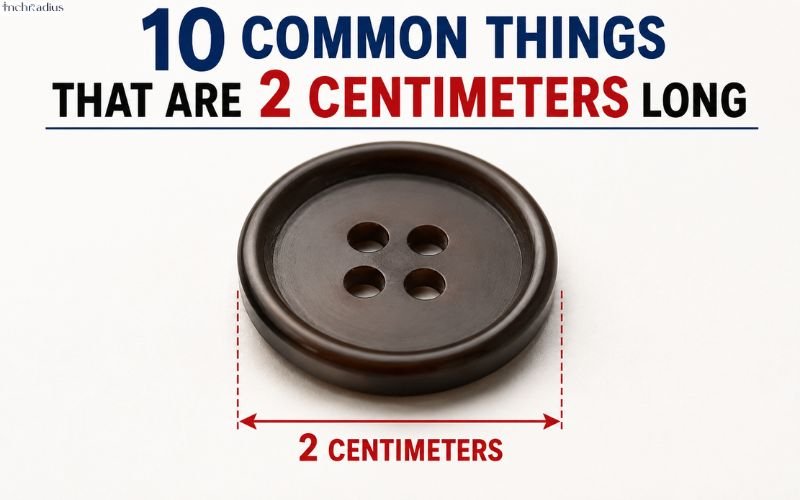
If you’re wondering how long is 2 centimeters, the quick answer is simple. 2 centimeters equals 20 millimeters (mm) or about 0.79 inches. It is just a little shorter than one inch, making it a common measurement for many small everyday items.
Although 2 centimeters sounds small, you’ll find this measurement in stationery, clothing accessories, kitchen items, toys, and craft supplies. Instead of trying to imagine a number on a ruler, it’s much easier to compare it with objects you already know. A shirt button, a large marble, or a standard game die can all give you a clear idea of this length.
Learning to recognize 2 centimeters is useful when shopping online, checking product dimensions, working on DIY projects, or helping children understand measurements. Once you become familiar with a few everyday examples, estimating this size becomes quick and surprisingly accurate.
2 Centimeters Conversion Table
How Long Is 2 Centimeters?
Many people search for how long is 2 centimeters, how big is 2 centimeters, or what does 2 centimeters look like because numbers alone are difficult to picture. The easiest way to understand this measurement is by connecting it with familiar objects that are close to the same size.
Since 2 centimeters equals 0.79 inches or 20 millimeters, it is commonly used to describe small items. Product labels, school supplies, sewing accessories, jewelry, electronic parts, and packaging often use this measurement. Knowing its approximate size can help you judge whether an object will fit into a small space or whether two items are similar in size.
Rather than carrying a ruler everywhere, many people learn measurements by memory. After seeing a few real-life examples, you can estimate 2 centimeters with reasonable accuracy. This skill is useful when buying products online, choosing hardware, making crafts, or comparing small household items.
If you’re already familiar with 1 inch, you’ll notice that 2 centimeters is slightly shorter. It also gives you a good starting point before moving on to larger measurements such as 2 inches and 3 inches.
2 Centimeters Conversion Table
| Measurement | Equivalent |
| Centimeters | 2 cm |
| Millimeters | 20 mm |
| Inches | 0.79 inches |
| Meters | 0.02 meters |
| Feet | 0.066 feet |
10 Common Things That Are 2 Centimeters Long
| Item | Approximate Size (Inches) |
| Small shirt button | 2 centimeters |
| Nickel coin diameter | 2 centimeters |
| Cherry tomato | 2 centimeters |
| Large marble | 2 centimeters |
| Standard game die | 2 centimeters |
| Bottle cap height | 2 centimeters |
| Glue stick cap | 2 centimeters |
| LEGO brick stack | 2 centimeters |
| Thick marker cap | 2 centimeters |
| Small binder clip width | 2 centimeters |
How to Measure 2 Centimeters Without a Ruler
You don’t always need a ruler to estimate 2 centimeters. A few everyday items can help you judge this length with reasonable accuracy.
Use Your Index Finger
The width of an adult index finger is usually close to 2 centimeters. While finger sizes vary slightly, this is one of the fastest ways to estimate small measurements.
Compare It With a Shirt Button
Many decorative shirt buttons are about 2 centimeters across. Holding one next to another object gives you a quick size reference.
Use a Coin
Several coins are close to 2 centimeters in diameter. Comparing a coin with a small object is a simple way to estimate length when a ruler isn’t available.
Related Post: 10 Common Things That Are 15 Inches Long
1. Small Shirt Button
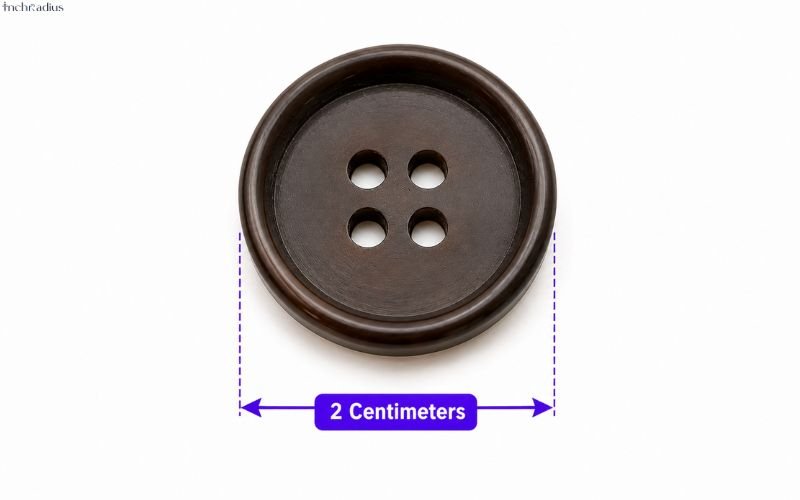
A shirt button is one of the easiest objects to remember when learning the size of 2 centimeters. Decorative buttons found on jackets, sweaters, and coats are often close to this measurement, making them a practical reference for everyday use.
Unlike tiny buttons on dress shirts, larger buttons are designed to stand out while remaining comfortable to fasten. Their size makes them easy to hold and easy to compare with other small objects. If you enjoy sewing or repairing clothes, you’ve probably handled buttons that measure around 2 centimeters without noticing their exact size.
This comparison is also useful because buttons are available almost everywhere. Whether you’re checking a coat, a cardigan, or a craft box, you can quickly find one that gives you a good idea of what 2 centimeters looks like. It’s a simple trick that works at home, in a classroom, or while shopping.
Once you become familiar with this reference, you’ll find it easier to estimate similar measurements by sight. If you’ve already explored 1 inch, you’ll notice that a 2-centimeter button is just a little smaller, helping you understand the difference between metric and imperial measurements.
2. Nickel Coin Diameter
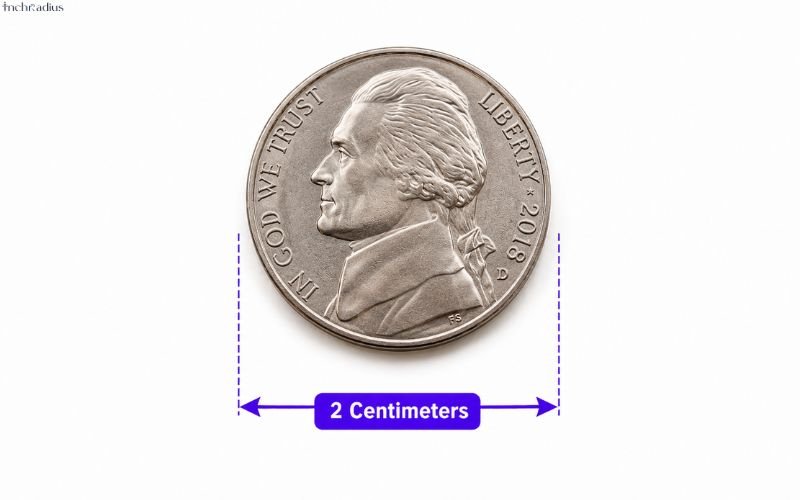
A U.S. nickel has a diameter of about 21.21 millimeters, making it only slightly larger than 2 centimeters. Because coins are made to exact specifications, they are among the most reliable objects for comparing small measurements.
One reason this example works so well is consistency. Every nickel has the same diameter, so the comparison doesn’t change over time. If you’ve ever held a nickel, you already have a good idea of how close 2 centimeters is in real life.
This reference is especially helpful when measuring small accessories, hardware, jewelry, or craft materials. Instead of guessing, you can place a coin next to the object for a quick visual check. While it won’t replace a ruler for precise work, it is accurate enough for many everyday situations.
If you’re learning both metric and imperial units, this comparison also makes it easier to understand how centimeters relate to inches. After reading about 2 inches, you’ll see that 2 centimeters is much smaller, yet still large enough to measure many common household items.
3. Cherry Tomato
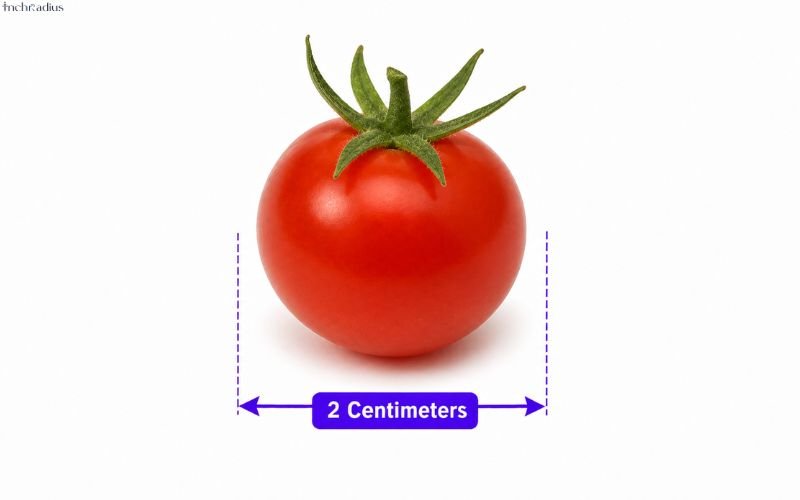
A small cherry tomato offers another easy way to picture 2 centimeters. Although different varieties grow to different sizes, many cherry tomatoes measure between 1.8 and 2.2 centimeters across, placing them very close to this length.
Because cherry tomatoes are found in grocery stores throughout the year, they’re familiar to most people. Their nearly round shape also makes them useful for comparing both height and width. When you hold one in your hand, it becomes much easier to understand how much space 2 centimeters actually covers.
Gardeners, cooks, and grocery shoppers often notice that cherry tomatoes stay fairly consistent in size. This makes them a practical reference when estimating measurements without special tools. They’re also useful in classrooms, where real objects help children learn measurement concepts more easily.
If you’ve already looked at 3 inches, comparing it with a cherry tomato quickly shows how much smaller 2 centimeters really is. Simple comparisons like this make metric measurements easier to remember.
Related Post: 12 Common Things That Are 14 Inches Long
4. Large Marble
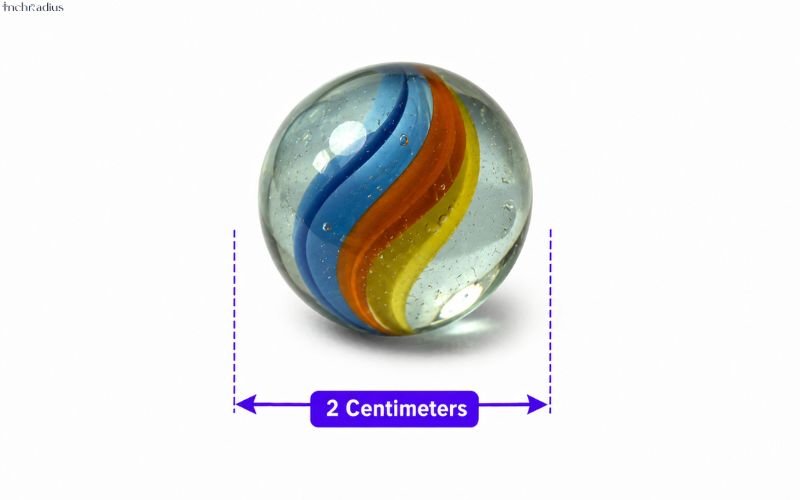
Large marbles have a diameter of about 20 millimeters, making them almost the perfect example of a 2-centimeter object. Their smooth shape and standard size have made them a favorite teaching tool for measurements for many years.
Marbles are easy to recognize and simple to compare with other objects. Whether they’re made of glass, stone, or plastic, larger marbles usually stay within a similar size range. This consistency makes them useful for estimating small lengths without measuring equipment.
Teachers often use marbles during classroom activities because students can hold them, compare them with rulers, and immediately understand the measurement. They are also popular in craft projects, decorative displays, and collections.
If you’re familiar with 4 inches, you’ll quickly notice the difference in scale. A marble shows that 2 centimeters is a compact measurement commonly used for small everyday objects rather than larger household items.
5. Standard Game Die
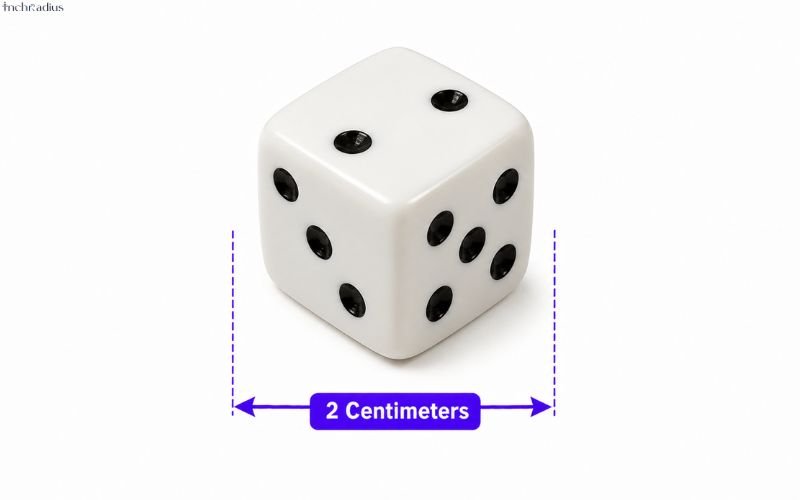
A standard game die used in board games measures about 19 to 20 millimeters on each side, making it almost exactly 2 centimeters. Since every side is the same length, it gives you a clear idea of this measurement from every angle.
Dice are manufactured with consistent dimensions so that games remain fair. That consistency also makes them one of the most dependable everyday references for learning measurements. Whether you’re playing a family board game or organizing classroom activities, a die is likely within easy reach.
Its cube shape makes comparison simple. You can place a die next to small hardware, craft materials, or office supplies to judge whether they are close to 2 centimeters in size. Although it isn’t meant to replace a ruler, it’s a convenient object for quick estimates.
If you’ve already read about 5 inches, you’ll immediately see how much larger that measurement is. Remembering the size of a standard game die is an easy way to recognize what 2 centimeters looks like whenever you come across this measurement.
Related Post: 12 Common Things That Are 13 Inches Long
6. Bottle Cap Height
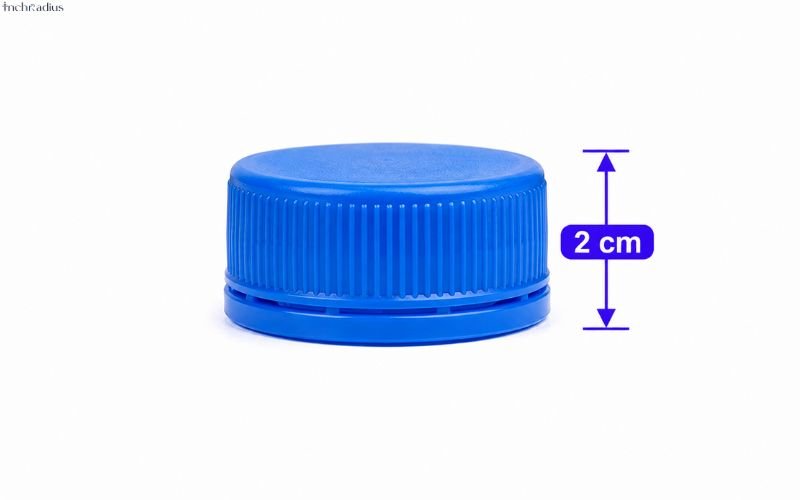
A standard plastic bottle cap is a handy reference for estimating 2 centimeters. Many caps used on water bottles, soft drinks, and juice bottles are close to 20 millimeters (2 cm) in height. While different brands may have slight variations, most fall within a similar size range.
Bottle caps are designed to be easy to grip and twist, which is why manufacturers keep their dimensions fairly consistent. Because almost everyone uses bottled drinks, this is one of the easiest objects to remember when thinking about small measurements.
The next time you open a bottle, stand the cap upright on a flat surface and look at its height. You’ll have a quick visual guide that is close to 2 centimeters. This simple comparison is useful when estimating the size of small craft items, hardware, or packaging without reaching for a ruler.
If you’ve already learned about 6 inches, this example also helps you understand the difference between a small metric measurement and a much longer imperial one. After using a bottle cap as a reference a few times, you’ll begin to recognize the size of 2 centimeters almost automatically.
Related Post: 12 Common Things That Are 12 Inches Long
7. Glue Stick Cap
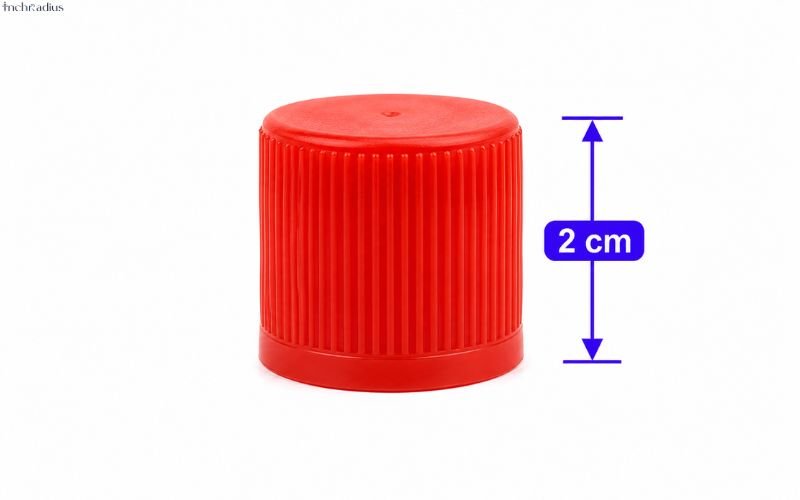
The cap from a standard glue stick is another everyday object that measures close to 2 centimeters. Most glue stick caps are made just tall enough to cover the adhesive while remaining easy to remove, giving them a height of around 1.8 to 2.2 centimeters.
This is a useful example because glue sticks are common in schools, offices, and homes. Whether you’re helping with homework, making greeting cards, or working on an art project, there’s a good chance you’ll have one nearby.
Instead of thinking about numbers on a ruler, you can simply look at the cap to estimate a length of about 2 centimeters. This practical approach makes measurements easier to remember because it connects them with objects you use regularly.
The glue stick cap also shows how small yet useful this measurement is. Many stationery products, office supplies, and craft materials are made in similar dimensions. If you’ve explored 7 inches, you’ll quickly see how much larger that measurement is compared to this compact everyday item.
8. LEGO Brick Stack
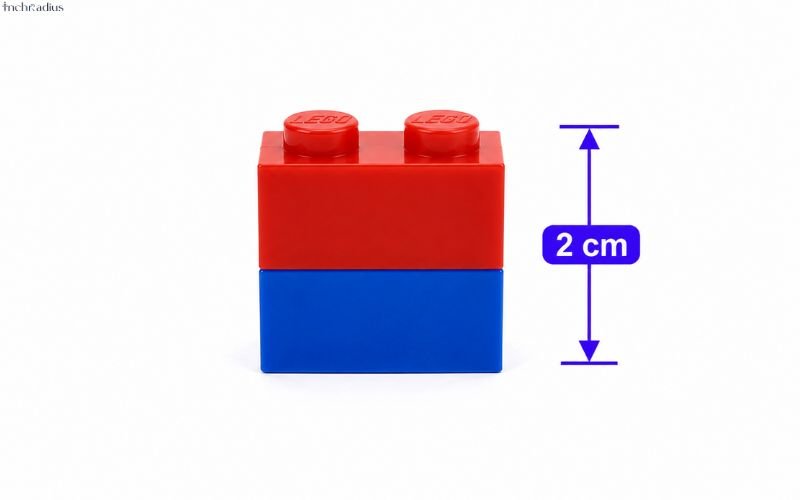
LEGO bricks are known for their precise dimensions, making them excellent tools for learning measurements. A small stack of standard LEGO pieces can measure very close to 2 centimeters, giving builders an easy way to visualize this length.
One reason LEGO works so well as a reference is its accuracy. Every brick is manufactured to exact specifications so that pieces fit together perfectly. That consistency means the size stays the same no matter which set the bricks come from.
Children often learn measurement concepts more easily when they can hold and compare real objects. A LEGO stack provides a clear example of what 2 centimeters looks like while also making learning more interactive. Adults can use the same trick when working on model projects or organizing small parts.
If you’re already familiar with 8 inches, this comparison shows just how compact 2 centimeters really is. It may be a small measurement, but it appears in many toys, electronics, and everyday products.
9. Thick Marker Cap
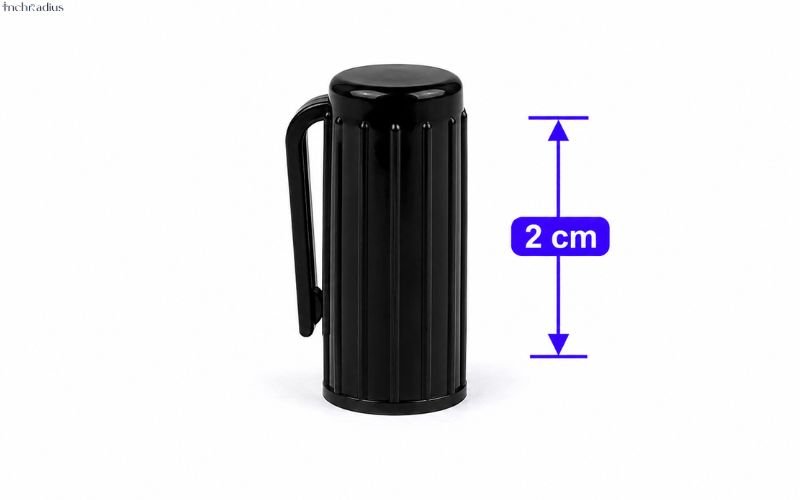
A thick marker cap is another simple way to picture 2 centimeters. Many permanent markers and whiteboard markers have caps that are approximately this height, although the exact size depends on the manufacturer.
Marker caps are designed to protect the writing tip while allowing the marker to fit comfortably in your hand. Because of this, many brands use similar dimensions, making them a dependable reference for everyday estimating.
This comparison is especially useful for students, teachers, artists, and office workers who regularly use markers. Instead of searching for a ruler, you can compare the cap with another small object to judge whether it is close to 2 centimeters.
Although this isn’t a precision measuring tool, it works well for quick estimates during craft work, labeling, or organizing supplies. If you’ve previously read about 9 inches, you’ll notice the huge difference in scale, making it easier to understand just how small 2 centimeters really is.
10. Small Binder Clip Width
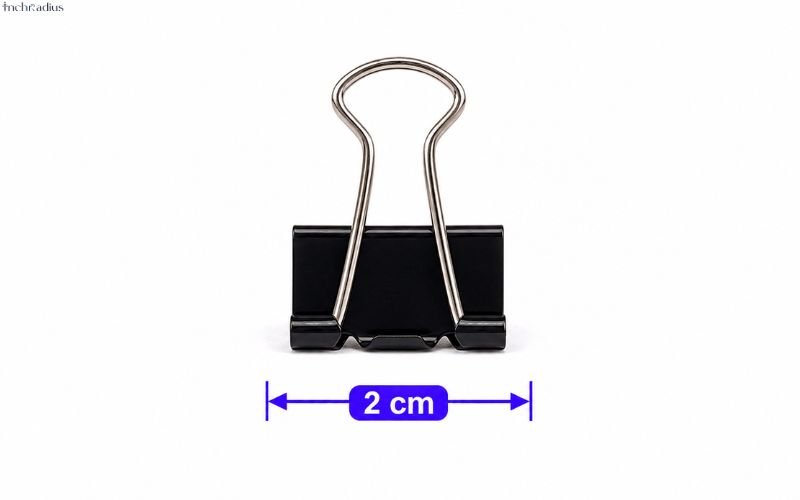
A small binder clip is another familiar office item that helps explain the size of 2 centimeters. Many of these clips have a metal body that measures close to 20 millimeters across, making them a practical real-life comparison.
Binder clips are designed to hold papers securely without taking up much space. Their compact size makes them useful in offices, classrooms, and home workspaces, and many people keep several in a desk drawer.
Because binder clips are made in standard sizes, they offer a reliable reference when estimating small measurements. Whether you’re checking the width of a craft project, comparing office supplies, or organizing stationery, a small binder clip provides a quick visual guide.
The more everyday objects you associate with 2 centimeters, the easier it becomes to estimate this measurement without using a ruler. If you’ve also seen examples of 10 inches, you’ll have a better sense of how metric and imperial measurements compare in real life.
Frequently Asked Questions
What is 2 centimeters in inches?
2 centimeters is equal to approximately 0.79 inches. It is slightly shorter than one inch and is also equal to 20 millimeters.
Is 2 centimeters smaller than 1 inch?
Yes. One inch measures 2.54 centimeters, so 2 centimeters is a little shorter than 1 inch.
What everyday objects are about 2 centimeters long?
Many common items are close to this size, including a shirt button, large marble, game die, bottle cap, glue stick cap, marker cap, and small binder clip.
How can I estimate 2 centimeters without a ruler?
You can use the width of your index finger, a large shirt button, or a standard game die as quick references. These objects are close enough for everyday estimating.
Is 2 centimeters the same as 20 millimeters?
Yes. Since 1 centimeter equals 10 millimeters, 2 centimeters equals exactly 20 millimeters.
Why should I learn common measurements like 2 centimeters?
Knowing the approximate size of common measurements helps when shopping online, completing DIY projects, reading product dimensions, choosing the correct hardware, or measuring small household items without always needing a ruler.
Conclusion
Now that you know how long 2 centimeters is, estimating this small measurement becomes much easier. Two centimeters equals 20 millimeters or about 0.79 inches, and many everyday objects are close to this size. A shirt button, cherry tomato, marble, game die, bottle cap, glue stick cap, LEGO bricks, marker cap, and binder clip all provide simple ways to picture this length.
The best way to remember any measurement is by connecting it with familiar objects. Once you recognize a few examples, you’ll be able to estimate 2 centimeters more confidently while shopping, doing crafts, working on school projects, or handling everyday tasks. Small comparisons like these make measurements easier to understand and much easier to remember.
For More Measurements Guides, Visit: InchRadius