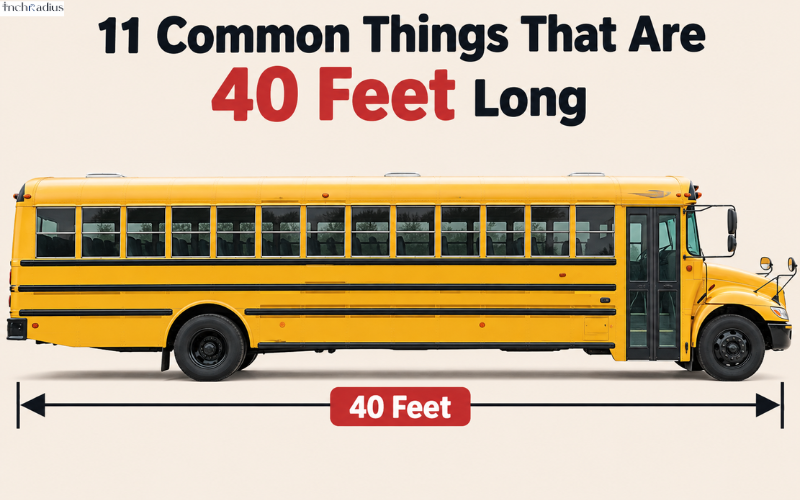
40 feet is exactly 480 inches, 12.192 metres, 1,219.2 centimetres, or 12,192 millimetres. It is a considerable length, roughly comparable to the height of a four-storey building or the length of a large recreational vehicle. Although 40 feet can be difficult to picture on its own, comparing it with familiar structures, vehicles and outdoor objects makes the measurement easier to visualise.
You might need to estimate this distance when planning a garden, measuring a driveway, choosing materials for a building project or judging the size of a large object. Several everyday structures and items come close to this length, giving you practical reference points without needing to carry a tape measure everywhere.
How Long Is 40 Feet?
Forty feet is a linear measurement equal to 480 inches or 12.192 metres. In centimetres, it measures 1,219.2 cm, while in millimetres it equals 12,192 mm. These conversions are exact, making it easy to switch between imperial and metric measurements when planning a project or comparing dimensions.
In everyday terms, 40 feet is long enough to cover a substantial part of a residential driveway, span a large garden or accommodate a sizeable vehicle. Imagine walking ten ordinary paces of approximately four feet each, although your actual stride will affect the distance. A typical single-storey room is much shorter, so 40 feet would extend well beyond the length of many living rooms.
This measurement is particularly useful in construction, landscaping, transport and outdoor planning. It can describe the approximate length of a large vehicle, the height of a mature tree or the dimensions of certain recreational structures. Always check the manufacturer’s specifications when an exact measurement matters.
Related Post: How Long Is 30 Feet?
How Big Is 40 Feet?
Forty feet is longer than most rooms in an ordinary home and considerably greater than the height of an average adult. To picture it, imagine four people, each around six feet tall, standing head to toe. They would cover approximately 24 feet, leaving another 16 feet to reach the full distance.
You could also imagine four ten-foot sections marked along a driveway or lawn. Breaking a long distance into smaller sections makes it easier to estimate without having to visualise the entire length at once.
Large objects offer another useful reference. Some recreational vehicles approach 40 feet in length, while certain mature trees can reach around this height. These examples illustrate two different ways to understand the same number: horizontal length and vertical height. However, the dimensions of individual vehicles and trees vary considerably.
A standard sheet of A4 paper measures 11.7 inches along its longer edge. More than 41 sheets placed end to end would cover approximately 40 feet. Although paper is not a convenient tool for measuring a large outdoor space, it demonstrates just how much distance 480 inches represents.
11 Common Things That Are 40 Feet Long
The following examples help make 40 feet easier to picture. Some are designed to approach this length, while others may reach it depending on their model, type or natural growth. The dimensions given are approximate comparisons, not guarantees that every example measures exactly 40 feet.
| Everyday Item | Actual Size |
| 1. Large recreational vehicle | 40 feet |
| 2. Shipping container combination | 40 feet |
| 3. School bus | 40 feet |
| 4. Large motorboat | 40 feet |
| 5. Mature tree | 40 feet |
| 6. Telephone pole | 40 feet |
| 7. Garden swimming pool | 40 feet |
| 8. Residential driveway | 40 feet |
| 9. Large sailboat | 40 feet |
| 10. Fire engine | 40 feet |
| 11. Zip-line cable section | 40 feet |
1. Large Recreational Vehicle
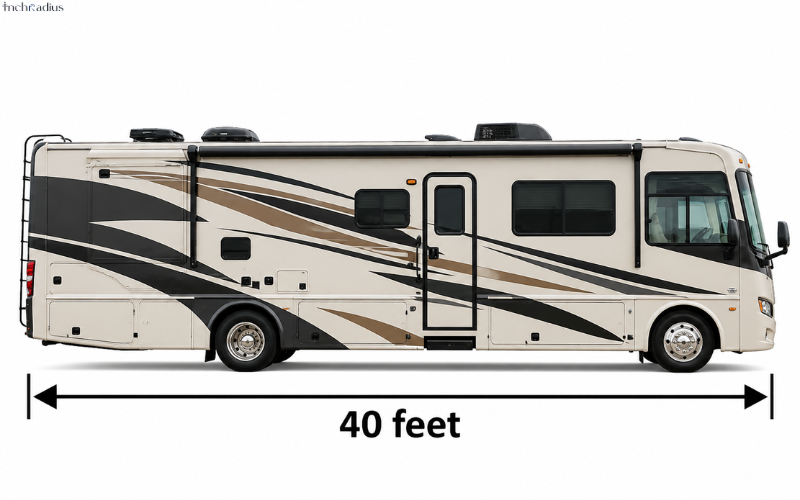
A large recreational vehicle, often called an RV or motorhome, can measure close to 40 feet from front to back. These vehicles provide sleeping areas, cooking facilities, seating and storage for people travelling or staying away from home. Their length depends on the manufacturer and model, so not every motorhome reaches this size.
A 40-foot motorhome is a useful visual reference because its length is easy to compare with a driveway or parking area. Picture one parked beside a house, with its front and rear extending across a substantial section of the available space.
If you are estimating 40 feet outdoors, imagine the distance occupied by a large motorhome parked in a straight line. Remember that the vehicle’s actual dimensions should be checked before using this comparison for parking, storage or access planning. Some models are shorter, while certain specialised recreational vehicles may be longer.
2. Shipping Container Combination

Shipping containers are widely used to transport goods by road, rail and sea. A standard long shipping container is commonly 40 feet long, making it one of the most reliable examples of this measurement. Unlike many natural objects, its nominal length follows an established industrial size.
A 40-foot container provides a clear horizontal reference. Picture a long, rectangular steel box standing on a transport trailer or positioned in a freight yard. Its straight sides and defined corners make it easier to visualise than a tree or an irregularly shaped object.
There is an important distinction between the nominal outside length and the usable internal space. The interior is shorter because of the container’s walls and construction. If you need the measurement for storage, delivery access or building work, consult the supplier’s specifications rather than relying on the general comparison.
3. School Bus
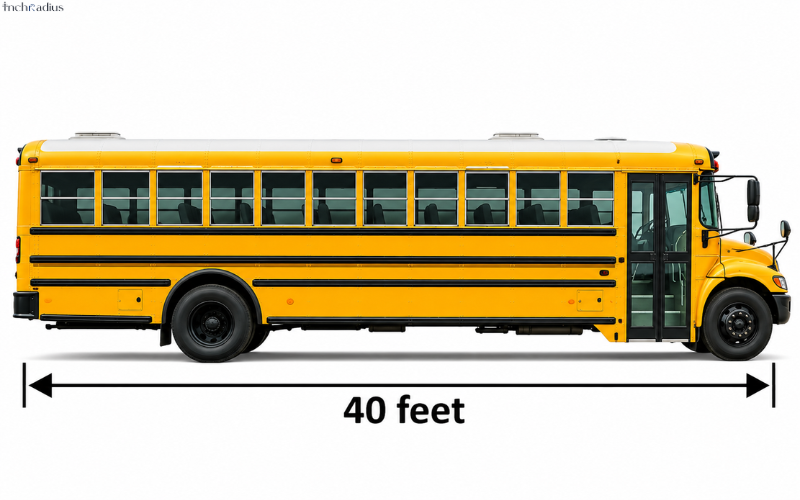
Some full-size school buses approach 40 feet in length, although their dimensions vary according to the model, passenger capacity and local regulations. Smaller school buses can be much shorter, so this comparison applies to large vehicles rather than every bus used to transport pupils.
A school bus is an effective way to picture 40 feet because it is a familiar, elongated vehicle. Imagine one parked parallel to a pavement. Its length can occupy a large portion of a residential street or school parking area.
You can use this example when estimating the space needed for a driveway, vehicle bay or turning area. However, remember that the overall space required for a bus is greater than its body length if it must turn or manoeuvre safely. A 40-foot comparison helps establish scale, but practical vehicle planning also requires adequate clearance.
4. Large Motorboat
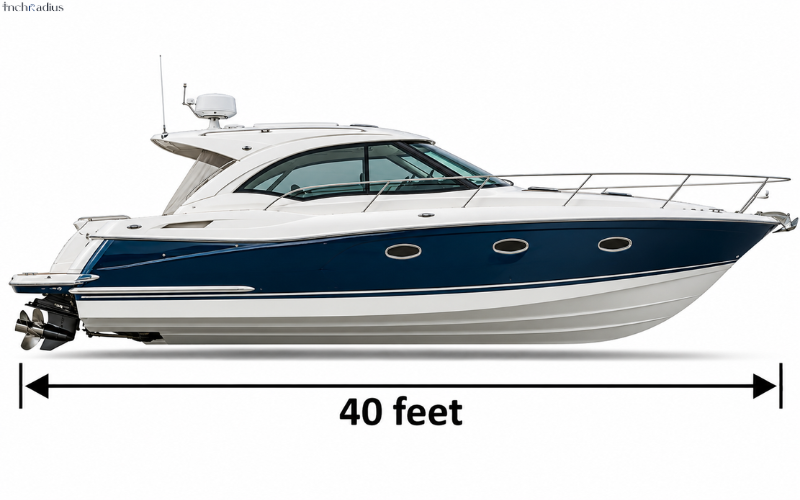
Large motorboats can approach 40 feet in overall length, particularly boats designed for extended trips, fishing or comfortable recreational cruising. The exact measurement depends on the design and whether the published specification includes features such as a swim platform or other extensions.
Imagine a motorboat resting on a suitable trailer in a boatyard. Its bow and stern mark the two ends of a long structure that can span much of a residential driveway. This makes it a useful comparison for people familiar with boating or marina facilities.
Boat measurements can be confusing because manufacturers may distinguish between hull length and overall length. Two boats advertised at similar sizes might occupy different amounts of space when stored. If you are using a boat as a reference for 40 feet, treat it as an approximation unless its stated dimensions confirm the measurement.
5. Mature Tree
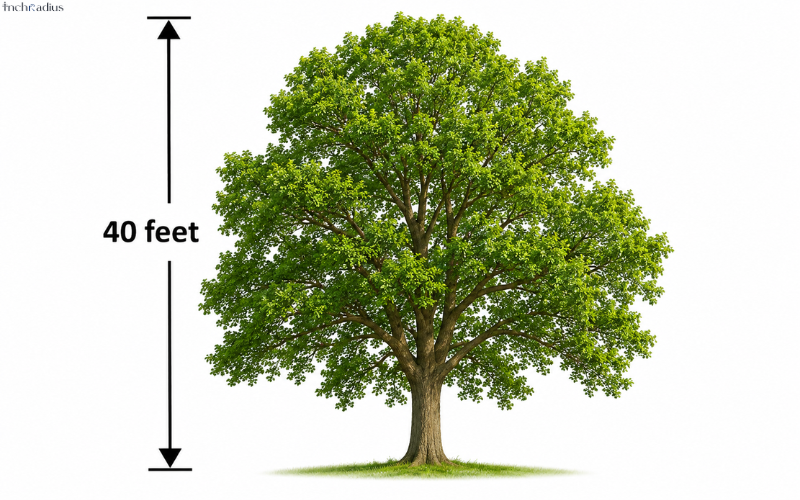
A mature tree can reach approximately 40 feet in height, depending on the species, age, soil and growing conditions. Some ornamental trees remain much shorter, while many established trees grow considerably taller. For this comparison, focus on a tree whose height is close to the target measurement.
Looking at a tree provides a vertical way to visualise 40 feet. Imagine a tree standing beside a two-storey house. Its crown may rise well above the roof, showing how substantial this height can be. The tree’s trunk, branches and foliage also make the scale easier to appreciate than an invisible distance across a lawn.
Do not assume that a tree’s height equals its distance from the ground to the tip of its highest branch based on appearance alone. Perspective can be misleading. If you need an accurate height for pruning, construction clearance or landscaping, use an appropriate measuring method or seek professional assistance.
6. Telephone Pole
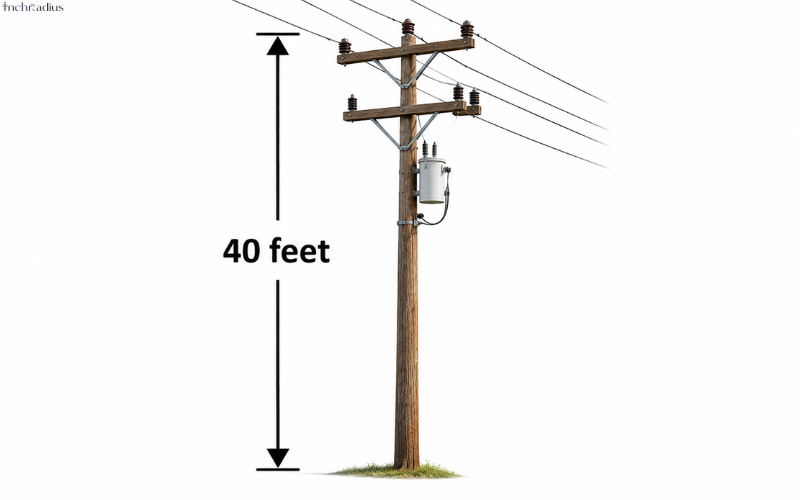
Some telephone and utility poles are around 40 feet tall, although pole heights differ according to their purpose, location and the equipment they support. Shorter poles may be used for local distribution, while taller structures can be required for different utility installations.
A pole makes a useful comparison because its narrow shape highlights the vertical distance. Unlike a building, it does not have multiple floors or wide walls that might distract from the measurement. Looking from its base to its top gives you an idea of how far 40 feet extends above the ground.
The visible portion may be shorter than the pole’s full length because part of it is buried underground. Wires, fittings and other equipment can also extend beyond the pole itself. Use the example to estimate scale rather than to determine the exact height of a particular installation.
7. Garden Swimming Pool
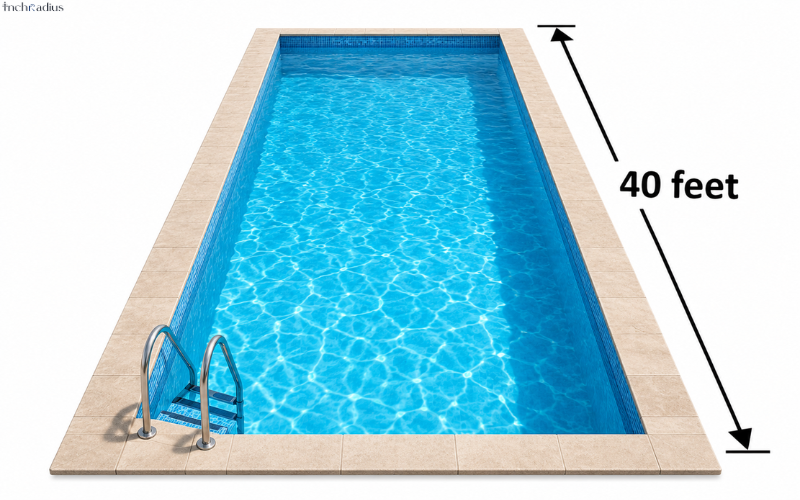
A long garden swimming pool can measure 40 feet from one end to the other. This is a plausible length for a private pool designed for recreation, exercise or swimming laps, although many residential pools are considerably shorter.
Picture a rectangular pool with its long sides running parallel to the garden. Forty feet gives swimmers room to travel along a substantial stretch of water, making the dimension easier to knowing than a number written on a plan. You can also imagine dividing the pool into four equal sections, each measuring 10 feet.
Pool dimensions matter when planning excavation, landscaping, fencing and surrounding paving. The total space needed will be greater than the pool’s length because access paths and safety features require additional room. If you are considering a pool installation, use the manufacturer’s or contractor’s measurements for accurate planning.
8. Residential Driveway
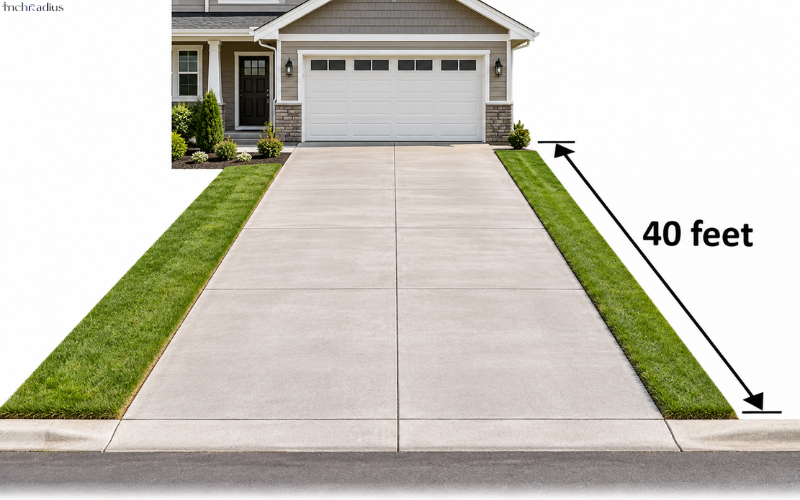
A residential driveway can extend for approximately 40 feet from the pavement towards a garage or house. The actual length depends on the property’s layout, the position of the building and the space needed to park vehicles.
Driveways are particularly helpful when imagining this measurement because you can walk along them and observe the distance directly. Picture four consecutive sections of 10 feet marked from the entrance to the end of the drive. Together, they create a simple representation of 40 feet.
This comparison is useful for estimating parking space, planning paving work or deciding how much material might be needed for a project. However, driveways are not standardised lengths. Some are only a short distance from the road to the house, while others extend much farther across a property. Measure the actual driveway before ordering materials or planning construction.
9. Large Sailboat

A large sailboat may have an overall length close to 40 feet. Boats of this size are often designed for coastal cruising, overnight stays and longer recreational journeys. They can include cabins, sleeping berths, a small galley and storage space.
A sailboat offers a recognisable comparison because its hull forms a long, continuous shape. Imagine seeing one tied to a marina pontoon, with its bow pointing towards open water. The distance from the front of the hull to the rear helps illustrate the target measurement.
Be aware that a boat’s mast can be much taller than its hull is long. The two measurements describe different dimensions and should not be confused. Sailboat specifications may also distinguish between hull length and overall length. If a boat is being used for storage or mooring calculations, check the exact model dimensions.
10. Fire Engine
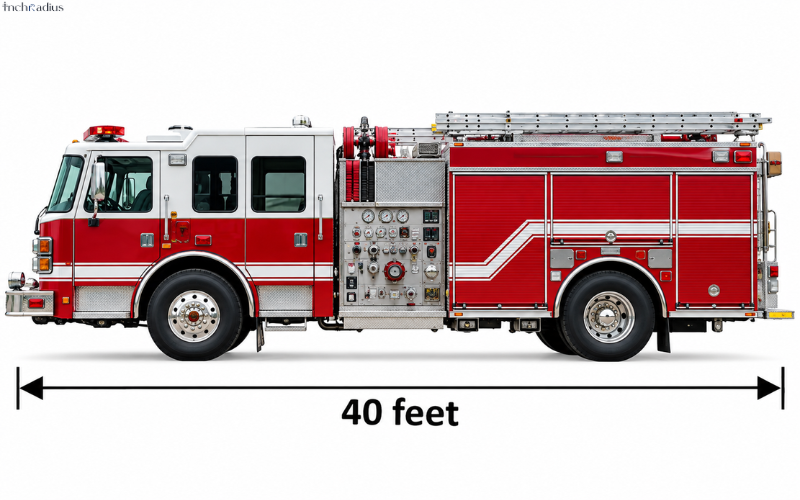
Certain large fire engines can approach 40 feet in overall length, depending on the vehicle’s design and equipment. A standard engine carrying hoses, water and firefighting equipment may be shorter, while some specialist vehicles are substantially longer.
The size of a fire engine makes it a useful reference for visualising a long vehicle. Imagine one parked outside a fire station, extending across a large section of the forecourt. Its cab, equipment compartments and rear section create a clear sense of how 40 feet can occupy horizontal space.
This example is especially useful when thinking about access roads, parking areas and emergency vehicle clearance. However, a vehicle’s length is only one factor in determining whether it can enter or turn within a space. Height, width, turning radius and surrounding obstacles must also be considered.
11. Zip-Line Cable Section

A 40-foot section of zip-line cable provides a direct example of a measured distance. Zip lines are used in adventure parks, outdoor activity centres and some private recreational settings. Their total lengths vary widely, from short practice lines to installations spanning hundreds of feet.
Imagine a cable stretched in a straight line between two secure points, with the distance between those points measuring 40 feet. This creates a clear horizontal reference, similar to marking out a section of garden or driveway.
A cable’s actual length may differ from the straight-line distance between its endpoints because of its slope, sag and installation arrangement. Zip-line systems also require specialist design, secure anchoring and appropriate safety equipment. Never use an improvised cable or attempt to construct a ride based solely on a distance estimate. For visualising 40 feet, the measured section is useful; for installation, professional specifications are essential.
How to Estimate 40 Feet Without a Ruler
You can estimate 40 feet without a tape measure by breaking the distance into smaller sections and using familiar references. These methods are useful for rough planning, but they are not substitutes for accurate measurements where precision matters.
1. Count Ten-Foot Sections
Imagine marking a line across a lawn or driveway in four equal sections. Each section should measure 10 feet, giving a total of 40 feet. You can use a known 10-foot object or a measuring tape to establish the first section, then repeat the distance.
If you have no measuring equipment at all, pacing out the sections may help, but your stride will affect the result. Walk naturally and treat the final distance as an estimate rather than an exact measurement.
2. Use Your Walking Stride
An adult’s ordinary walking stride varies, but a rough estimate of 2 to 2.5 feet per step can be useful for an initial calculation. At that rate, 40 feet would take approximately 16 to 20 steps.
Count your steps along a reasonably straight path and avoid deliberately changing your stride to reach a preferred number. Differences in leg length, walking speed and terrain can alter the result. This method is best for deciding whether a space is roughly 40 feet long, not for setting construction boundaries.
3. Compare the Space with a Familiar Vehicle
If you regularly see a large motorhome or a long shipping container, use its known dimensions as a reference. A 40-foot shipping container, for example, offers a particularly useful comparison because its nominal length is standardised.
Imagine placing that length along the area you want to assess. If the space is visibly shorter, it is probably less than 40 feet; if it extends beyond the reference, it is longer. This approach works best when the reference object’s dimensions are known, rather than guessed from appearance.
Related Post: 11 Common Things That Are 21 Feet Long
FAQs
How many inches are there in 40 feet?
There are exactly 480 inches in 40 feet. One foot equals 12 inches, so multiplying 40 by 12 gives 480. This conversion is useful when working with imperial measurements for furniture, building materials or room dimensions. It also helps compare 40 feet with smaller measurements expressed in inches.
How many metres is 40 feet?
Forty feet equals exactly 12.192 metres. To convert feet into metres, multiply the number of feet by 0.3048. This metric equivalent is useful for construction projects, property measurements and international specifications. For everyday estimates, you might round it to approximately 12.2 metres, but use the exact figure when precision is required.
Is 40 feet longer than a standard car?
Yes. Forty feet is much longer than a typical passenger car, which is often around 12 to 16 feet long. Depending on the vehicle, two or three cars placed end to end could approach or exceed 40 feet. Their actual combined length will vary, so check individual vehicle dimensions for accurate comparisons.
How many steps does it take to walk 40 feet?
For an adult taking ordinary steps of roughly 2 to 2.5 feet, 40 feet may take around 16 to 20 steps. The actual number depends on your height, stride and walking style. Count your own steps over a known distance to develop a more useful personal estimate.
Is 40 feet the same as 40 square feet?
No. Forty feet measures length, which is a one-dimensional distance. Forty square feet measures area, covering a two-dimensional surface. For example, a rectangular floor measuring 5 feet by 8 feet has an area of 40 square feet, but neither side measures 40 feet.
How can I mark out 40 feet in my garden?
The most reliable method is to use a 50-foot or longer tape measure, mark the 40-foot point and keep the tape straight. If you do not have a tape, divide the distance into four sections of approximately 10 feet using a known reference. Check the final distance before installing fences or permanent structures.
Can a tree really be 40 feet tall?
Yes. Many mature trees can reach 40 feet or more, depending on their species and growing conditions. Some garden trees remain much shorter, while established trees can grow several times taller. A tree near this height can help you visualise the vertical scale, but its height should not be judged accurately by appearance alone.
What is the easiest way to picture 40 feet?
A standard 40-foot shipping container is one of the clearest references because its nominal length is established and its shape is easy to recognise. A large motorhome can provide a similar comparison. If neither is nearby, imagine four 10-foot sections arranged in a straight line across a driveway or lawn.
Conclusion
Forty feet is a substantial distance, measuring 480 inches or approximately 12.19 metres. A standard 40-foot shipping container offers one of the clearest ways to picture it, while a large motorhome, a long driveway or a sizeable swimming pool can provide familiar alternatives. For vertical comparisons, a mature tree or a utility pole around this height can help show how far 40 feet reaches above the ground.
When estimating this distance outdoors, divide it into four sections of 10 feet or count your walking steps for a rough result. Use a tape measure whenever accuracy is important, especially for construction, vehicle access or landscaping. Familiar objects make the scale easier to imagine, but verified measurements remain the safest basis for practical decisions.