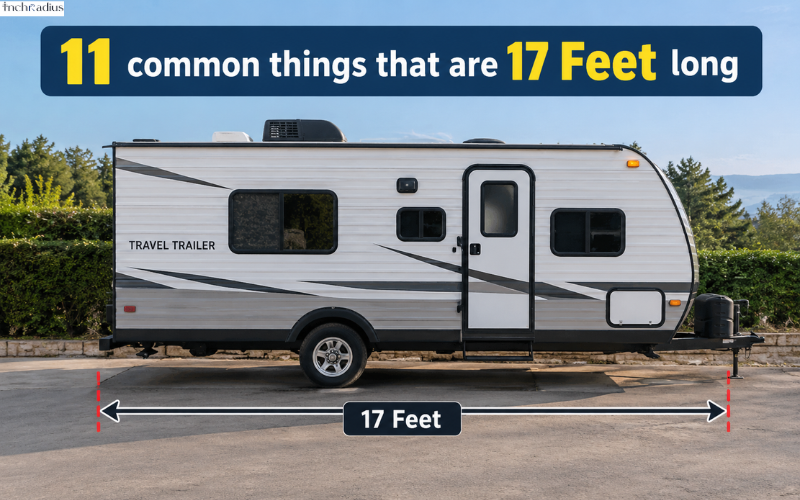
17 feet is equal to 204 inches, 518.16 centimetres, or 5,181.6 millimetres. It is a fairly long distance, roughly the length of a large family vehicle, a small boat, or a medium-sized trailer. Seeing 17 feet written as a number can be difficult to picture, especially if you do not have a tape measure nearby. Real objects can make the measurement much easier to visualise.
A 17-foot space could stretch across part of a driveway, a room, or a garden. The examples below include objects and structures that are exactly 17 feet long as well as familiar items that come close to this measurement. Where an example varies by model or design, the difference is clearly explained.
How Long Is 17 Feet?
Seventeen feet is a precise length of 204 inches. In metric units, it measures 5.1816 metres, which is 518.16 centimetres or 5,181.6 millimetres. For everyday measuring, it is usually easier to think of 17 feet as just over five metres.
The measurement is long enough to cover a significant part of a room, driveway, garage, or garden. A 17-foot boat, trailer, or recreational vehicle gives a useful physical comparison because these products are often sold according to their approximate overall length. A person standing at one end of a 17-foot space would need to walk several normal steps to reach the other end.
For a quick mental picture, imagine a little more than three 5-foot rulers placed end to end, or a straight line extending about five metres across an open space.
How Big Is 17 Feet?
A length of 17 feet can be surprisingly difficult to judge from memory. One useful approach is to divide it into smaller sections. Seventeen feet contains three 5-foot sections plus another 2 feet. If you can picture a 5-foot person lying or standing along a measured space, three such lengths would bring you to 15 feet, with another 2 feet left over.
Paper can also help. A standard sheet of A4 paper is about 11.7 inches long. Around 17 A4 sheets placed end to end would reach close to 16.6 feet, so another small section would bring you near 17 feet. This is only an estimate because paper sizes and positioning affect the result.
A 17-foot measurement is also around the length of a large vehicle. If you stand at one end of such a vehicle and walk towards the other, you get a useful sense of how far 17 feet extends.
11 Common Things That Are 17 Feet Long
The easiest way to picture 17 feet is to compare it with objects you may have seen in everyday life. Some products are made specifically around a 17-foot length, while others vary slightly according to their model or design. The table gives the target measurement so you can use the examples as visual references.
| Everyday Item | Actual Size |
| 17-Foot Boat | 17 feet |
| 17-Foot Travel Trailer | 17 feet |
| 17-Foot Utility Trailer | 17 feet |
| 17-Foot Canoe | 17 feet |
| 17-Foot Pontoon Boat | 17 feet |
| 17-Foot Fishing Boat | 17 feet |
| 17-Foot Camper | 17 feet |
| 17-Foot Ladder | 17 feet |
| 17-Foot Swimming Pool | 17 feet |
| 17-Foot Box Truck | 17 feet |
| 17-Foot Recreational Vehicle | 17 feet |
17-Foot Boat
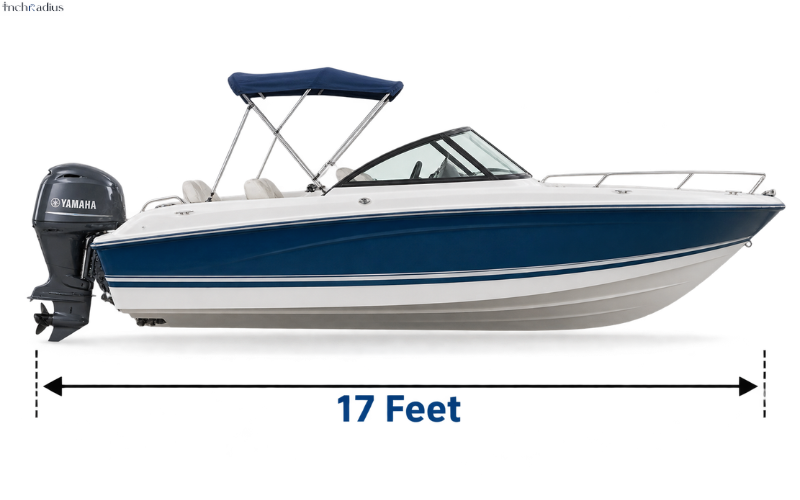
A 17-foot boat provides one of the clearest real-world comparisons for this measurement. Boats are commonly described by their overall length, and models around 17 feet are widely available in several recreational styles. Depending on the design, the length is measured from the front of the boat to the rear.
A 17-foot boat is long enough to provide a useful sense of how much space 17 feet covers. If you imagine placing the boat in a straight line on the ground, its bow-to-stern distance would be exactly the target measurement for a 17-foot model.
Boat length does vary, so not every recreational boat will be 17 feet. A 16-foot or 18-foot boat would still give a close visual comparison. If you have access to a boat of this size, standing beside it is an easy way to see how long 17 feet really is.
17-Foot Travel Trailer
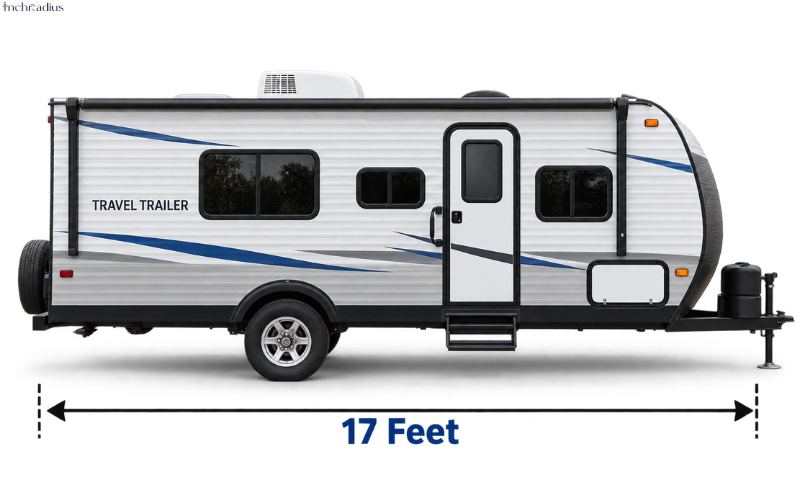
A 17-foot travel trailer is another useful comparison. Travel trailers come in many sizes, from compact models designed for short trips to much larger trailers with several rooms. A trailer listed as 17 feet long provides a direct example of the measurement.
The stated length can sometimes refer to the body of the trailer, while other manufacturers may measure the trailer differently or include additional parts. For that reason, checking the manufacturer’s specifications is necessary when an exact measurement matters.
For visualising distance, however, a 17-foot travel trailer works well. It is roughly the length of a large vehicle and extends across a substantial part of a driveway. Standing at the hitch and looking towards the rear gives you a practical picture of how far 17 feet stretches.
17-Foot Utility Trailer
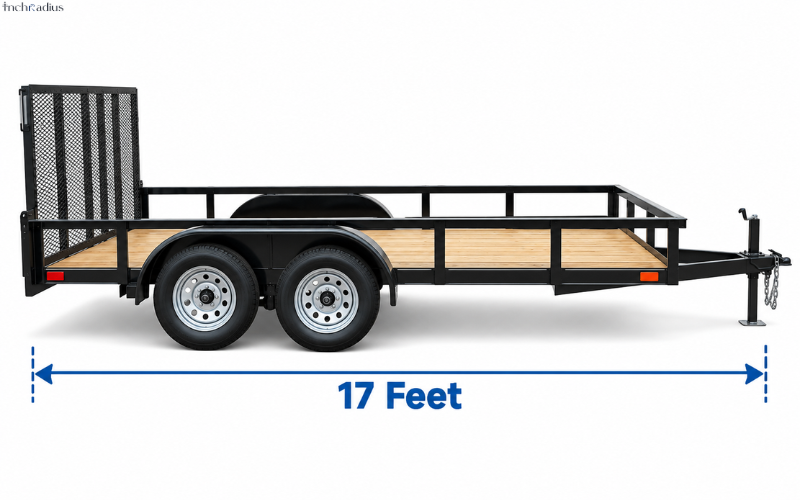
Utility trailers are used to carry equipment, garden machinery, building supplies, vehicles, and other loads. They are produced in a wide range of lengths, including models around 17 feet.
A 17-foot utility trailer gives you a long, narrow example of the measurement. Unlike a room or open area, its straight sides make the length easy to visualise. If the trailer is 17 feet overall, the distance from its front point to its rear is approximately the same as the target measurement, depending on how the manufacturer defines its dimensions.
Utility trailers can differ in overall length, particularly when the drawbar or hitch is included. A trailer described as having a 17-foot deck may therefore have a greater total length. This makes it a useful comparison, but the specification should be checked if precision is required.
17-Foot Canoe
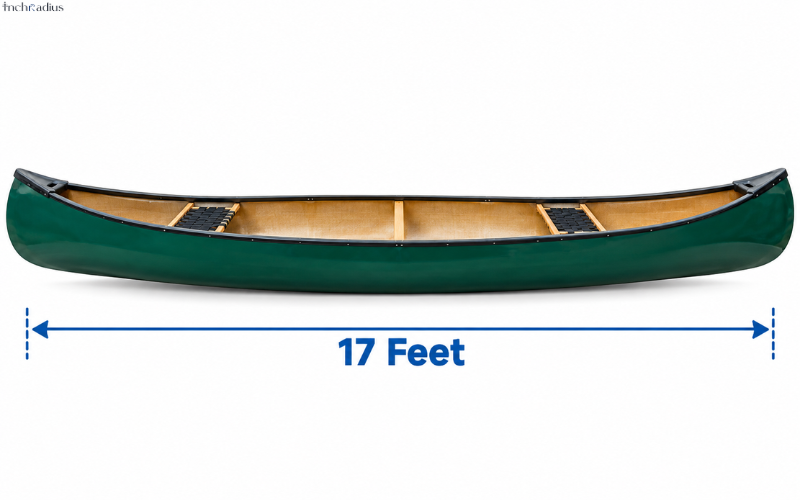
Long canoes can provide another interesting way to picture 17 feet. Many recreational canoes are shorter, but longer touring and specialised canoes can reach around 17 feet.
A 17-foot canoe is particularly useful as a visual reference because it has a simple, narrow shape. Imagine placing the canoe flat on the ground and stretching a tape measure from one end to the other. The full distance would be 17 feet for a model made to that length.
Because canoe designs differ, the quoted length may not always be exactly 17 feet. Some are 16, 17, or 18 feet long. Even so, a long canoe gives a much better sense of the distance than a small household object. Its length also shows why 17 feet is a substantial measurement rather than a short everyday distance.
17-Foot Pontoon Boat
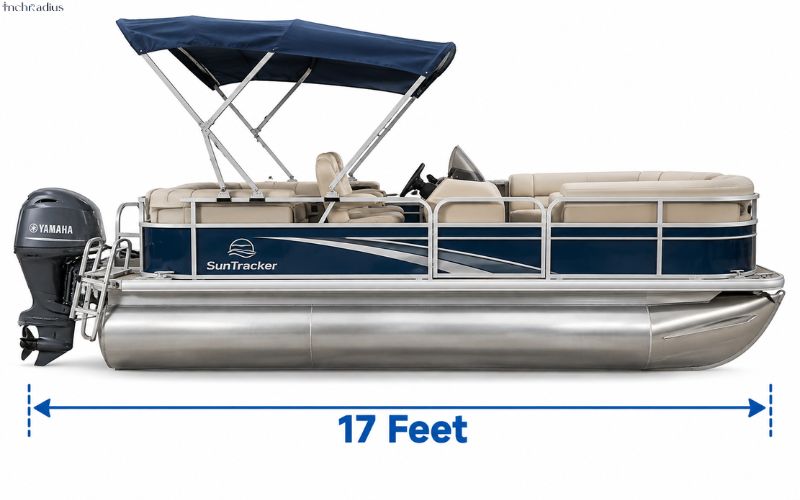
Pontoon boats are generally wider than canoes and have a broad deck supported by pontoons underneath. Recreational models are available in many lengths, including boats around 17 feet.
A 17-foot pontoon boat gives a strong visual impression because its long deck makes the measurement easy to follow from one end to the other. If you were standing at the bow, the stern would be about 17 feet away on a model with that exact overall length.
The exact dimensions depend on the manufacturer and design. Some models may be slightly shorter or longer, so the product specification should be used for an exact measurement. As a general comparison, though, a pontoon boat around this size shows that 17 feet is enough room for a sizeable recreational craft.
17-Foot Fishing Boat
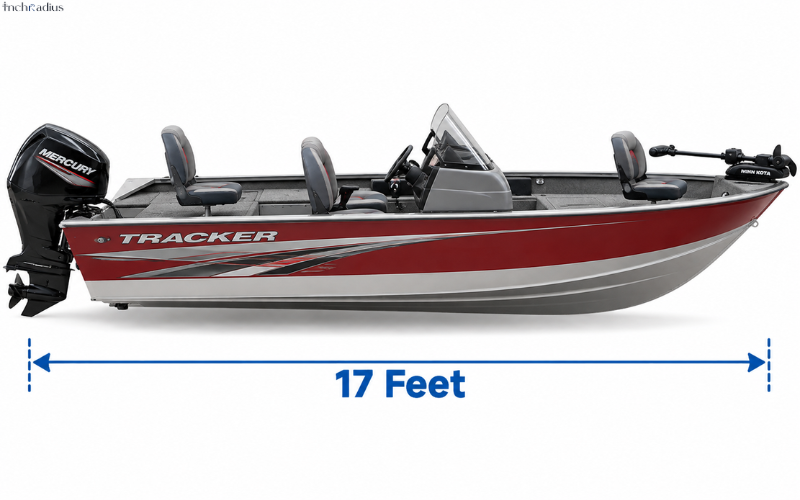
A fishing boat measuring 17 feet long is a practical example for people who spend time around lakes, rivers, or coastal waters. Boats in this size range can provide enough space for fishing equipment, seating, storage, and a motor, depending on their design.
The important measurement is the boat’s overall length. A 17-foot fishing boat extends 204 inches from its front to its rear. Seeing the full boat in person makes the distance much easier to judge than looking at the number alone.
Fishing boats vary considerably. A model might be 16 feet, 17 feet, or 18 feet, and some manufacturers measure particular parts differently. If you are using one as a measuring reference, check the stated overall length. For a simple mental picture, a 17-foot fishing boat is about as long as a large car plus several extra feet.
17-Foot Camper
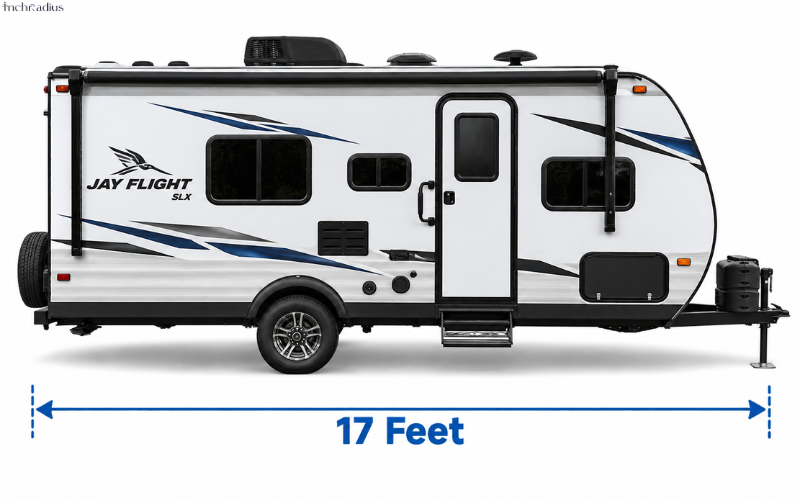
A camper around 17 feet long is a useful comparison because campers are built in many compact and medium sizes. Their overall length can include the living section and other exterior components, depending on the manufacturer.
Picture a camper parked in a driveway. Its front-to-back length would occupy about 17 feet of space. This can make the measurement easier to understand when planning parking areas, storage space, or campsite arrangements.
Camper dimensions vary widely, so not every compact camper will be exactly 17 feet. Some may be a little shorter, while others may extend beyond 20 feet. The 17-foot figure should therefore be treated as an exact example only when the camper’s published specifications give that length.
Even with those differences, a camper gives a helpful reference because it shows how 17 feet looks in a full-sized object rather than as a line on paper.
17-Foot Ladder
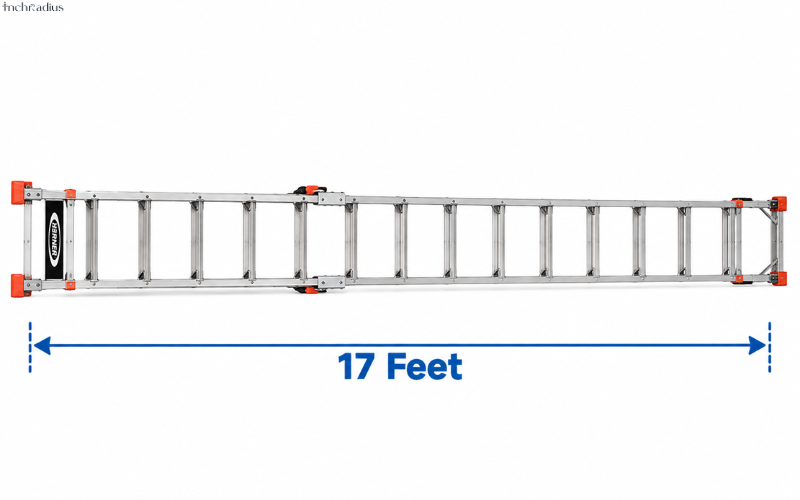
A 17-foot ladder is a tall, extended piece of equipment that can also demonstrate the measurement, although its dimension is usually discussed as height when the ladder is standing rather than length.
A straight ladder measuring 17 feet from end to end would cover the same distance if laid horizontally on the ground. This makes it easy to understand the measurement without needing a long tape measure.
Ladders can have different stated lengths and working heights. An extension ladder marked with a certain length may also have a different maximum safe working height because it is used at an angle. Therefore, a 17-foot ladder should be treated as a direct 17-foot comparison only when its physical length is specified as 17 feet.
If you lay a straight 17-foot ladder flat, its overall end-to-end distance provides a clear visual reference for the target length.
17-Foot Swimming Pool
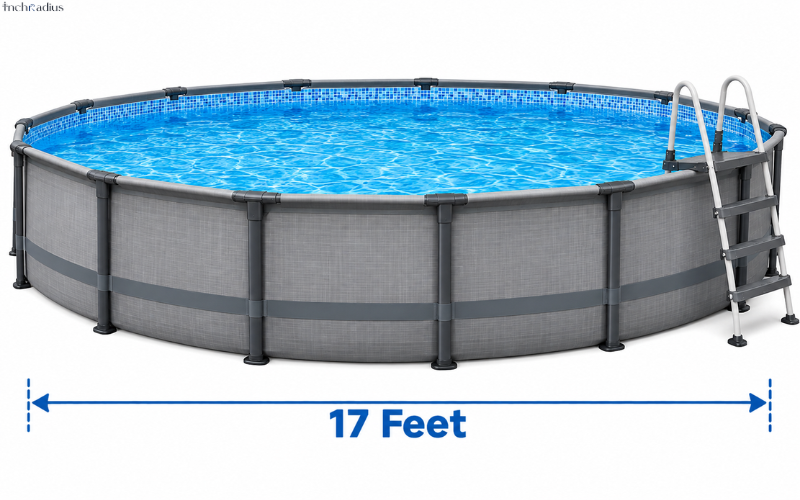
A swimming pool can be another helpful way to visualise 17 feet. Pools are available in numerous lengths, particularly above-ground and compact in-ground designs. A pool that measures 17 feet from one end to the other gives a clear example of the distance.
Imagine standing at one short end of the pool and looking towards the opposite end. Seventeen feet is a little over five metres, so the far end would be more than five metres away.
Pool measurements are normally given by the manufacturer’s specifications, and the stated length may refer to the pool itself rather than surrounding decking or equipment. A pool that is 17 feet long is therefore a useful exact comparison when its published dimensions confirm the measurement.
This example is especially helpful for visualising 17 feet as a horizontal distance because most people can picture the length of a swimming pool more easily than 204 inches.
17-Foot Box Truck
A box truck around 17 feet long provides a large-scale vehicle comparison. Moving companies and commercial operators use box trucks in several sizes, with body lengths varying according to the vehicle and manufacturer.
A truck with a 17-foot cargo body gives you a long, rectangular reference. Looking from the front of the cargo box to its rear shows approximately how far 17 feet extends. The complete vehicle will normally be longer because the cab and other components add to its overall length.
This distinction matters. A truck advertised with a 17-foot box does not necessarily measure exactly 17 feet from bumper to bumper. The 17-foot figure usually refers to the cargo area. For visualising the target distance, however, the cargo box itself is a useful comparison.
It also shows why 17 feet can represent a significant amount of usable space.
17-Foot Recreational Vehicle
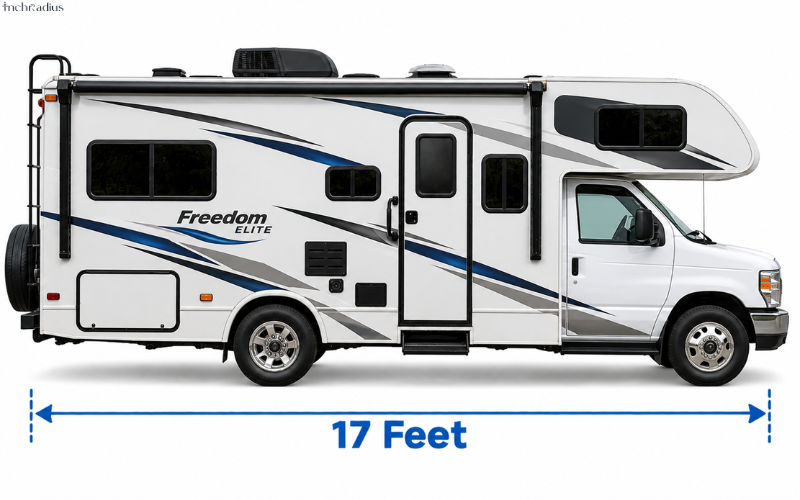
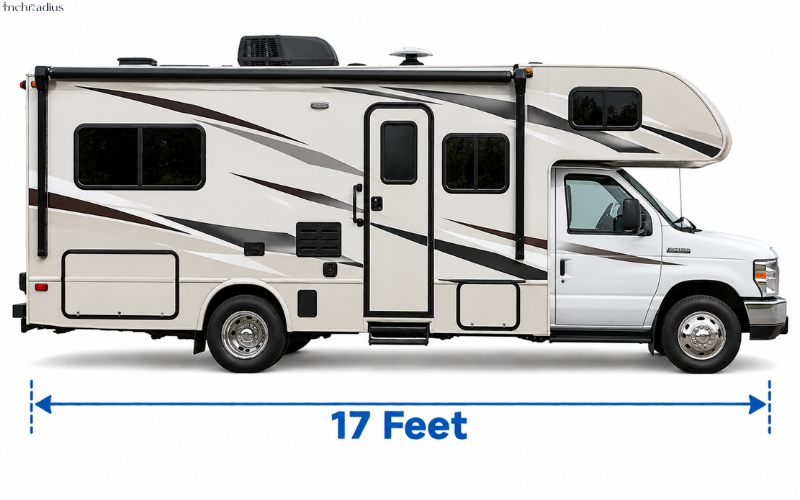
A recreational vehicle, or RV, can be built around a 17-foot overall length, particularly among smaller motorhomes and camper-style vehicles. RV dimensions vary greatly, so the manufacturer’s specification is the best source for an exact figure.
A 17-foot RV gives a straightforward way to picture the distance because it has a clear front-to-back dimension. Parked in a driveway or campsite, it would occupy roughly 17 feet of linear space if its overall length is specified as 17 feet.
The actual footprint may be greater when mirrors, steps, awnings, or other accessories are extended. These features should not be confused with the vehicle’s stated length.
As a visual reference, standing beside a 17-foot RV can help turn an abstract measurement into something familiar. It is also close to the length of several other large recreational vehicles and trailers.
Measurement Without a Ruler
You can estimate 17 feet without carrying a long ruler, but body-based methods are only rough because people’s hand and finger sizes differ.
Use a hand span. Measure your hand from the tip of your thumb to the tip of your little finger when your fingers are spread. Many adults have a span of roughly 8 to 9 inches. About 23 hand spans would therefore come close to 17 feet, although your personal result may differ.
Use sheets of A4 paper. A4 paper is about 11.7 inches long. Placing around 17 sheets end to end gives approximately 199 inches, which is close to 17 feet. Adding a small extra section brings the estimate nearer to 204 inches.
Use a familiar vehicle. If you know the approximate length of a car, van, boat, or trailer, use it as a reference. A large vehicle around 17 feet long can give you a quick visual estimate. This method is less precise than measuring, but it is useful when you only need to judge whether a space is roughly 17 feet.
Related Post: 11 Common Things That Are 16 Feet Long
FAQs
How many inches are in 17 feet?
There are 204 inches in 17 feet. The conversion is straightforward because one foot contains 12 inches. Multiplying 17 by 12 gives 204. This is useful when comparing 17 feet with objects or measurements normally described in inches, such as furniture, building materials, or product dimensions.
How many centimetres is 17 feet?
Seventeen feet is 518.16 centimetres. One foot equals 30.48 centimetres, so 17 × 30.48 gives 518.16 cm. For a simpler everyday figure, you can think of 17 feet as approximately 518 centimetres, or just over five metres.
How many metres are in 17 feet?
17 feet equals 5.1816 metres. Rounded to two decimal places, that is 5.18 metres. This makes it easier to compare the measurement with metric dimensions used for rooms, gardens, vehicles, building projects, and outdoor spaces.
Is 17 feet considered a long distance?
For an everyday household measurement, 17 feet is fairly long. It is more than five metres and can cover a substantial part of a room, driveway, or garden. A vehicle, boat, or trailer around 17 feet long gives a useful real-world comparison because its full length is easy to see.
How can I picture 17 feet without measuring it?
Think of a large vehicle, boat, or trailer that is about 17 feet long. You can also picture three 5-foot sections followed by another 2 feet. A4 sheets provide another rough method: about 17 sheets placed end to end come close to the target distance.
Is a 17-foot boat actually 17 feet long?
A boat advertised as 17 feet is generally designed around that stated overall length, but exact dimensions depend on the manufacturer and how the length is measured. Some boats may be slightly shorter or longer. Always check the manufacturer’s specifications when the precise dimension matters.
What does 17 feet look like compared with a car?
A typical large car is considerably shorter than 17 feet, although vehicle dimensions vary. A large vehicle may be around 15 to 17 feet long, while smaller cars can be much shorter. Adding several feet beyond the length of an ordinary car can help you picture the full 17-foot distance.
How can I measure 17 feet accurately?
The most reliable method is a tape measure or another measuring tool marked in feet and inches. Measure from one end of the space to the other and stop at 17 feet, which is the same as 204 inches. Body measurements and familiar objects are useful for estimates but should not replace a proper measuring tool when accuracy matters.
Conclusion
Seventeen feet is a substantial distance measuring 204 inches, 518.16 centimetres, or 5.1816 metres. A 17-foot boat, trailer, camper, or similar recreational vehicle can make the length much easier to picture. For a quick mental reference, think of three 5-foot lengths placed together and then add another 2 feet.
You can also estimate the distance with A4 sheets or a familiar vehicle, although these methods will not be exact. If you need to measure a real space accurately, a tape measure is the better choice. The key figure to remember is simple: 17 feet is just over five metres long.