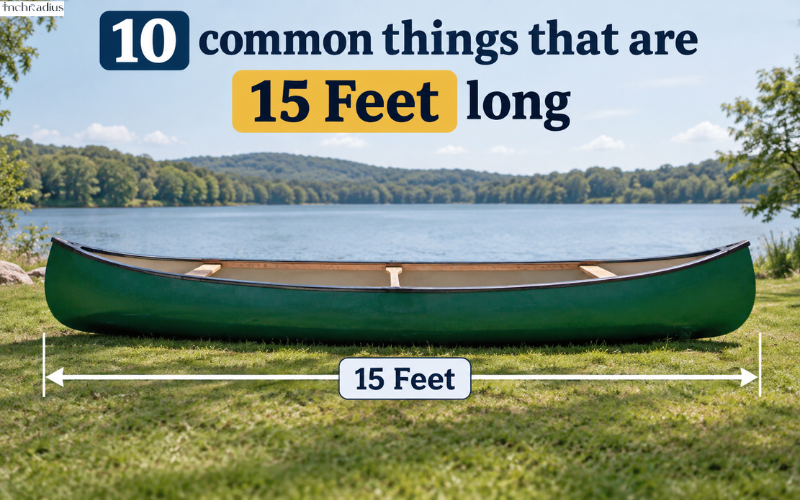
How long is 15 feet? 15 feet is exactly 180 inches, 4.572 metres, 457.2 centimetres, or 4,572 millimetres. It is a fairly long distance, roughly equal to the length of a large family car and a half, or about the height of a tall two-storey space when measured vertically. For many people, 15 feet is difficult to picture because most everyday objects are much shorter.
Looking at familiar things such as a swimming pool, extension ladder, canoe, or large boat can make the measurement easier to visualise. A 15-foot length can also be useful when planning a room, garden area, driveway, cable run, or outdoor space.
How Long Is 15 Feet?
Fifteen feet is a fixed measurement equal to 180 inches. In metric units, it is 4.572 metres, which is 457.2 centimetres or 4,572 millimetres. Put simply, 15 feet is just over four and a half metres from one end to the other.
The measurement becomes easier to picture when it is compared with objects that people recognise. A 15-foot extension ladder, for example, can stretch from floor level to a substantial height when positioned against a building. A 15-foot canoe or small boat gives a similar idea horizontally.
The exact size of real objects can vary, so these comparisons should be treated as visual references rather than universal standards. If you need an exact 15-foot measurement for construction, decorating, landscaping, or another practical job, a tape measure is still the better choice.
How Big Is 15 Feet?
A 15-foot length is about 4.57 metres, so imagine placing four one-metre rulers end to end, then adding another 57 centimetres. That gives you a useful mental picture of the distance.
You can also picture several smaller objects joined together. Five 3-foot lengths would make exactly 15 feet. Three 5-foot lengths would also reach 15 feet. This can be easier to imagine if you are standing in a room or garden and trying to judge the distance.
For a horizontal comparison, a 15-foot canoe, pool, or boat gives a strong visual reference. For a vertical comparison, a 15-foot ladder shows how substantial the measurement is. It is much longer than a standard household room is wide, but it is not an unusually large distance for outdoor equipment or small recreational vehicles.
10 Common Things That Are 15 Feet Long
The following examples give you practical ways to picture 15 feet. Some are made in exact 15-foot versions, while others are commonly available close to this length. Always check the manufacturer’s dimensions when the exact size matters.
| Everyday Item | Actual Size |
| Extension Ladder | 15 feet |
| Canoe | 15 feet |
| Above-Ground Swimming Pool | 15 feet |
| Small Fishing Boat | 15 feet |
| Jump Rope | 15 feet |
| Extension Cord | 15 feet |
| Garden Hose | 15 feet |
| Flagpole | 15 feet |
| Inflatable Paddle Board | 15 feet |
| Utility Trailer | 15 feet |
Extension Ladder
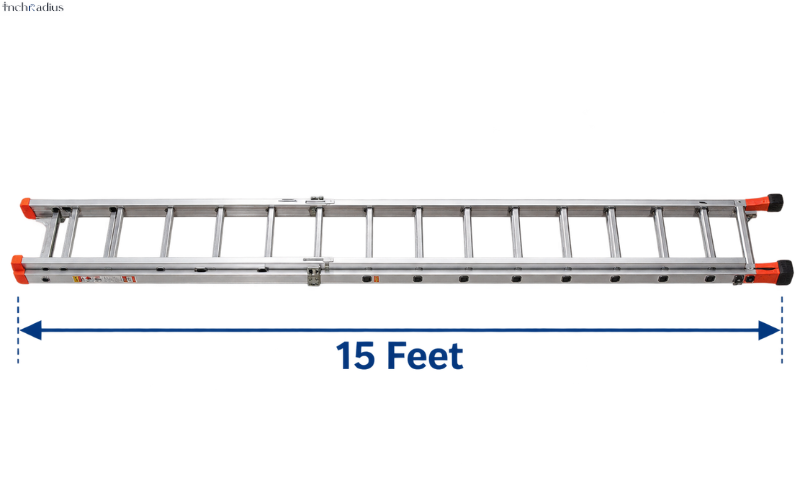
A 15-foot extension ladder is one of the easiest ways to understand this measurement vertically. When fully extended, the ladder spans 15 feet from one end to the other. However, the actual working height can be different because the ladder needs to be positioned at a safe angle and may extend beyond the point where you are standing.
If you have seen a long ladder leaning against a house, 15 feet gives a good idea of its scale. It is considerably longer than a typical household step ladder and can reach well above the height of many ground-floor windows.
For a quick mental comparison, imagine standing a 15-foot ladder upright. Its top would be around 4.57 metres above the ground. That makes it a useful visual reference for judging vertical distances such as wall heights, tree branches, or the height of outdoor structures.
When shopping for a ladder, remember that a ladder advertised as 15 feet may not provide 15 feet of usable climbing height. The design, angle and extension mechanism all affect its working reach.
Canoe
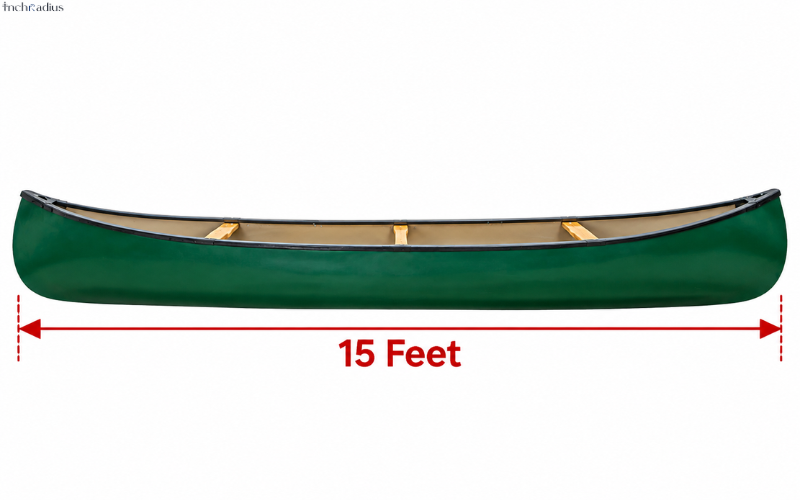
A 15-foot canoe is a sizeable recreational canoe and provides an excellent horizontal comparison. Canoes come in many lengths, but 15-foot models are commonly used for touring, fishing, camping trips and carrying more than one person.
Imagine placing the canoe on the ground from bow to stern. The distance between its two ends would cover 15 feet. At 4.572 metres long, it would take up a noticeable amount of space in a garage, storage area or garden.
A canoe also helps show why length does not tell you everything about an object’s size. A 15-foot canoe is long and narrow, whereas a 15-foot swimming pool may be much wider. Both can have the same length while having very different shapes and uses.
If you are trying to visualise 15 feet outdoors, picture a canoe laid flat and then imagine walking from its front end to its rear. That walk gives you a useful sense of the distance.
Above-Ground Swimming Pool
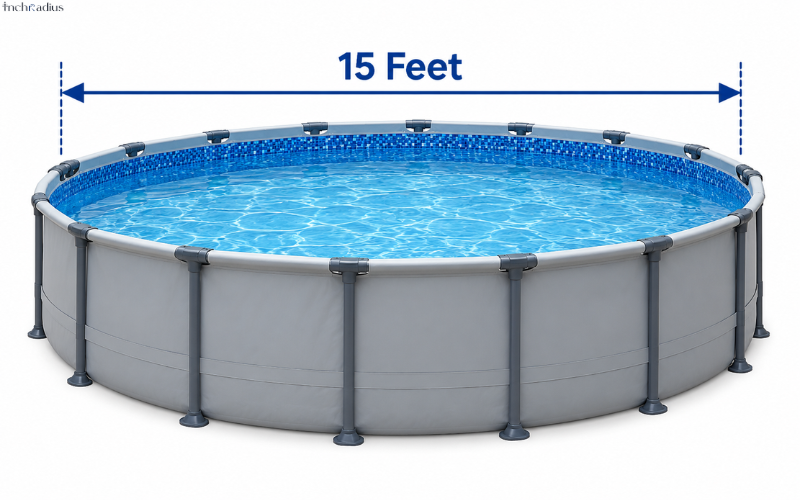
A 15-foot round above-ground swimming pool is another practical reference. Many residential pools are sold in different diameters, including models around 15 feet across. In a round pool, the 15-foot measurement refers to the diameter, meaning the distance from one side straight across the centre to the opposite side.
This is a particularly useful example because you can imagine the measurement on the ground. Stand at one edge of the pool and picture a straight line across to the other edge. That distance would be 15 feet.
A pool this size also needs more space than its stated diameter suggests. The surrounding ground may need room for equipment, access, decking and safe movement. So a 15-foot pool does not necessarily mean you need exactly 15 feet of garden space.
As a visual reference, imagine a circle more than 4.5 metres wide. That gives you a strong idea of how much ground 15 feet can cover.
Small Fishing Boat
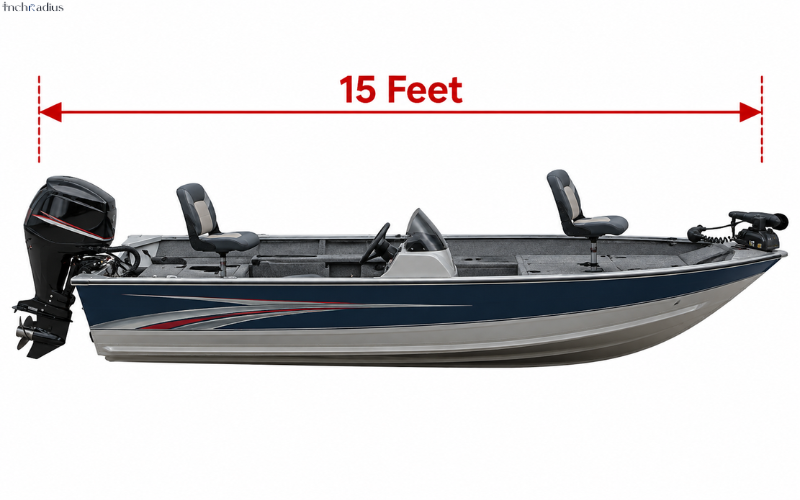
A small fishing boat can also measure around 15 feet from bow to stern. Boats in this range are large enough for recreational fishing and short trips, yet small enough to be transported by many suitable trailers.
Picture the boat sitting on its trailer. From the pointed front of the bow to the back of the stern, a 15-foot model stretches more than four and a half metres. That is roughly the distance you might walk across a modest outdoor area.
Boat length can be measured in different ways depending on the manufacturer, so a listed 15-foot boat should be checked against its published dimensions if you need precise measurements. Accessories, engines and trailers may also extend beyond the main hull.
For visualising the length alone, however, a 15-foot fishing boat is a useful example. It shows that 15 feet is long enough for a small vehicle-like object but still far shorter than the large boats seen at commercial harbours.
Jump Rope
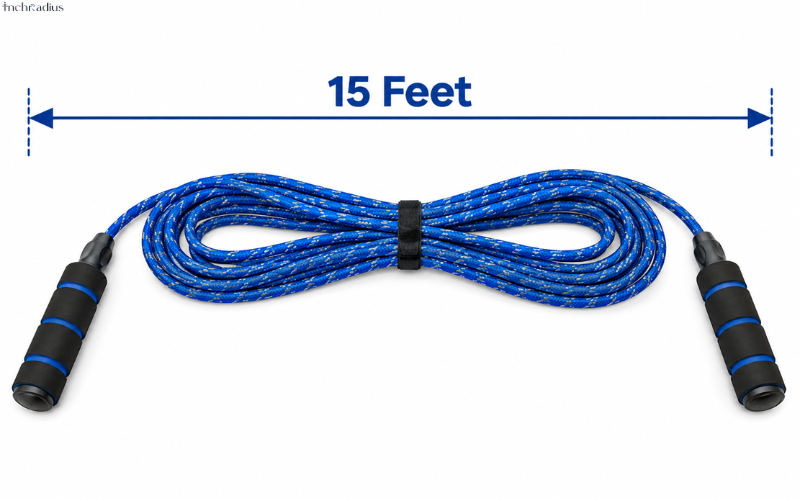
A 15-foot jump rope gives a simple example because its length is easy to understand when it is laid straight. Longer ropes are often used for group skipping, training exercises, school activities and certain fitness routines.
If the rope is stretched out without bends or loops, one end to the other measures 15 feet. That is exactly 180 inches or 4.572 metres.
A rope is also helpful because it demonstrates the difference between an object’s length and the amount of space it occupies when being used. A 15-foot rope can be coiled into a small bundle, so it does not always look 15 feet long. Once stretched straight, however, its full length becomes clear.
If you do not have a tape measure, you could use several known lengths of rope or string to create a rough 15-foot reference. Just remember that bending, stretching and tying the material can affect the result.
Extension Cord
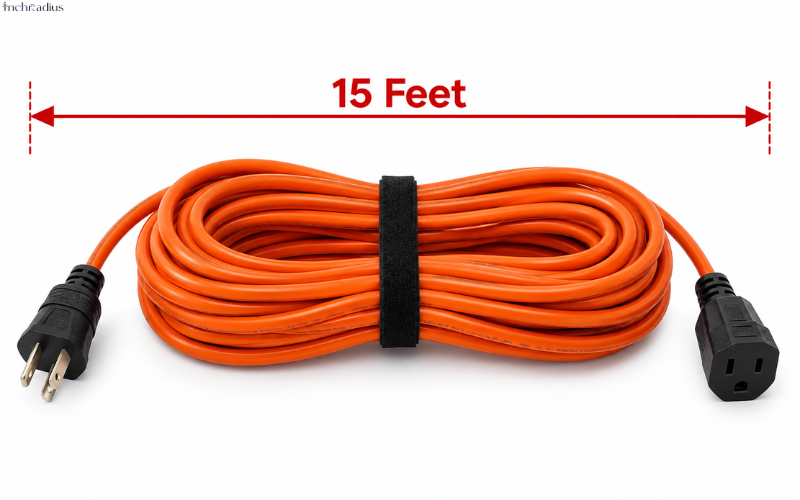
A 15-foot extension cord is a familiar household item that makes the measurement easy to picture. It provides an exact 15-foot reference when the cord is designed and labelled at that length.
Laid straight along a floor, the cord would cover 180 inches. This is useful when thinking about distances between electrical outlets and appliances, workshop equipment or outdoor tools.
Extension cords are flexible, so a 15-foot cord may look much shorter when it is coiled. Stretching it carefully along a straight path reveals its actual length. You can use this idea to visualise 15 feet in a room without needing to imagine a large solid object.
Safety matters when using extension cords. The correct cord type and electrical rating depend on the equipment and situation. The length alone does not determine whether a cord is suitable.
Garden Hose
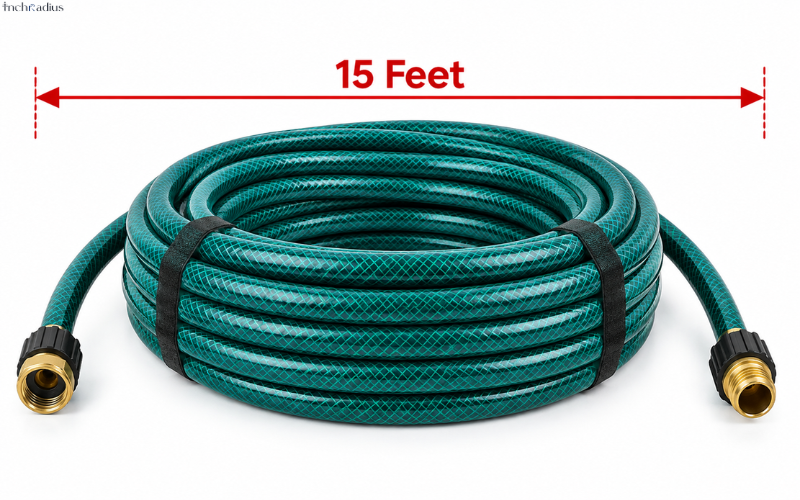
A 15-foot garden hose is another straightforward reference for this measurement. Hoses are sold in many lengths, and a 15-foot version is short enough for smaller jobs while still covering a useful distance around a garden or outdoor tap.
Lay the hose in a straight line and its full length will reach 15 feet. This is equivalent to 4.572 metres. If the hose is curled or coiled, it can appear far shorter, which is why stretching it out makes the comparison easier.
You can picture a 15-foot hose running from an outdoor tap to a flower bed, garden container or nearby washing area. The exact coverage will depend on where the hose is positioned and how much length is needed to move around obstacles.
As a visual guide, a straight 15-foot hose is long enough to cross a good-sized section of a garden but not so long that it becomes difficult to handle.
Flagpole
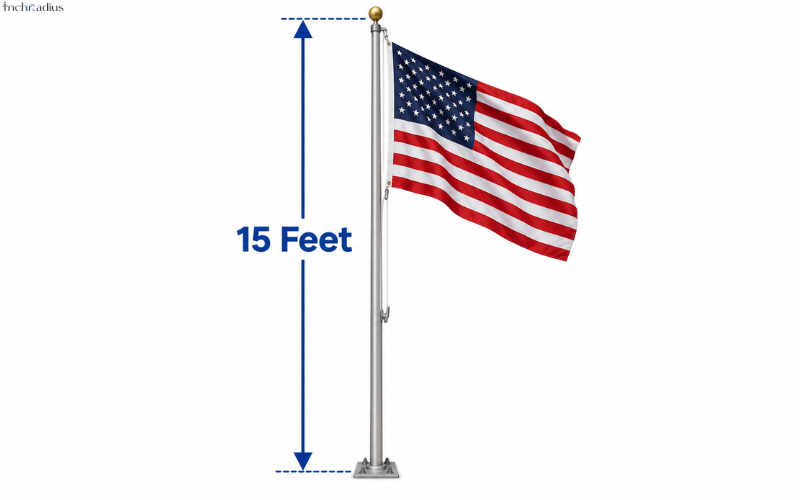
A 15-foot flagpole provides a useful vertical comparison. The pole itself can measure 15 feet from its base to its top, although the exact overall height can differ depending on the design and installation.
Imagine a straight pole standing beside a house or in a garden. At 15 feet, its top would be about 4.57 metres above the ground. That is substantially taller than a person, making it easier to appreciate the measurement vertically.
Flagpoles are available in many heights, and a 15-foot model can suit residential gardens, community spaces and smaller commercial properties. Installation depth and the mounting system can affect the overall height above ground.
This example is particularly helpful if you find horizontal distances difficult to judge. Looking upwards at a 15-foot pole gives a clear sense of how far the measurement reaches from ground level.
Inflatable Paddle Board
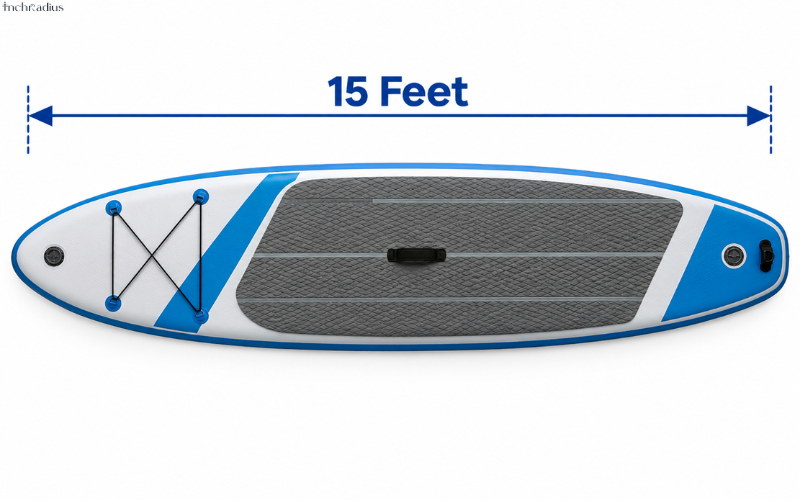
A long inflatable paddle board can measure around 15 feet from nose to tail. Boards of this length are designed for particular activities and are generally longer than the recreational paddle boards commonly used by beginners.
Imagine laying the board flat on the ground and measuring from its front tip to its rear. At 15 feet, it would extend over 4.5 metres. That makes it an impressive visual reference for anyone trying to picture the length.
The width of a paddle board is much smaller than its length, so the board also shows how a long object can take up relatively little space from side to side.
Inflatable boards can look surprisingly compact when deflated and packed away. Once inflated, however, their full dimensions become obvious. A 15-foot board is therefore a good reminder that an item’s stored size can be very different from its usable length.
Utility Trailer
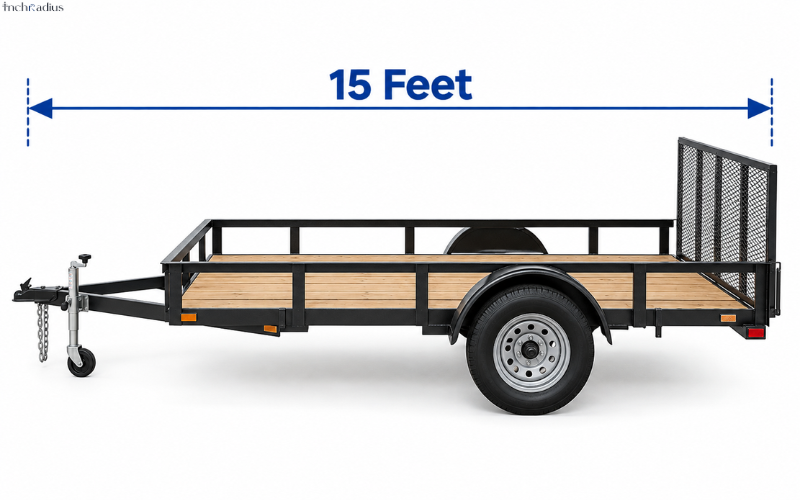
A utility trailer around 15 feet long gives another practical reference. Trailers are available in many sizes, and a 15-foot model provides a useful comparison for understanding the distance from front to rear.
Picture the trailer parked on a driveway. Its main body could stretch for about 4.57 metres. Depending on the design, the hitch or other components may extend beyond the stated body length, so published dimensions should be checked if you need an exact overall measurement.
A trailer of this length can be used for transporting equipment, landscaping materials, recreational gear and other large loads. Its actual carrying capacity depends on its construction and weight rating rather than length alone.
For visualising 15 feet, imagine walking from the rear of the trailer to its front. That distance gives a much clearer impression than simply seeing the number written down.
Measurement Without a Ruler
You can estimate 15 feet without a ruler or tape measure, although none of these methods should replace proper measuring equipment when accuracy matters.
Use five 3-foot lengths. Three feet is a familiar distance, so imagine or mark five sections of 3 feet each. Five sections joined together make exactly 15 feet. A standard yardstick is 3 feet long, making this approach particularly convenient if you have one available.
Use three 5-foot lengths. If you know the approximate length of a person’s height or another object that is close to 5 feet, three such sections can give you a rough 15-foot estimate. Human height varies, so this method is only approximate.
Use familiar household objects. A 15-foot extension cord, garden hose or jump rope can serve as a ready-made reference. Stretch it out straight and use its full length to visualise the distance. This is often easier than trying to judge 15 feet by eye alone.
Body measurements such as hand spans and finger lengths are not reliable for such a long distance because people’s proportions differ. They are better suited to rough, much shorter measurements.
Related Post: 12 Common Things That Are 14 Feet Long
FAQs
Is 15 feet longer than 4 metres?
Yes. Fifteen feet equals 4.572 metres, so it is 57.2 centimetres longer than 4 metres. The difference is large enough to matter when planning a space. For a rough mental picture, think of 15 feet as four metres plus just over half another metre.
How many inches are in 15 feet?
There are 180 inches in 15 feet because one foot contains 12 inches. The calculation is 15 × 12 = 180. This conversion is useful when comparing the measurement with smaller objects or when using plans and dimensions that are written in inches.
Is 15 feet a long distance?
For an indoor space, 15 feet is a fairly substantial distance. It is about 4.57 metres, so it can span a large part of a room or garden. Outdoors, however, 15 feet is still a relatively short distance compared with a driveway, road or sports field.
How can I visualise 15 feet?
Think of a 15-foot canoe, extension ladder, garden hose or small boat. You can also picture five 3-foot sections placed end to end. These comparisons make 15 feet easier to imagine than the numerical measurement alone.
How many yards is 15 feet?
Fifteen feet equals 5 yards because one yard contains 3 feet. This is a simple conversion that can be useful when thinking about garden spaces, fabric, sports areas or other measurements commonly expressed in yards.
Is a 15-foot swimming pool really 15 feet wide?
If a round swimming pool is described as 15 feet in diameter, the distance straight across its centre is 15 feet. The pool’s actual footprint may require additional space around the outside for access, equipment and safety. The manufacturer’s dimensions provide the exact requirements.
How high is 15 feet?
Fifteen feet is 4.572 metres high. A 15-foot ladder or flagpole gives a useful vertical comparison. It is much higher than an average person, but it is still below the height of many larger buildings and mature trees.
What is 15 feet in centimetres and millimetres?
Fifteen feet equals 457.2 centimetres and 4,572 millimetres. The calculation starts with 15 feet × 30.48 centimetres, giving 457.2 centimetres. Multiplying that figure by 10 gives 4,572 millimetres.
Conclusion
Fifteen feet is a little more than 4.5 metres, or exactly 180 inches. A 15-foot canoe, swimming pool, ladder, garden hose or extension cord can make the measurement much easier to picture. For a simple mental shortcut, imagine five sections of 3 feet placed end to end. That gives you the full 15-foot distance without needing to visualise the entire measurement at once.
If you are estimating space for a garden, room, trailer, boat or outdoor equipment, these comparisons can give you a useful starting point. For building, cutting, installation or any job where precision matters, use a tape measure and check the object’s stated dimensions rather than relying on an estimate.