
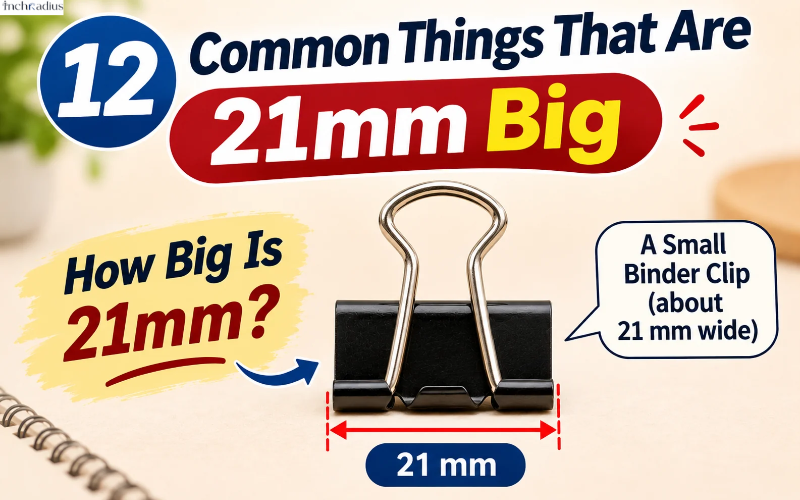
21 millimetres (mm) is equal to 2.1 centimetres, 0.83 inches, or 0.021 metres. It is a small measurement, slightly shorter than 1 inch. Although it may be difficult to picture 21mm on its own, comparing it with familiar objects makes the size much easier to understand. For example, a UK 20p coin has a diameter of approximately 21.4mm, making it an excellent real-life reference.
You can also find similar measurements in small buttons, watch straps, metal fittings and everyday household items. These comparisons are useful when checking the size of a small object, measuring a component or estimating a distance without having a ruler nearby.
How Long Is 21 Millimetres?
21 millimetres is a little over two centimetres. To put the measurement into perspective, it is approximately 0.83 inches, which means it falls just short of a full inch on a standard ruler.
Here are the exact conversions:
| Measurement | Equivalent |
| Millimetres | 21 mm |
| Centimetres | 2.1 cm |
| Inches | 0.8268 inches |
| Metres | 0.021 m |
| Feet | 0.0689 feet |
A measurement of 21mm is often found in small household fittings, craft materials and mechanical components. It is not particularly long, but it is large enough to notice when placed beside a coin or fingertip.
For a practical comparison, a UK 20p coin measures approximately 21.4mm across its widest circular dimension. The difference is only 0.4mm, so it gives you a very close visual reference.
You might encounter this measurement when checking the diameter of a small fitting, choosing a replacement component or looking at the width of an accessory.
Related Post: 11 Common Things That Are 19 Feet Long
How Big Is 21mm?
The easiest way to picture 21mm is to imagine a small coin sitting between your fingers. It is roughly the width of a fingertip and slightly shorter than the distance covered by one inch on a ruler.
Another helpful comparison is a small round button. Many buttons used on shirts, jackets and craft projects measure around 20–22mm across. Their circular shape makes it easier to understand how much space 21mm covers.
You can also use a standard ruler. Look at the distance between the zero mark and the 2.1cm mark. That short section represents exactly 21mm.
A smartphone screen, notebook or sheet of paper can help provide a sense of scale, but their overall dimensions are much larger. For a closer comparison, small coins, buttons and fittings are more useful.
Remember that 21mm measures a length or diameter, not necessarily the thickness of an object. Always check which dimension is being measured.
12 Common Things That Are About 21mm Big
Several everyday objects have one dimension close to 21mm. Some are circular, while others are measured by their width or diameter.
The following table gives you 12 useful examples. Their measurements are approximate unless a specific standard dimension is mentioned.
Related Post: 10 Common Things That Are 18 Feet Long
| Everyday Item | Actual Size |
| UK 20p Coin | 21mm |
| Large Shirt Button | 21mm |
| Narrow Watch Strap | 21mm |
| Small Hexagonal Nut | 21mm |
| Craft Wooden Bead | 21mm |
| Small Cabinet Knob | 21mm |
| Metal Washer | 21mm |
| Small Wooden Wheel | 21mm |
| Round Furniture Glide | 21mm |
| Miniature Craft Hoop | 21mm |
| Small Rubber Grommet | 21mm |
| Small Jar Lid | 21mm |
1. UK 20p Coin
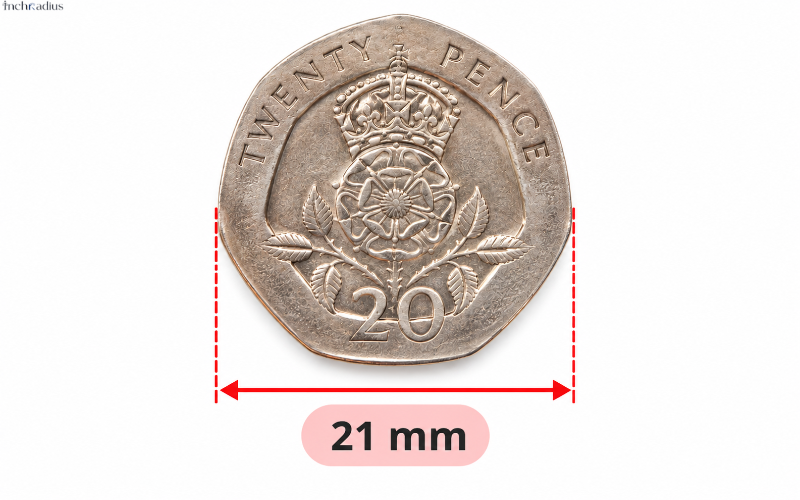
A UK 20p coin is one of the closest everyday comparisons for 21mm. Its official diameter is approximately 21.4mm, making it just 0.4mm wider than the measurement you are trying to picture.
The coin has a distinctive seven-sided shape with curved edges. It is made to fit comfortably in your hand and is commonly used for everyday purchases across the United Kingdom.
To visualise 21mm, place a 20p coin on a flat surface and look at its widest distance across. That distance is almost identical to 21mm.
You can also use the coin when estimating small gaps or checking the size of a round object. Just remember that its diameter is slightly larger than 21mm, so it is a close comparison rather than an exact match.
Related Post: 11 Common Things That Are 17 Feet Long
2. Large Shirt Button
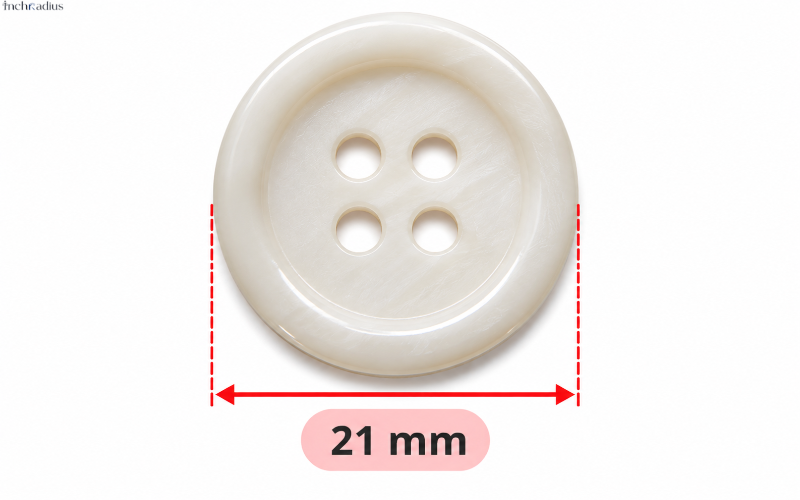
A large shirt button can provide another useful comparison for 21mm. Buttons come in different sizes, but some larger shirt, cardigan and jacket buttons measure approximately 20–22mm across.
Imagine a round button with four small holes in the middle. Its outer edge gives you a simple way to picture a distance of just over two centimetres.
You can find buttons of this size on thicker shirts, casual jackets and handmade clothing. Smaller buttons are often used near the collar or on lightweight garments, while larger ones are suitable for more noticeable fastening points.
If you have a button measuring close to 21mm, place it beside a ruler to see how closely its diameter matches the measurement. This is particularly useful for sewing projects where you need to replace a missing button with one of a similar size.
3. Narrow Watch Strap
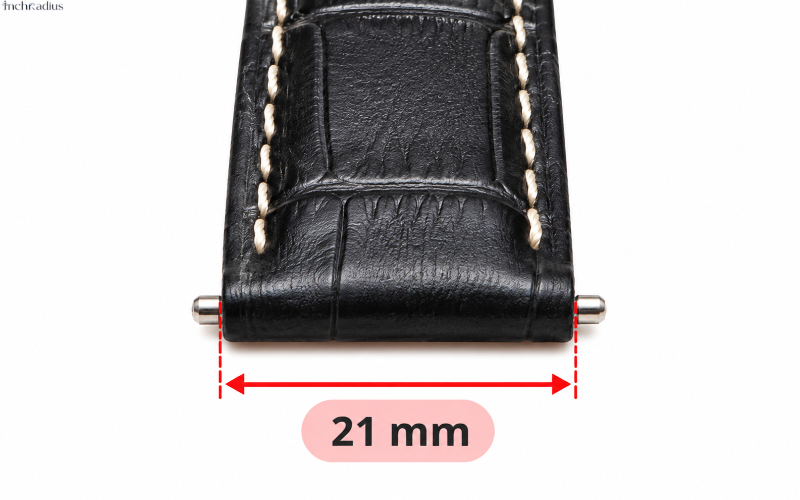
Watch straps are available in several standard widths, including 18mm, 20mm, 21mm and 22mm. A 21mm strap is therefore an excellent example of an object with a width matching your target measurement.
The width is normally measured across the strap where it attaches to the watch case. It does not refer to the strap’s length around your wrist.
A narrow watch strap measuring 21mm from one side to the other is approximately 2.1cm wide. This gives you a practical reference because you can see how much space the measurement covers without needing to imagine a line.
Watch straps are made from leather, silicone, rubber and metal. Their materials differ, but the width remains the same when they are manufactured to the same specification.
If you are replacing a watch strap, check the lug width carefully. A strap that is even slightly too wide may not fit properly.
Related Post: 11 Common Things That Are 16 Feet Long
4. Small Hexagonal Nut
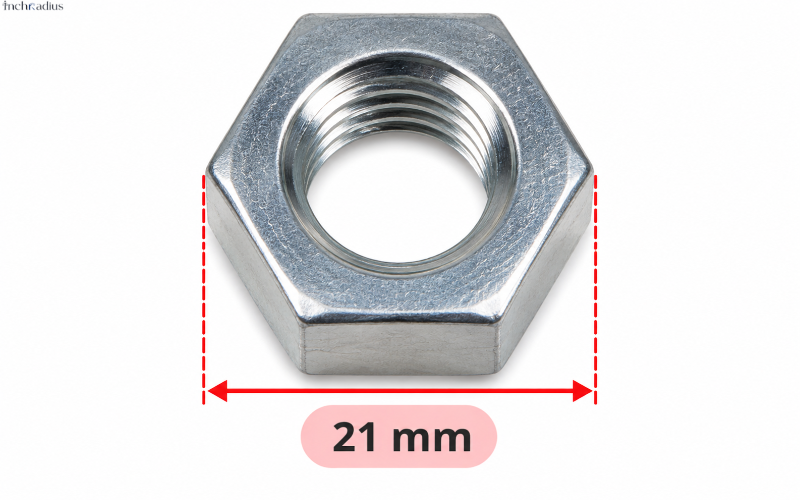
A small hexagonal nut is another interesting way to picture 21mm. Nuts are used to secure bolts in furniture, machinery, bicycles and household equipment.
A nut described as a 21mm nut usually refers to the distance across its opposite flat sides. This is known as its spanner or socket size, rather than its overall diameter.
The six-sided shape makes it easy to recognise. If you measure across the two opposite flat surfaces, you will get approximately 21mm.
This is particularly useful when working with tools because socket sizes are marked according to the measurement they fit. A 21mm socket, for example, is designed to fit a compatible 21mm hexagonal nut or bolt head.
Related Post: 10 Common Things That Are 15 Feet Long
5. Craft Wooden Bead
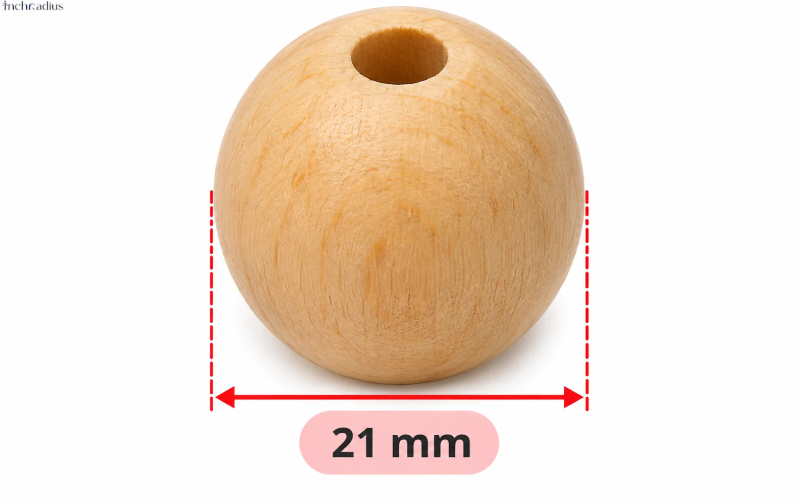
A round wooden craft bead measuring approximately 21mm in diameter is another useful example. These beads are used in jewellery making, decorative projects, children’s craft activities and handmade ornaments.
The bead is usually round, with a small hole running through its centre. Its overall diameter gives you the measurement to compare with 21mm.
Imagine holding the bead between your thumb and index finger. It would fit comfortably between them, although the exact feeling depends on your hand size.
Wooden beads are available in many different diameters. Some are only a few millimetres wide, while larger decorative beads can measure several centimetres across.
A bead measuring 21mm is large enough to be clearly visible in a necklace or craft arrangement without taking up too much space. It is also a handy reference when comparing small round objects.
6. Small Cabinet Knob
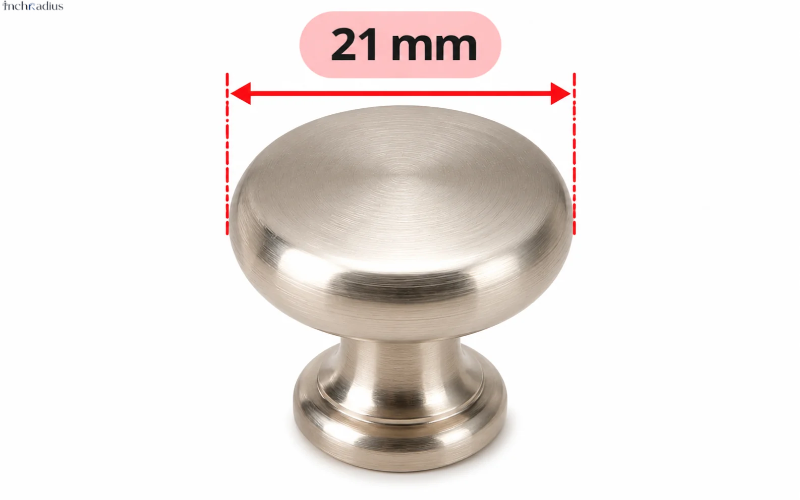
A small cabinet knob can help you visualise a measurement of approximately 21mm. Many compact knobs used on drawers, cupboards and storage units have a front face measuring around 20–25mm across.
The front circular surface is the easiest part to use for comparison. If the knob has a face diameter of 21mm, its width from one side to the other matches your target measurement.
These knobs are commonly made from stainless steel, brass, aluminium, ceramic and plastic. Some have a simple rounded appearance, while others include decorative patterns.
A 21mm knob is relatively small compared with larger kitchen cabinet handles. However, it is large enough to grip with your fingertips and open a drawer comfortably.
If you are replacing a cabinet knob, remember that the face diameter and screw length are two separate measurements. The face diameter is the part that helps you picture 21mm.
Related Post: 12 Common Things That Are 14 Feet Long
7. Metal Washer
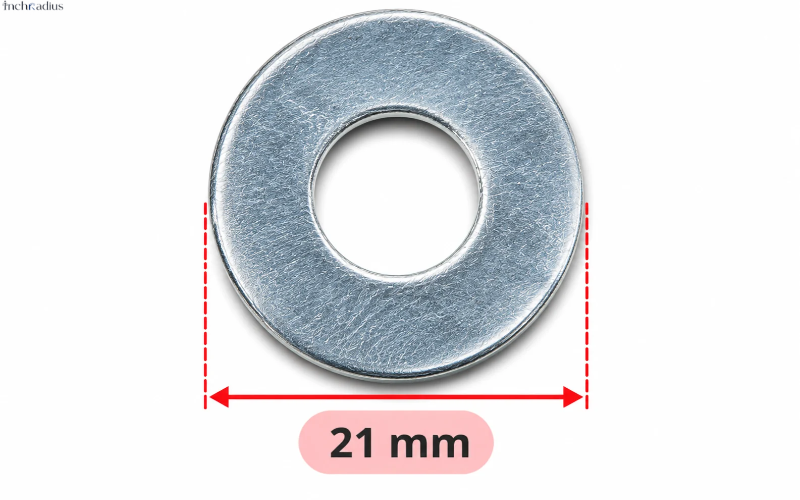
A metal washer is a small circular component commonly used with nuts and bolts. It helps spread the pressure of a fastening and can protect the surface of the material being joined.
Some washers have an outside diameter close to 21mm, although their dimensions depend on the bolt size and the washer standard.
For this comparison, focus on the outside edge rather than the hole in the middle. The distance across the complete circular washer is the dimension that should be close to 21mm.
Washers are usually made from steel, stainless steel or other metals. They are commonly found in furniture fittings, bicycles, garden equipment and mechanical assemblies.
Their flat shape makes them particularly useful for understanding small measurements. You can place one on a ruler and compare its outer diameter with the 2.1cm mark.
8. Small Wooden Wheel
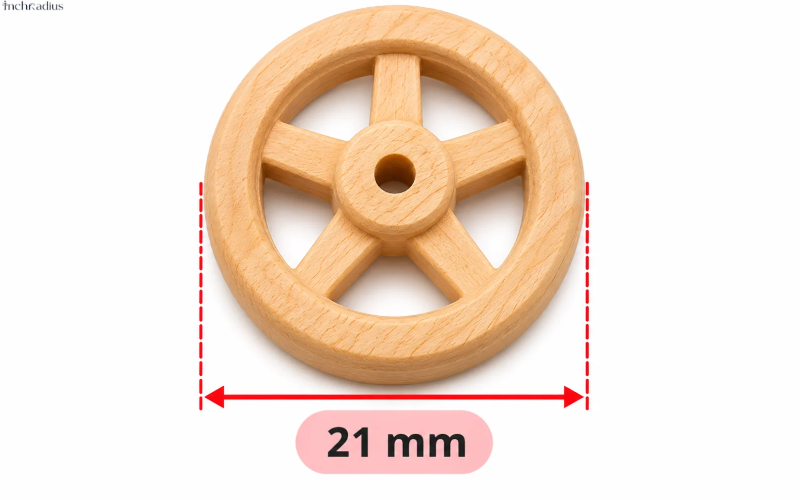
Small wooden wheels used in craft projects and miniature toys can measure approximately 21mm across. They are often included in handmade cars, model vehicles, decorative toys and school projects.
Their circular shape makes them a simple reference for visualising the measurement. The diameter runs from one outside edge through the centre to the opposite edge.
A wheel measuring 21mm is only slightly larger than two centimetres. You can compare it with a coin to get a better idea of its size.
These wheels are normally made from unfinished wood, painted wood or lightweight materials. Some have a small central hole for attaching an axle.
When choosing wheels for a miniature project, the diameter matters because it affects the height and movement of the finished model. A difference of a few millimetres can change how the toy looks and works.
Related Post: 11 Common Things That Are 13 Feet Long
9. Round Furniture Glide
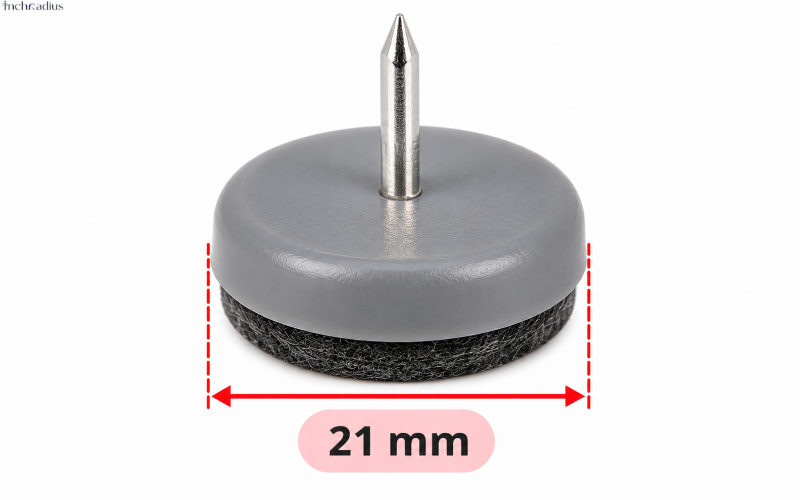
A small round furniture glide is fitted to the bottom of furniture legs to help protect floors and reduce scratching. Some compact versions have a circular base measuring close to 21mm across.
You may find these glides underneath small chairs, stools, cabinets and other household furniture. They are commonly made from rubber, plastic or felt-covered materials.
The circular base is the dimension to compare with 21mm. Its diameter should be measured from one outer edge to the opposite side.
A glide of this size is small enough to remain mostly hidden beneath furniture, yet wide enough to provide a protective contact surface.
If you are buying replacement glides, measure the existing base rather than relying on appearance alone. Furniture fittings are available in several sizes, and a slightly different diameter may not provide the fit you need.
Related Post: 10 Common Things That Are 12 Feet Long
10. Miniature Craft Hoop
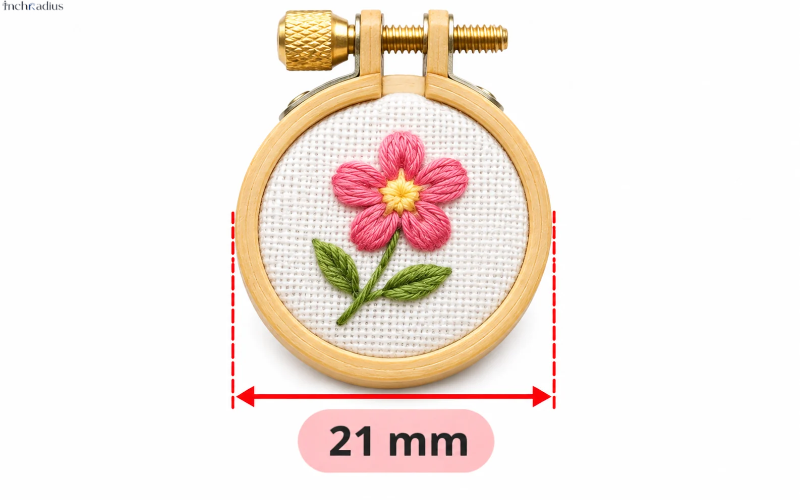
Miniature craft hoops and small decorative rings can also provide a close comparison for 21mm. These items are used in jewellery making, embroidery decorations, miniature displays and handmade accessories.
A small hoop with an outside diameter of approximately 21mm is about the same width as the measurement you are trying to understand.
Unlike a solid coin or button, a hoop has an open centre. This makes it easy to see the distance between its outer edges without being distracted by a solid surface.
Craft hoops can be made from metal, plastic or lightweight decorative materials. Their sizes vary according to the intended project.
If you are using one as a measurement reference, check whether the stated diameter refers to the inside or outside edge. The outside diameter is the correct dimension for comparing its full width with 21mm.
Related Post: 11 Common Things That Are 11 Feet Long
11. Small Rubber Grommet
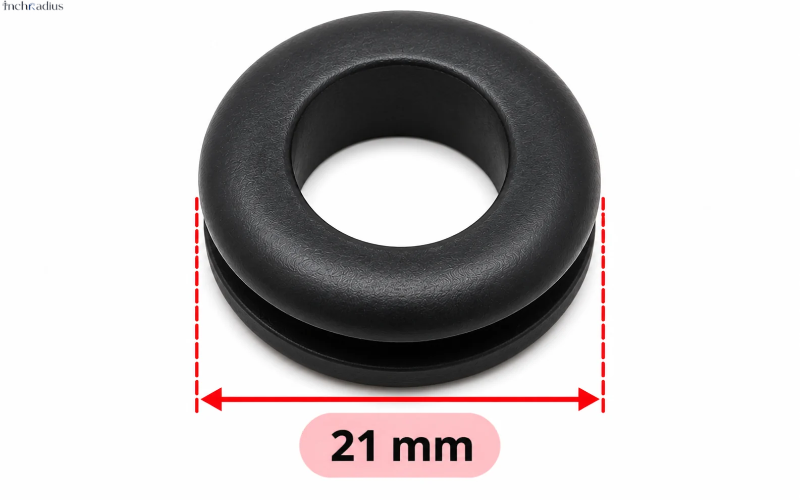
A rubber grommet is a small protective fitting used around holes in panels, furniture and electrical equipment. It helps prevent cables or wires from rubbing against sharp edges.
Some compact grommets have an outside diameter close to 21mm. Their overall circular shape makes them useful for understanding how much space this measurement covers.
Grommets are commonly made from flexible rubber or silicone. Their central openings allow wires, cables or small components to pass through safely.
The important detail is that a grommet has several measurements. These include its outside diameter, inside opening and thickness. For a 21mm comparison, use the outside diameter.
You might encounter these fittings when repairing a computer desk, working with electrical enclosures or organising cables behind household equipment.
Related Post: 10 Common Things That Are 10 Feet Big
12. Small Jar Lid
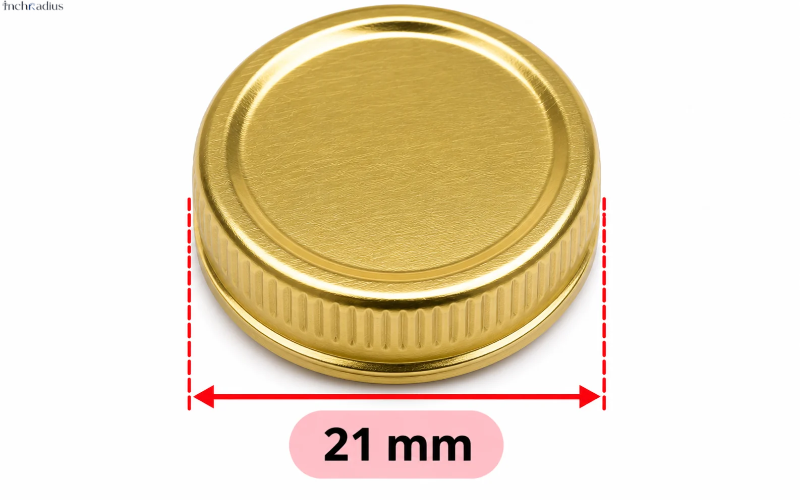
A small jar lid can be a useful household reference for 21mm. Some miniature jars and small containers use narrow screw-top lids with diameters close to this measurement.
The lid’s outside width is the dimension to compare. Measure across the circular top from one edge to the other, passing through its centre.
Small lids are used on sample containers, miniature storage jars, craft supplies and certain cosmetic products. Their sizes vary depending on the container, so not every small jar lid will measure 21mm.
If you have one at home, place it on a ruler to check its diameter. A lid measuring approximately 2.1cm will give you a good visual example.
Its flat top also makes it easy to compare against a coin or button. This is particularly useful when you need a quick reference for a small circular measurement.
Related Post: 11 Common Things That Are 9 Feet Big
How to Measure 21mm Without a Ruler
You do not always need a measuring tool to estimate 21mm. A few familiar objects and simple methods can help you get close to the correct size.
1. Use a UK 20p Coin
If you have a UK 20p coin, you already have a close reference. Its diameter is approximately 21.4mm, which is only slightly wider than 21mm.
Place the coin beside the object you want to measure. Compare their widths to see whether the object is close to 21mm.
This method works particularly well for small circular items such as buttons, washers and lids. Keep in mind that the coin is a little larger than the target measurement.
2. Use the Width of Your Fingertip
Your fingertip can help you estimate a distance of around 21mm. For many adults, the width of an index finger near the tip is close to two centimetres.
Hold your finger beside the object and compare the two widths. If they look similar, the object may be around 21mm.
However, finger sizes vary considerably. Someone with narrow fingers may have a fingertip much smaller than 21mm, while someone with wider fingers may have a larger one.
Treat this as a rough visual estimate rather than an accurate measurement.
3. Use a Standard Ruler
A ruler is the simplest way to measure 21mm accurately.
Find the zero mark and count along the small millimetre divisions until you reach 21. You can also look for the 2.1cm mark because 21mm is exactly the same as 2.1cm.
If you are measuring a round object, place it flat against the ruler and measure from one outside edge to the opposite edge.
Make sure the ruler starts at zero rather than at the very end of its plastic or wooden body. This helps avoid small measuring errors.
Related Post: 10 Common Things That Are 8 Feet Long
Frequently Asked Questions
1. Is 21mm bigger than 2cm?
Yes. 21mm is slightly bigger than 2cm. Two centimetres equal 20mm, so 21mm is exactly 1mm longer. The difference is small, but it can matter when measuring components, fittings and objects that need to fit together.
2. How many inches is 21mm?
21mm is approximately 0.8268 inches, usually rounded to 0.83 inches. This means it is slightly shorter than one full inch. On a standard ruler, it falls just before the 1-inch mark.
3. Is 21mm close to 1 inch?
Yes, 21mm is close to 1 inch, but it is not exactly the same. One inch equals 25.4mm, making it 4.4mm longer than 21mm. A 21mm object will therefore look slightly shorter than an inch on a ruler.
4. What common coin is approximately 21mm wide?
A UK 20p coin is an excellent example. It measures approximately 21.4mm across its widest dimension. This makes it a convenient everyday reference when estimating a measurement close to 21mm.
5. How many centimetres are in 21mm?
There are 2.1 centimetres in 21mm. To convert millimetres into centimetres, divide the measurement by 10. Therefore, 21 divided by 10 gives you 2.1cm.
6. What does 21mm look like on a ruler?
On a metric ruler, 21mm is the distance between the zero mark and the 21mm mark. It is also the same as 2.1cm, so you can find it just one small millimetre division after the 2cm mark.
7. Can I estimate 21mm using my fingers?
Yes, your fingertip can provide a rough estimate. The width of an adult index fingertip is sometimes close to 21mm, but this varies from person to person. Use your finger as a visual comparison rather than relying on it for precise measurements.
8. What is the easiest object to use when visualising 21mm?
A UK 20p coin is one of the easiest objects to use because its diameter is approximately 21.4mm. It is familiar, easy to handle and almost the same size as the measurement. A 21mm button or circular washer can also work well.
- Discover more everyday objects and their measurements in inches
- 10 Common Things That Are 21 Inches Long
- 12 Common Things That Are 20 Inches Long
- 10 Common Things That Are 19 Inches Long
- 12 Common Things That Are 18 Inches Long
- 10 Common Things That Are 17 Inches Long
- 12 Common Things That Are 16 Inches Long
Conclusion
21mm is a small distance, but it becomes much easier to picture when compared with familiar objects. A UK 20p coin is probably the most useful reference because its diameter is only slightly larger than 21mm. A large shirt button, small wooden bead or circular furniture fitting can also help you recognise this size.
For a quick reminder, 21mm equals 2.1cm or approximately 0.83 inches. Think of a small coin that fits comfortably between your fingers, rather than a full inch on a ruler. If accuracy matters for a repair, craft project or replacement fitting, use a metric ruler or calliper to confirm the measurement.
